
Few works of art in the world create such an immediate emotional impact as the Winged Victory of Samothrace. Standing triumphantly at top of the Daru staircase at the Louvre Museum, this ancient Greek sculpture comes to life as windswept, theatrical, and impossibly modern despite being over 2,000 years old.
Whether you are passionate about Greek mythology, fascinated by ancient civilizations, or simply searching for the Louvre’s most unforgettable moments, this masterpiece deserves your full attention. And ideally, it deserves more than a rushed pass by.
At Paris To Versailles, we often tell our guests that the Louvre reveals its secrets best when explored slowly, with context, stories, and emotion, exactly the way aristocratic travelers once discovered Europe’s great collections. This work is a perfect place to start your journey!
Table of Contents
- 1 What Is the Winged Victory of Samothrace?
- 2 Where Was the Winged Victory Found?
- 3 How Did the Winged Victory Get to the Louvre?
- 4 Why the Winged Victory Still Matters Today
- 5 Where to Find the Winged Victory of Samothrace in the Louvre?
- 6 FAQs about for the Winged Victory of Samothrace?
- 7 Have a Special Moment with an iconic Ancient Beauty at the Louvre!
What Is the Winged Victory of Samothrace?
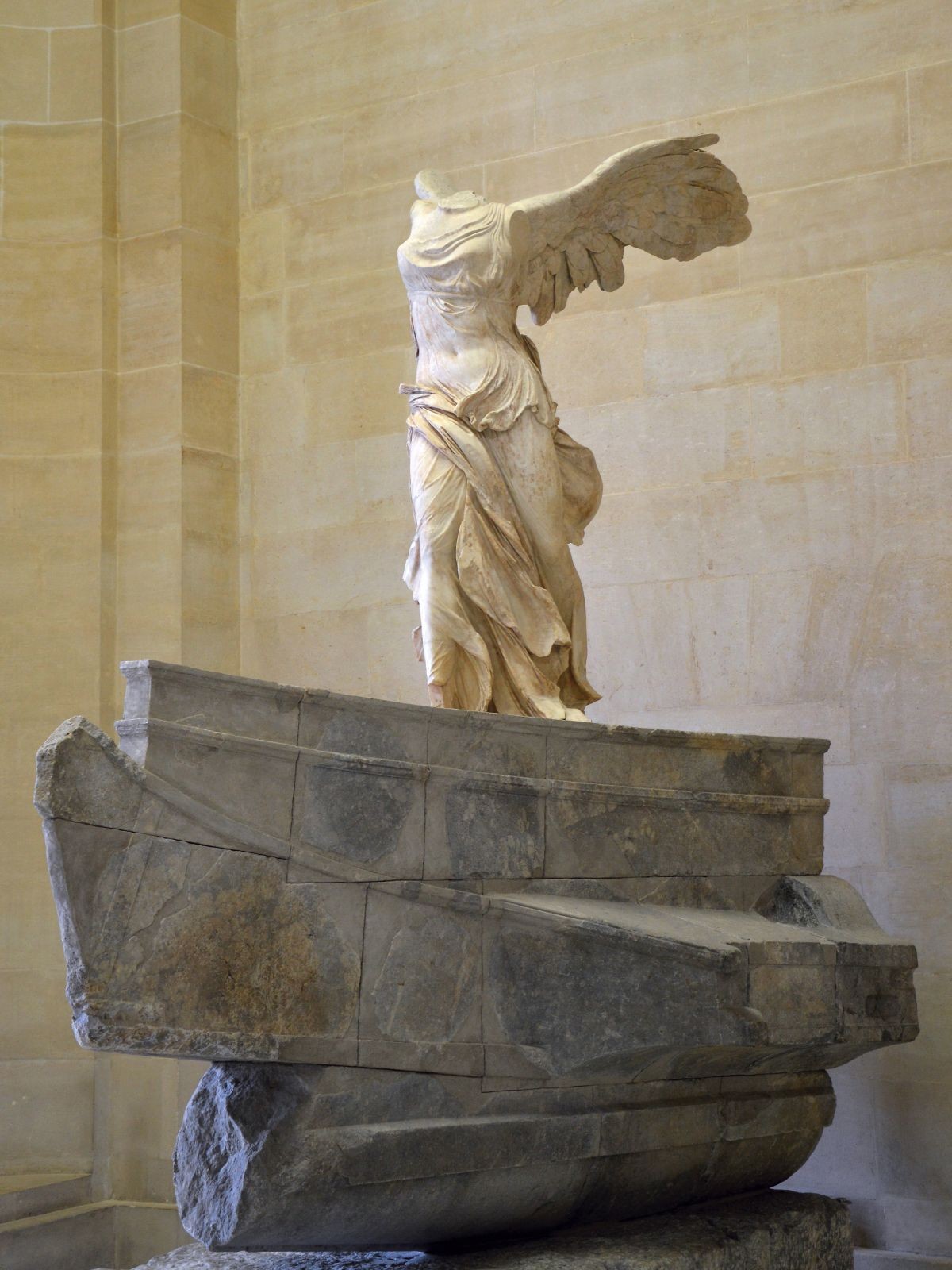
The Winged Victory of Samothrace, also called the Nike of Samothrace, is an ancient Greek marble sculpture representing Nike, the goddess of victory. She is often depicted with wings and is closely associated with Zeus and Athena, two major gods in the Greek and Roman pantheon.
Created around 190 BC, during the Hellenistic period, in white Parian marble, the statue was most likely designed to celebrate a naval military triumph. Unlike the calm perfection of other classical Greek sculpture, this work embraces movement, drama, and emotion. Like the Venus de Milo, Winged Victory is one of the few remaining statues from this period rather than Roman copies.
The sculpture originally stood on the prow of a stone ship, transforming the entire composition into a powerful moment. You can almost feel the sea wind pressing the drapery against Nike’s body while her wings expand behind her.
This sense of motion is what makes the Winged Victory of Samothrace such an extraordinary piece. Even without a head or arms, the statue communicates overwhelming energy.
Where Was the Winged Victory Found?
The Winged Victory of Samothrace was discovered in 1863 on the remote Greek island of Samothrace, located in the northern Aegean Sea near the coast of modern-day Turkey. At the time, the island was part of the Ottoman Empire and remained largely untouched by large-scale archaeological exploration.
The discovery was made by Charles Champoiseau, a French diplomat serving as vice-consul in Adrianople (today’s Edirne, Turkey). Like many Europeans of the 19th century, Champoiseau was deeply fascinated by ancient Greece and participated in several archaeological expeditions during his diplomatic missions.
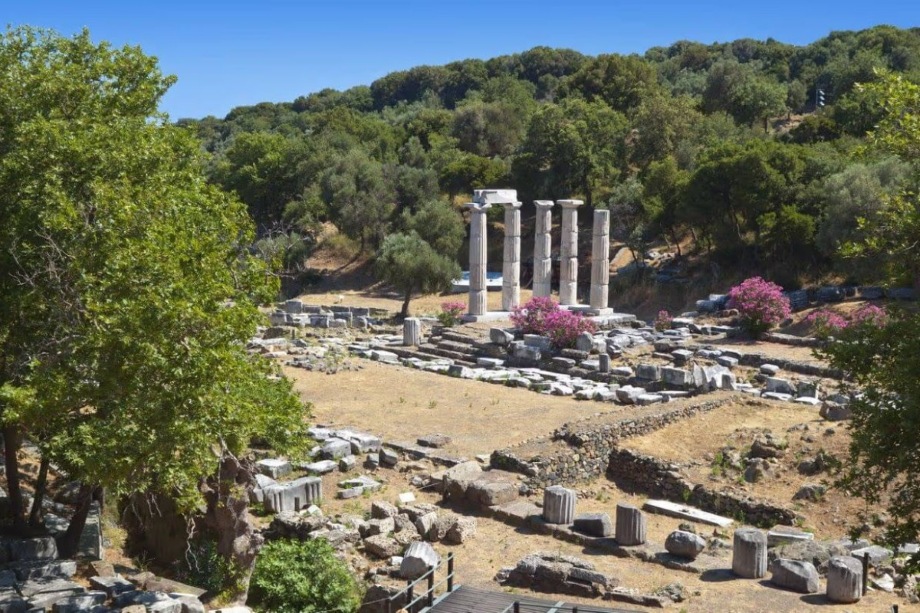
While exploring the island, he uncovered fragments of the sculpture among the ruins of the Sanctuary of the Great Gods, one of the most mysterious religious sanctuaries of the ancient Mediterranean world. This sacred site attracted pilgrims from across Greece, including kings, military leaders, and wealthy travelers seeking initiation into secret religious rites.
At first, archaeologists did not fully understand the scale of the discovery. The statue had shattered into numerous pieces over centuries of earthquakes and exposure to the elements. Large sections of the wings, drapery, and ship base were scattered across the site.
The sculpture’s dramatic setting also explains much of its emotional power. The sanctuary overlooked the sea, and historians believe the monument was intentionally positioned so arriving pilgrims would see Nike rising above the horizon like a divine apparition.
Why Was Samothrace Important?
Samothrace was famous in the ancient world for its mysterious religious cults and sacred ceremonies. The island was home to the Mysteries of the Great Gods, an initiation cult comparable in prestige to the famous Eleusinian Mysteries near Athens.
Unlike many ancient religious ceremonies reserved for elites, the Samothracian cult welcomed men and women, free people, and enslaved individuals alike. Initiates believed the rituals offered divine protection, particularly against dangers at sea, which explains why sailors, generals, and rulers were especially drawn to the sanctuary.
Several major historical figures are believed to have been connected to the cult. Ancient sources suggest that Philip II of Macedon, father of Alexander the Great, met Olympias, Alexander’s mother, during ceremonies on Samothrace. This romantic and political connection helped elevate the sanctuary’s prestige across the Greek world.
The sanctuary was also admired by some of antiquity’s greatest thinkers. Both Plato and Aristotle referenced Samothrace and its mysteries in their writings, evidence of the cult’s intellectual and spiritual importance in the ancient Mediterranean imagination.
For travelers of the Hellenistic world, Samothrace represented far more than a remote island. It was a place associated with divine favor, initiation, protection, and transformation, themes that resonate powerfully with the dramatic symbolism of the Winged Victory itself.
The Samothrace Sanctuary Complex and the Original Position of the Winged Victory
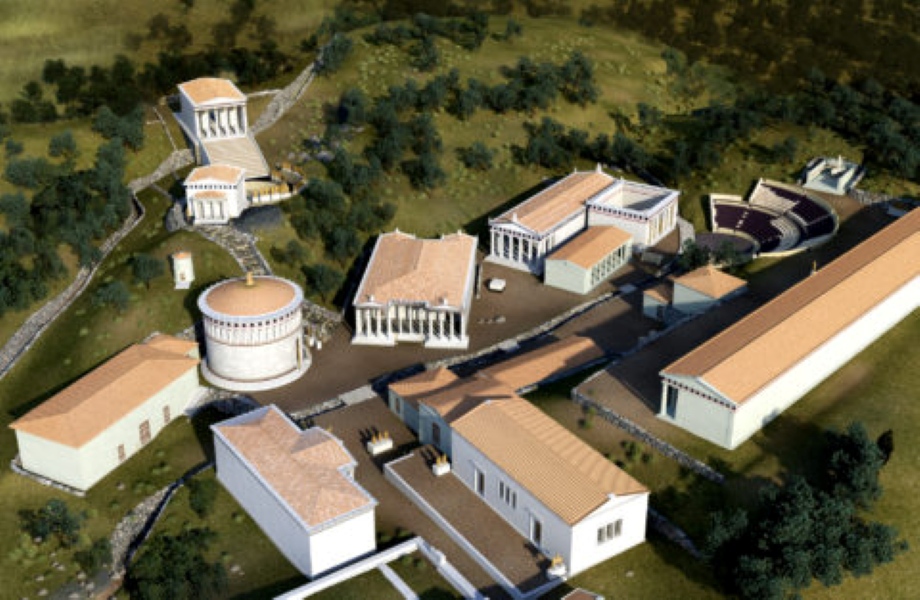
Archaeologists believe the Winged Victory of Samothrace occupied one of the most dramatic locations within the Sanctuary of the Great Gods.
The sanctuary itself was built across hillside terraces above the sea. Pilgrims arriving by boat would gradually ascend through ceremonial spaces, sacred buildings, altars, and initiation halls before reaching the heart of the complex.
The statue was most likely positioned on a high stone terrace overlooking a theater-like open area near the sanctuary’s main pathway. Mounted atop the prow of a monumental marble ship, Nike would have appeared elevated above visitors.
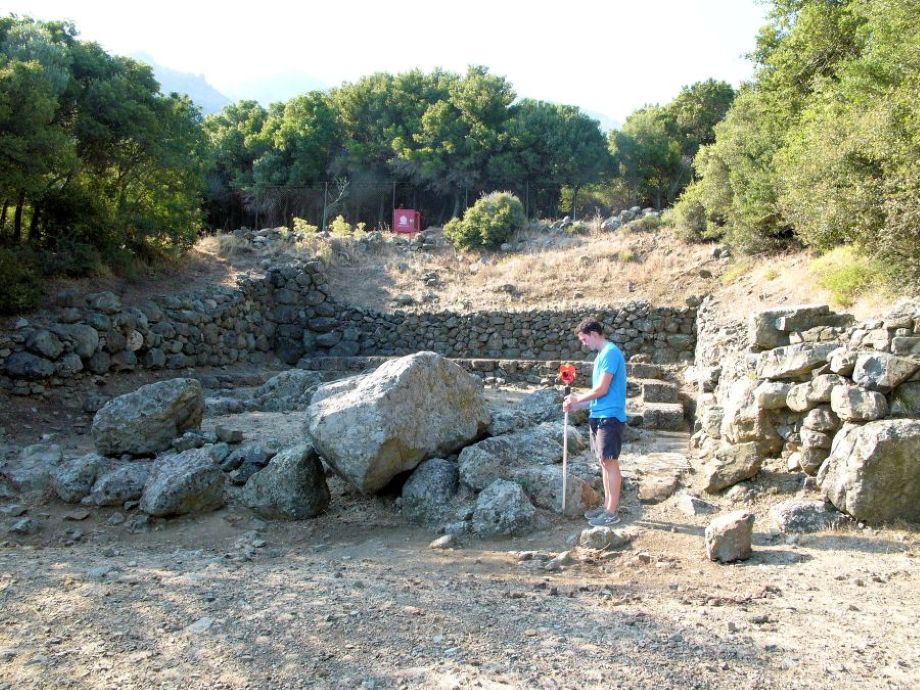
This placement was carefully calculated with the sculpture was oriented toward the sea so that natural winds animated the folds of the drapery while sunlight reflected off surrounding water basins and pale marble surfaces.
For ancient pilgrims approaching the sanctuary, the Winged Victory of Samothrace would not simply have been a sculpture. It was an immersive experience designed to evoke divine presence, triumph, and protection.
As visitors climbed upward through the sacred complex, Nike gradually revealed herself from below, creating a sense of anticipation remarkably similar to the experience modern visitors have today when ascending the Daru staircase at the Louvre.
How Did the Winged Victory Get to the Louvre?
After its discovery in 1863, the sculpture was transported to France piece by piece in what would become one of the Louvre’s most ambitious archaeological acquisitions of the 19th century.
At the time, archaeology had become both an intellectual pursuit and a geopolitical competition. Major museums including the British Museum, the Louvre, and Berlin’s museums raced to acquire masterpieces from Greece, Egypt, and the Near East in order to establish cultural prestige.
When Charles Champoiseau recognized the artistic importance of the Winged Victory of Samothrace, arrangements were quickly made to transfer the fragments to France by ship. Transporting the sculpture proved extraordinarily difficult. Many pieces were heavy, damaged, or buried deep within the sanctuary ruins.
The first shipment arrived at the Louvre in 1864, but the monument remained incomplete for decades. Additional archaeological campaigns later uncovered missing fragments of the wings, drapery, and perhaps most importantly, the monumental stone ship serving as the sculpture’s base. After each expedition, work was carried out to restore the statue. Finally, in 1883, the statue on its base was presented on the top of the Daru staircase.
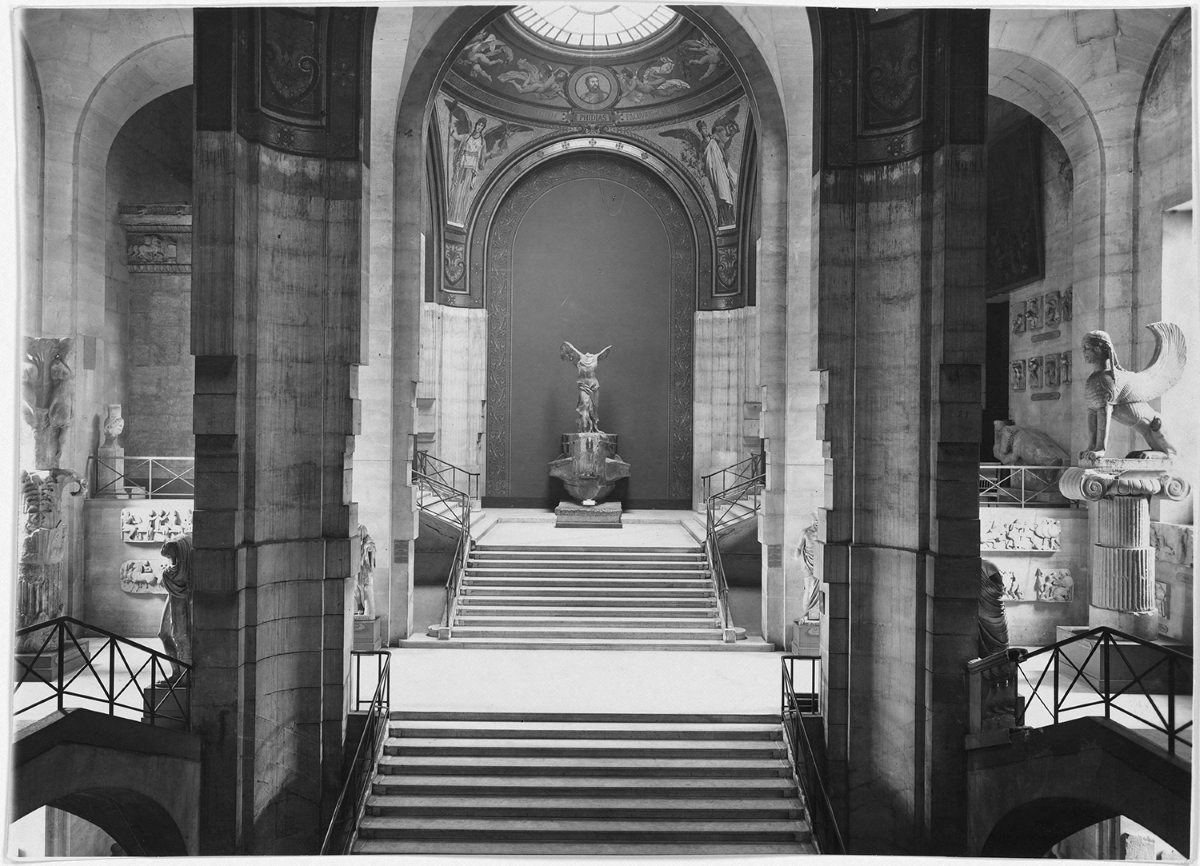
Unlike many ancient sculptures restored during the 19th century with speculative additions, the Louvre adopted a relatively restrained approach. The missing head and arms were never recreated, although a final expedition led by Champoiseau searched for the head in 1891, to no avail.
Nonetheless, these ongoing restorations helped transform the Winged Victory of Samothrace into one of the Louvre’s defining masterpieces and a symbol of the museum itself.
Is the whole sculpture authentic?
Unlike many ancient sculptures restored during the 19th century with speculative additions, the Louvre adopted a relatively restrained approach. The missing head and arms were never recreated, although a final expedition led by Champoiseau searched for the head in 1891, to no avail. With the pieces they obtained over time, archaeologists gradually reassembled the fragments and later identified pieces of the monumental ship base.
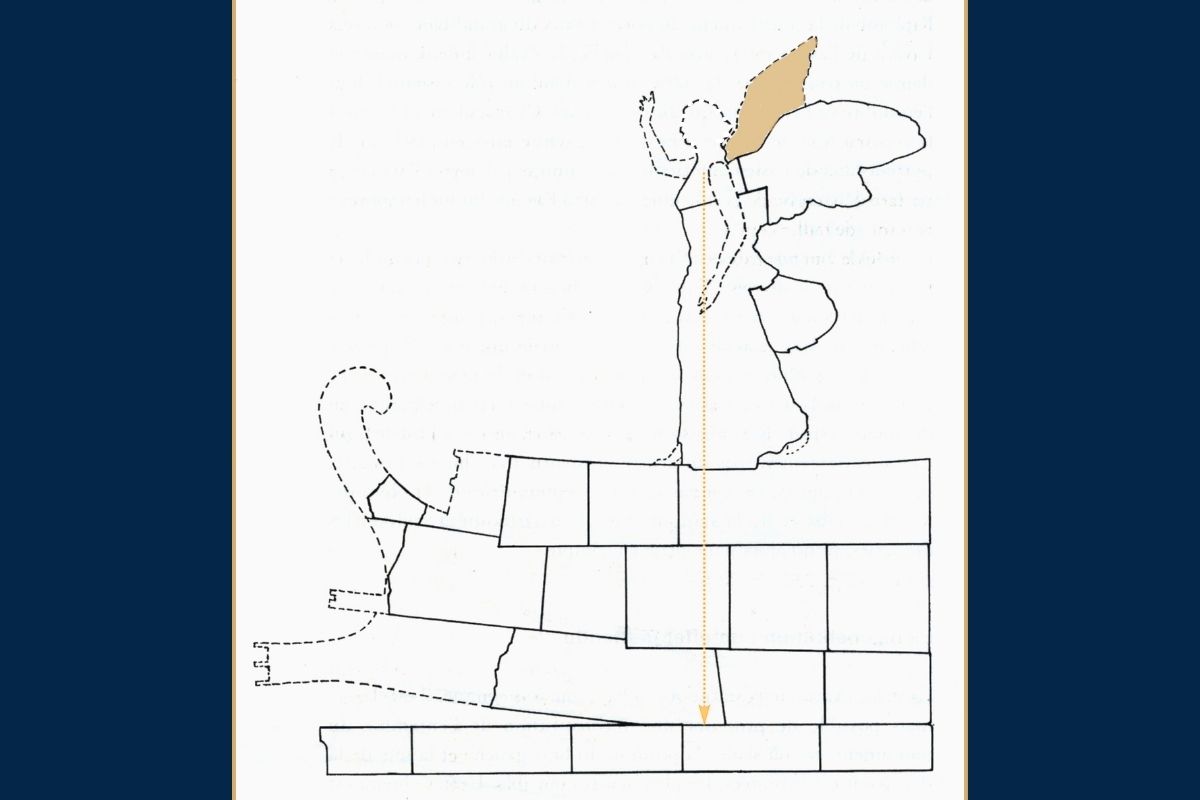
These ongoing restorations helped transform the Winged Victory of Samothrace into one of the Louvre’s defining masterpieces and a symbol of the museum itself.
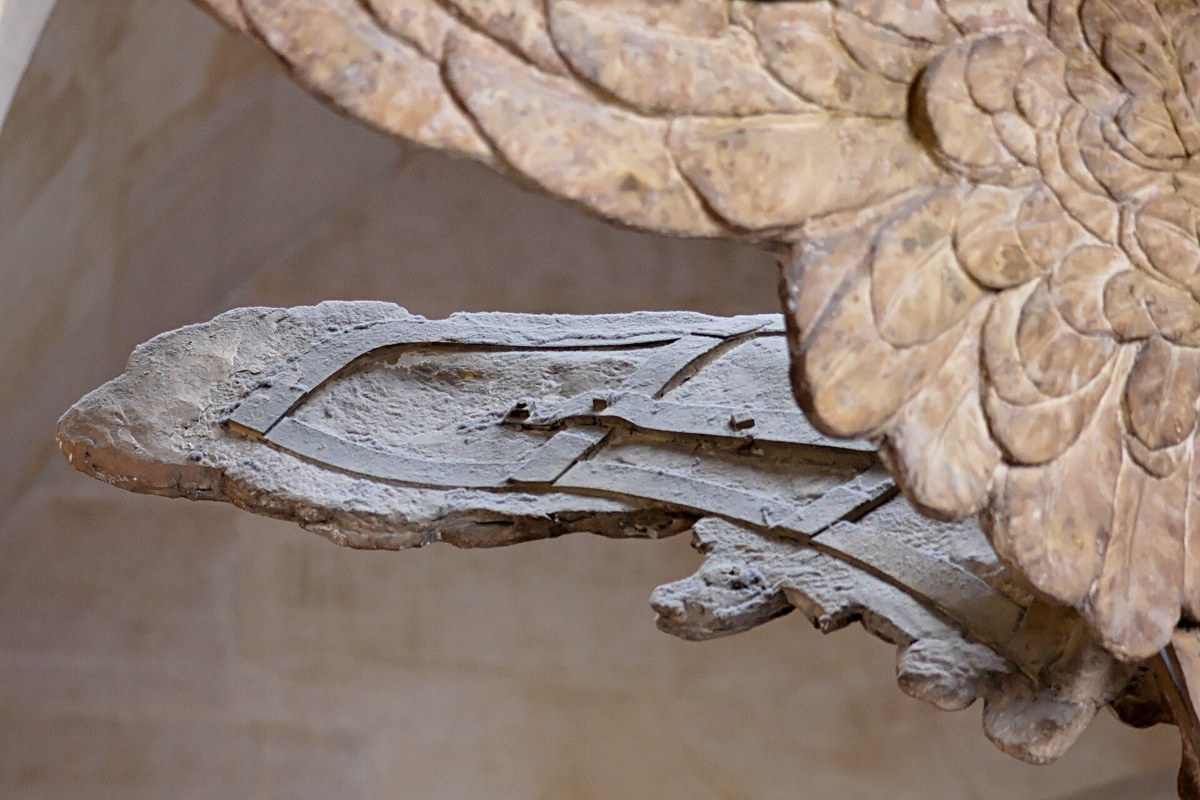
There are some things to note regarding the restoration process as pieces had to be fixed back together. In addition, the right wing displayed today is actually a plaster reconstruction mirroring the surviving left wing.
Then in 2013–2014, the Louvre also conducted a major restoration project that cleaned the marble and improved the presentation of the monument. This revealed details that had become almost invisible under centuries of dust and aging.
However, despite these decades of restoration and conservation, the majority of the sculpture remains authentically ancient.
Why the Winged Victory Still Matters Today
The Winged Victory of Samothrace is far more than an archaeological masterpiece. More than 2,000 years after its creation, it continues to shape conversations about art, cultural heritage, identity, and even international politics.
Its extraordinary journey from a sacred sanctuary on a remote Greek island to the grand halls of the Louvre has transformed the statue into a global icon whose influence extends well beyond the world of ancient history.
A Symbol That Survived War
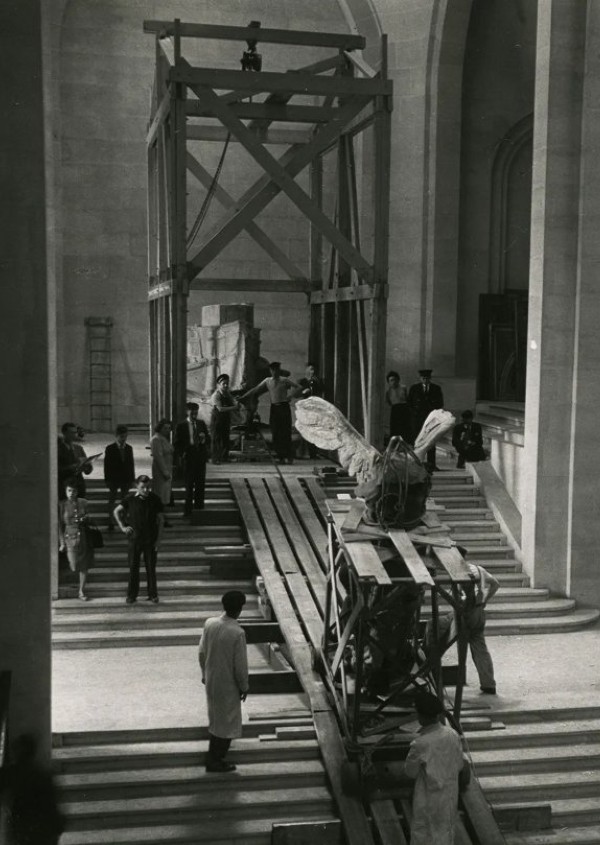
Few visitors realize that the Winged Victory of Samothrace narrowly escaped the dangers of World War II.
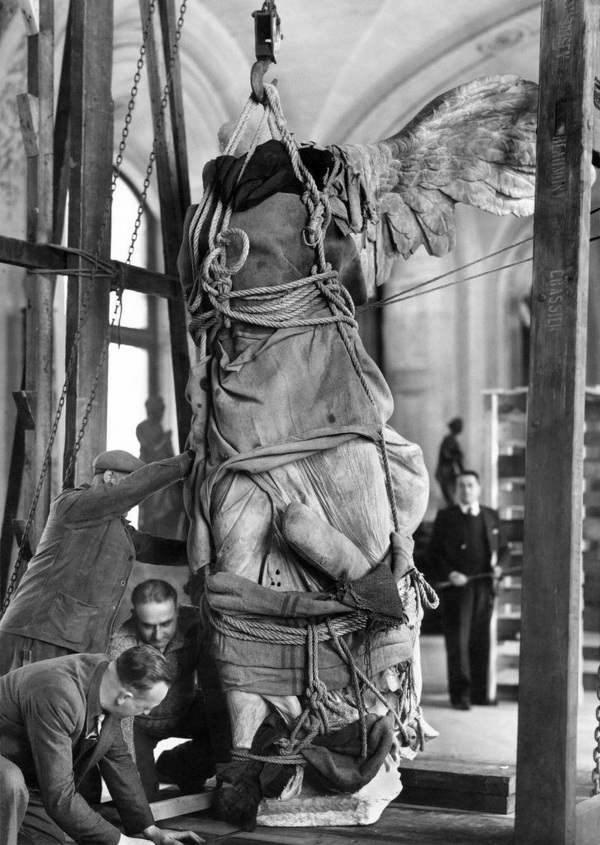
As German forces advanced toward Paris in 1939, Louvre curator Jacques Jaujard organized a secret evacuation of France’s most important masterpieces. Alongside the Mona Lisa and the Wedding of Cana, the Winged Victory was carefully packed into protective crates, and transported to a series of secure locations throughout the French countryside.
For several years, the sculpture remained hidden from occupying forces.
There is a remarkable irony in this story. Originally created to celebrate an ancient military victory, the monument itself became a survivor of one of the greatest conflicts in modern history. Its preservation stands as a testament to the determination of museum professionals who risked everything to safeguard humanity’s cultural heritage.
The Debate Over Cultural Heritage
Like many famous antiquities displayed outside their country of origin, the Winged Victory of Samothrace occasionally appears in discussions about cultural repatriation.
Some scholars and cultural advocates argue that the sculpture should return to Greece, where it was created and where it originally stood for centuries overlooking the Sanctuary of the Great Gods. They believe the monument would gain additional meaning if reunited with its archaeological landscape and is the property of the Greek people.
Others point out that the statue was excavated through archaeological research rather than removed from an existing monument and has been preserved, studied, and displayed at the Louvre for more than 160 years, giving the French museum some claim to rightful ownership.
Unlike the highly publicized debate surrounding the Parthenon Marbles, discussions concerning the Winged Victory remain relatively limited, although the Greek government has mentioned the statue explicitly in this debate. Nevertheless, the sculpture raises fascinating questions about ownership, stewardship, and the responsibility of museums to preserve world heritage.
The fame of the Venus de Milo comes from a rare combination of artistic quality, historical timing, museum prestige, and mystery.
From Ancient Monument to Global Icon
The influence of the Winged Victory of Samothrace extends far beyond the Louvre.
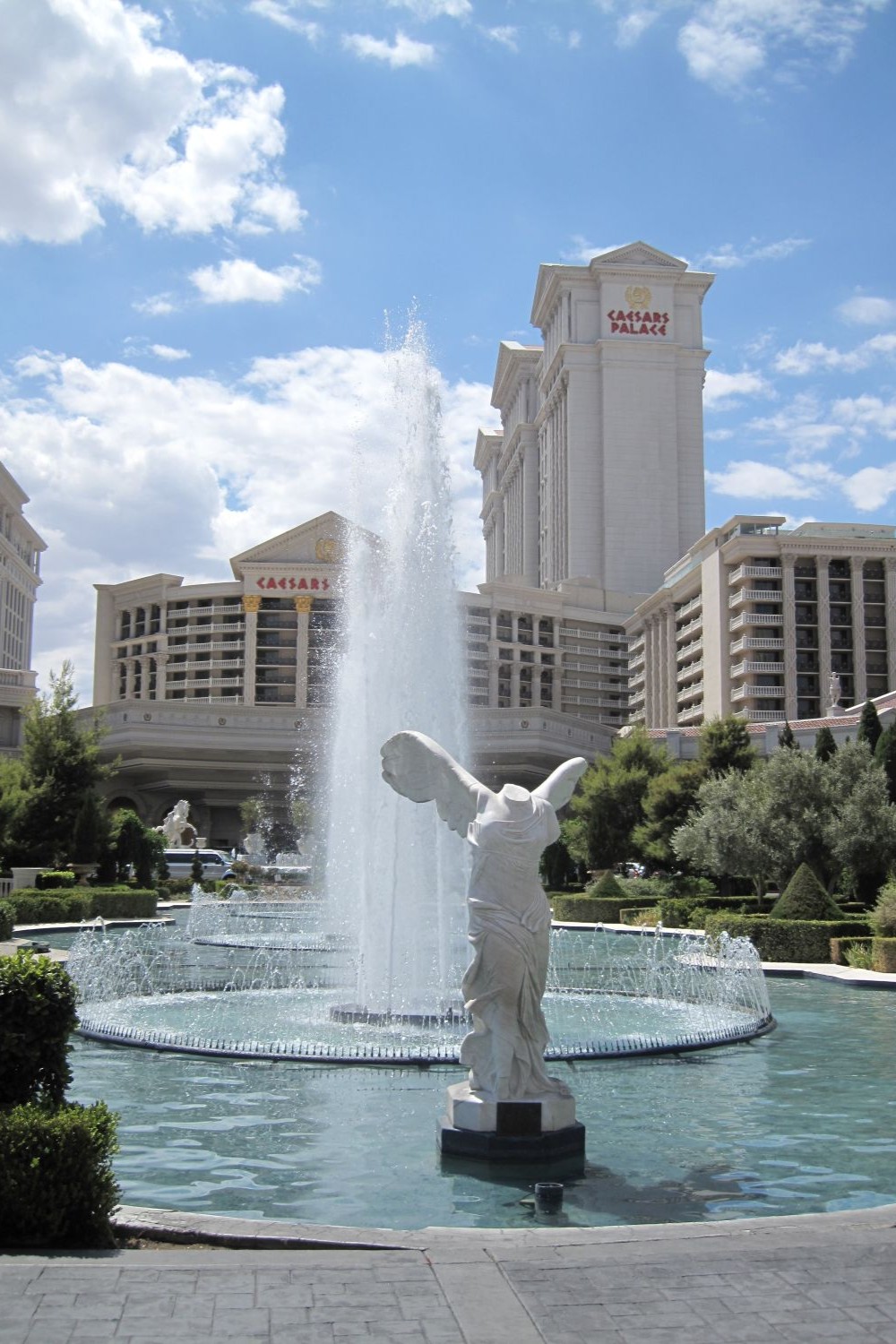
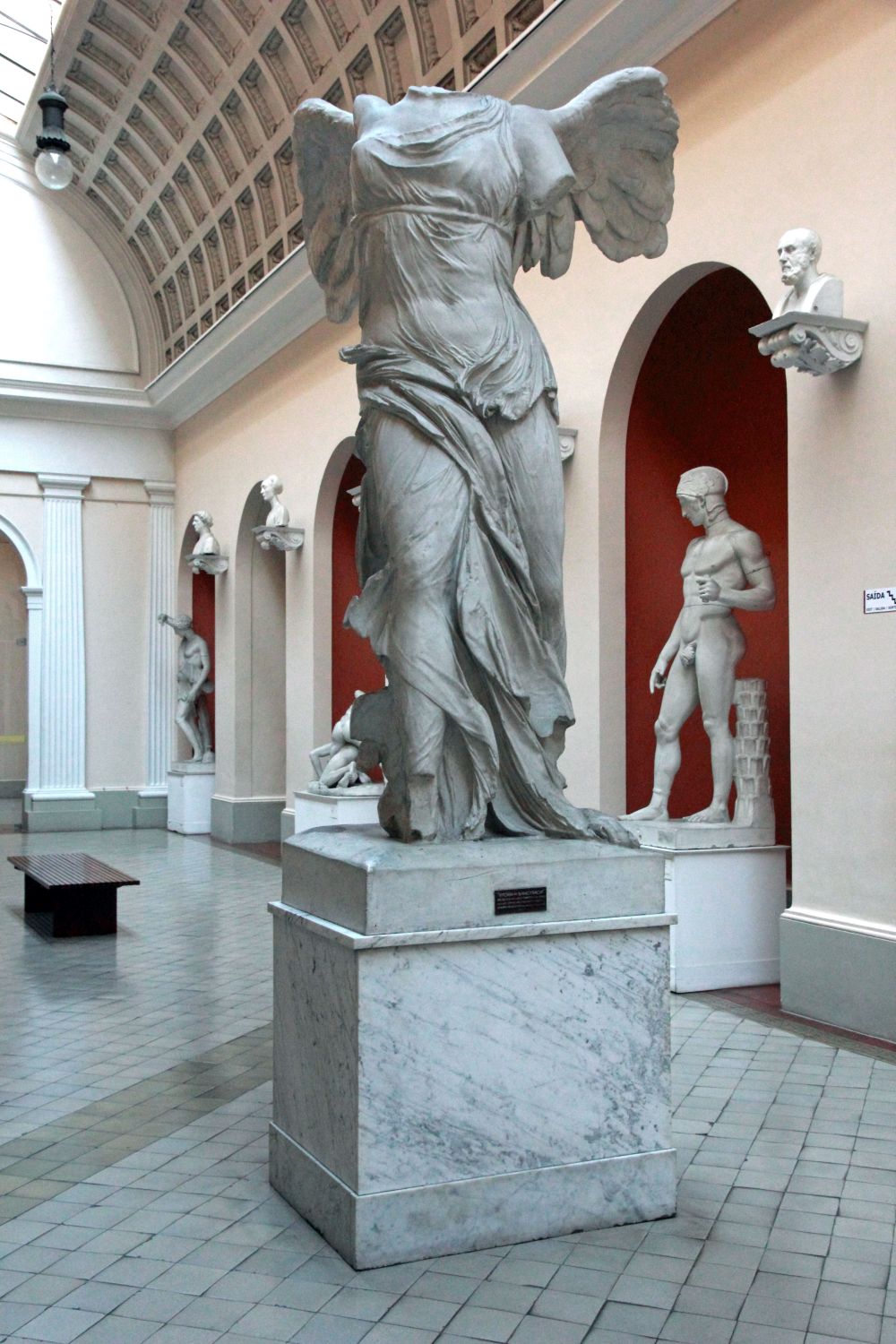
Today, reproductions of the statue can be found in museums, universities, art academies, and private collections around the world. For generations of artists, the sculpture has served as a masterclass in movement, composition, and emotional expression.
Its dramatic silhouette has inspired fashion designers, photographers, filmmakers, and luxury brands. Even people who know little about ancient Greece often recognize the image instantly.
What makes the sculpture so enduring is its universal message. The goddess Nike appears to push forward against invisible forces while remaining triumphant. That symbolism continues to resonate with modern audiences just as powerfully as it did with pilgrims arriving at Samothrace more than two millennia ago.
Where to Find the Winged Victory of Samothrace in the Louvre?
The Emotional Experience of Seeing It in Person
There is an undeniable theatrical quality to the encounter as the Winged Victory of Samothrace creates a rare moment of awe when climbing up the Daru staircase.
Perhaps that is why the sculpture remains one of the Louvre’s most unforgettable masterpieces. It is simultaneously an archaeological treasure, a survivor of history, a subject of modern debate, and a universal symbol of triumph.
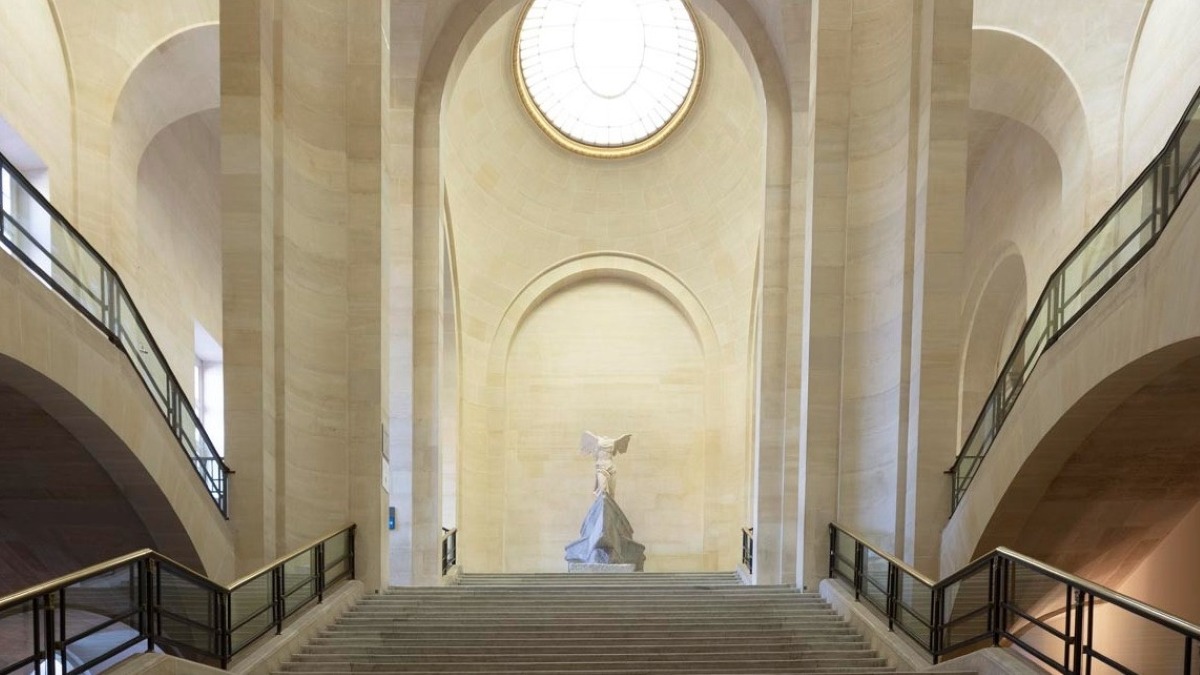
You can find the Winged Victory of Samothrace in the Denon Wing at the top of the Daru staircase on the first level.
It occupies one of the Louvre’s most spectacular locations and is almost impossible to miss once you enter the Denon wing as it is right around the corner from right end of the Grand Gallery. This makes it one of the busiest places in the museum.
Generally the Louvre becomes extremely busy, especially around midday. The morning can also be crowded as many believe this is the best time to go. We recommend exploring the Louvre Museum at Night or with a guide who can help you avoid the crowds when possible.
Nearby Masterpieces to Combine With Your Visit
After experiencing the Winged Victory of Samothrace, we encourage you to continue your journey through the Louvre with intention rather than wandering aimlessly. This area of the museum is one of the richest in artistic treasures, and with a thoughtful route, you can transform your visit into a truly memorable cultural experience.
From the Daru staircase, you are perfectly positioned to explore some of the Louvre’s most iconic masterpieces:
- The Mona Lisa, where Leonardo da Vinci’s enigmatic portrait draws visitors from around the world
- The Coronation of Napoleon, a monumental painting that immerses you in the grandeur of French imperial history
- The Venus de Milo, another masterpiece of ancient Greek sculpture, offering a fascinating contrast to the dynamism of the Winged Victory
- The Italian Renaissance galleries, featuring works by Raphael, Caravaggio, and Veronese
- French Romantic paintings like Liberty Leading the People by Delacroix and the Raft of Medusa by Géricault, where emotion and drama echo the intensity of the Hellenistic world
Each of these works connects in subtle ways to the themes embodied by the Winged Victory of Samothrace: power, beauty, storytelling, and human ambition.
FAQs about for the Winged Victory of Samothrace?
The Winged Victory of Samothrace is an ancient Greek marble sculpture representing Nike, the goddess of victory. Created around 190 BC, the Winged Victory of Samothrace is celebrated for its dramatic movement and powerful sense of motion.
The Winged Victory of Samothrace is located in the Denon Wing of the Louvre Museum, at the top of the Daru staircase. This central position makes the Winged Victory of Samothrace one of the most iconic and visible masterpieces in the museum.
The Winged Victory of Samothrace was discovered in fragments in 1863, and its head and arms were never found. Despite this, the Winged Victory of Samothrace remains one of the most powerful sculptures of antiquity.
The Winged Victory of Samothrace is famous for its extraordinary sense of movement, its dramatic composition, and its emotional intensity. The Winged Victory of Samothrace is widely considered one of the greatest masterpieces of Hellenistic Greek art.
Yes, you can visit the Winged Victory of Samothrace independently at the Louvre. However, many visitors choose a guided experience to better understand the history, symbolism, and artistic significance of the Winged Victory of Samothrace.
Have a Special Moment with an iconic Ancient Beauty at the Louvre!
In our experience, the difference between a tiring museum visit and an unforgettable one lies in curation. A carefully designed route allows you to move seamlessly from one masterpiece to another, building a narrative that enhances your understanding and enjoyment of each work.
This is precisely why many of our guests choose a private guided experience to transform the Louvre from an overwhelming collection into a coherent and deeply personal journey.
To discover her with the depth this piece deserves, consider a private Louvre experience curated by Paris to Versailles Private Tours.
Louvre Through the Ages
Learn more about the fascinating history and lavish royal lives with your expert guide!