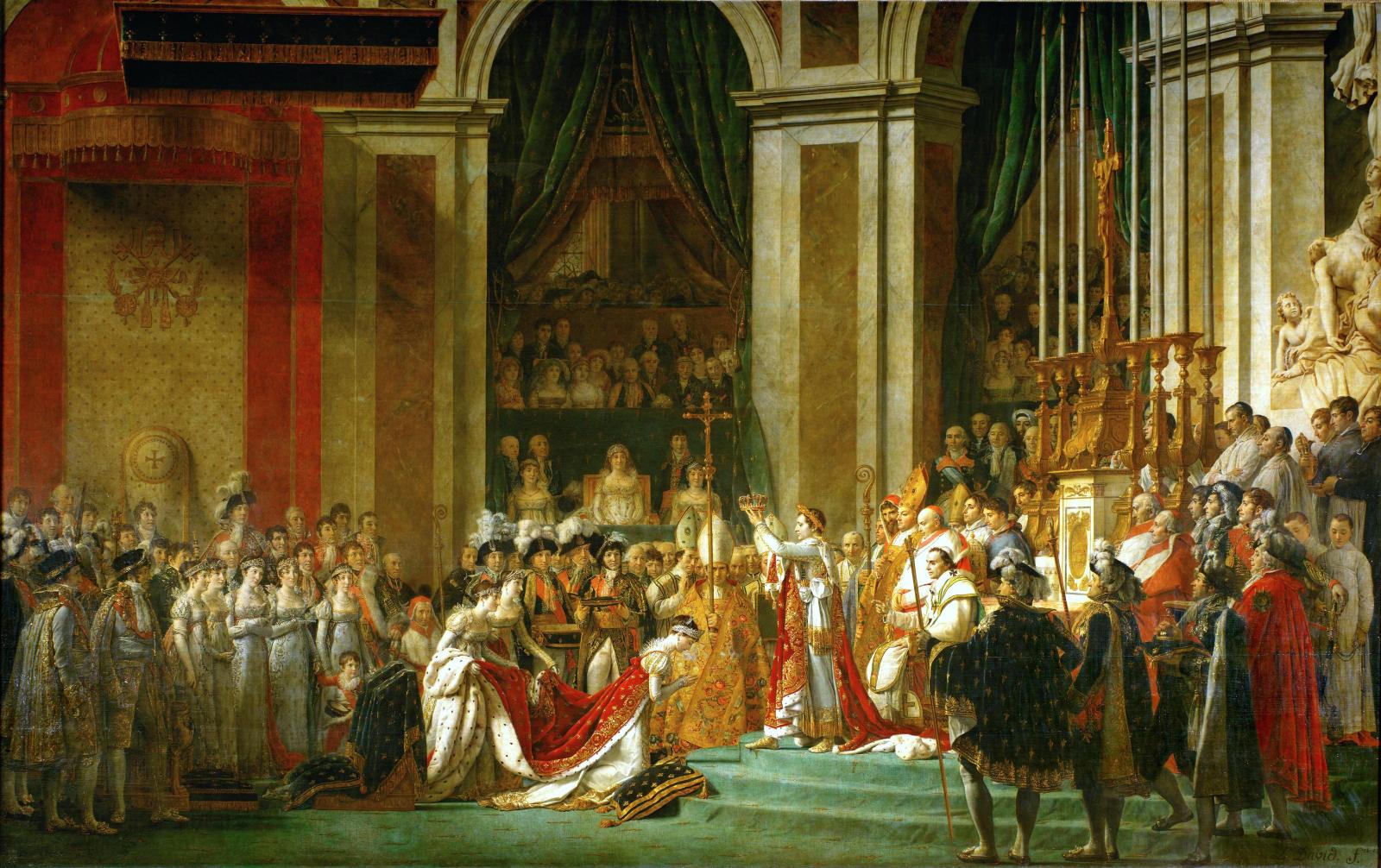
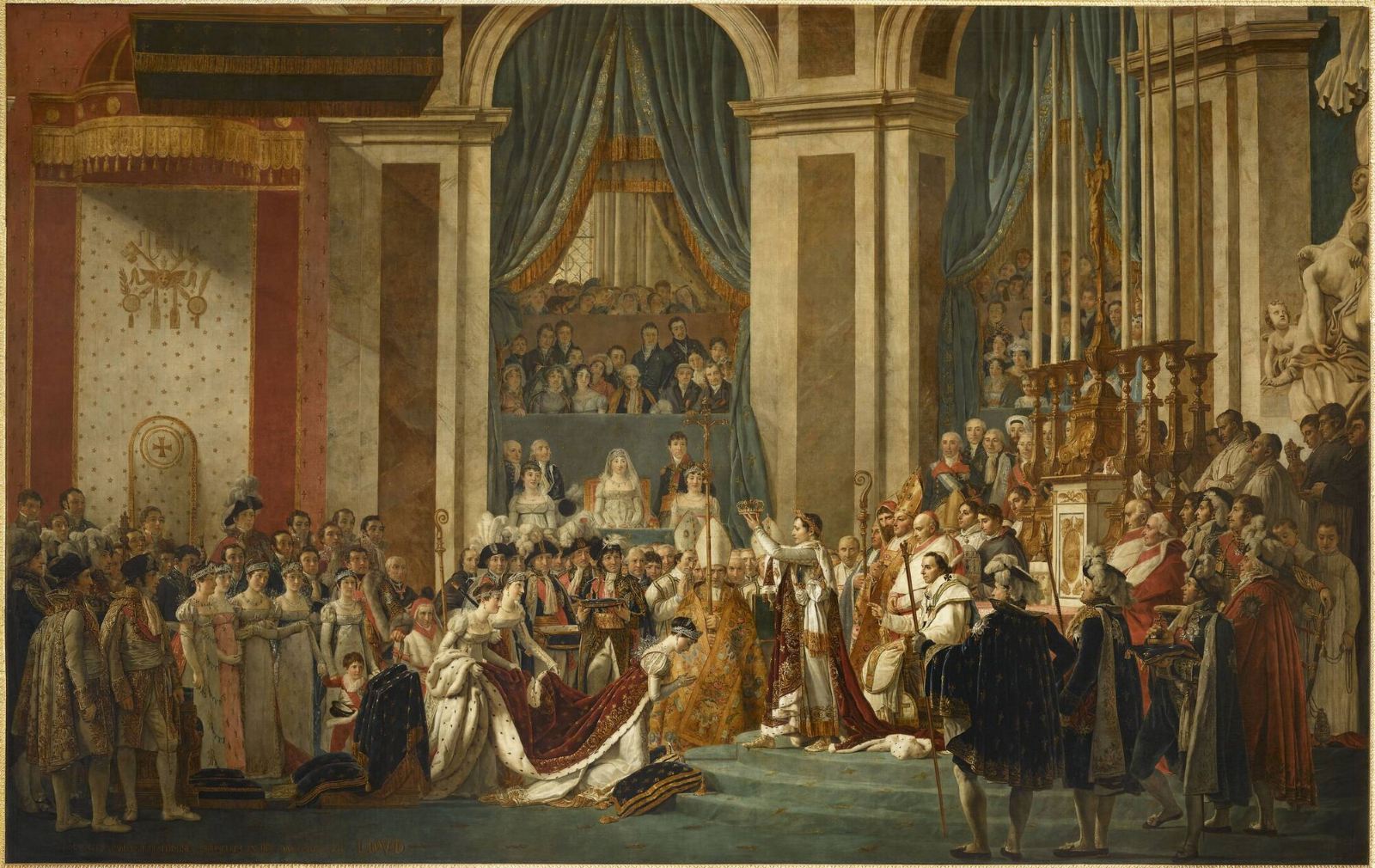
First exhibited in 1808, The Coronation of Napoleon by Jacques Louis David is a grand declaration of power, ambition, and carefully orchestrated symbolism. As one of the most famous and monumental paintings in the Louvre, it is a bold piece of political propaganda that still amazes viewers today. As you explore the Louvre, understanding this masterpiece elevates your experience from simple sightseeing to true historical immersion. Let us guide you through its history, secrets, and how to admire it in the most poignant way. If you wish to discover more masterpieces in the Louvre like this one, we invite you to explore our blog, where we share curated insights into the most important works to see in Paris and how to experience them at their very best.
Table of Contents
- 1 What Is “The Coronation of Napoleon” by Jacques-Louis David?
- 2 The Historical Context Behind "The Coronation of Napoleon" by David
- 3 A Visual Analysis of "The Coronation of Napoleon" by David
- 4 Who can we see at Napoleon's Coronation?
- 5 Where can you see the Coronation of Napoleon Today?
- 6 FAQs about The Coronation of Napoleon by David
- 7 Plan Your Visit to Step Inside this historical moment at the Louvre!
What Is “The Coronation of Napoleon” by Jacques-Louis David?
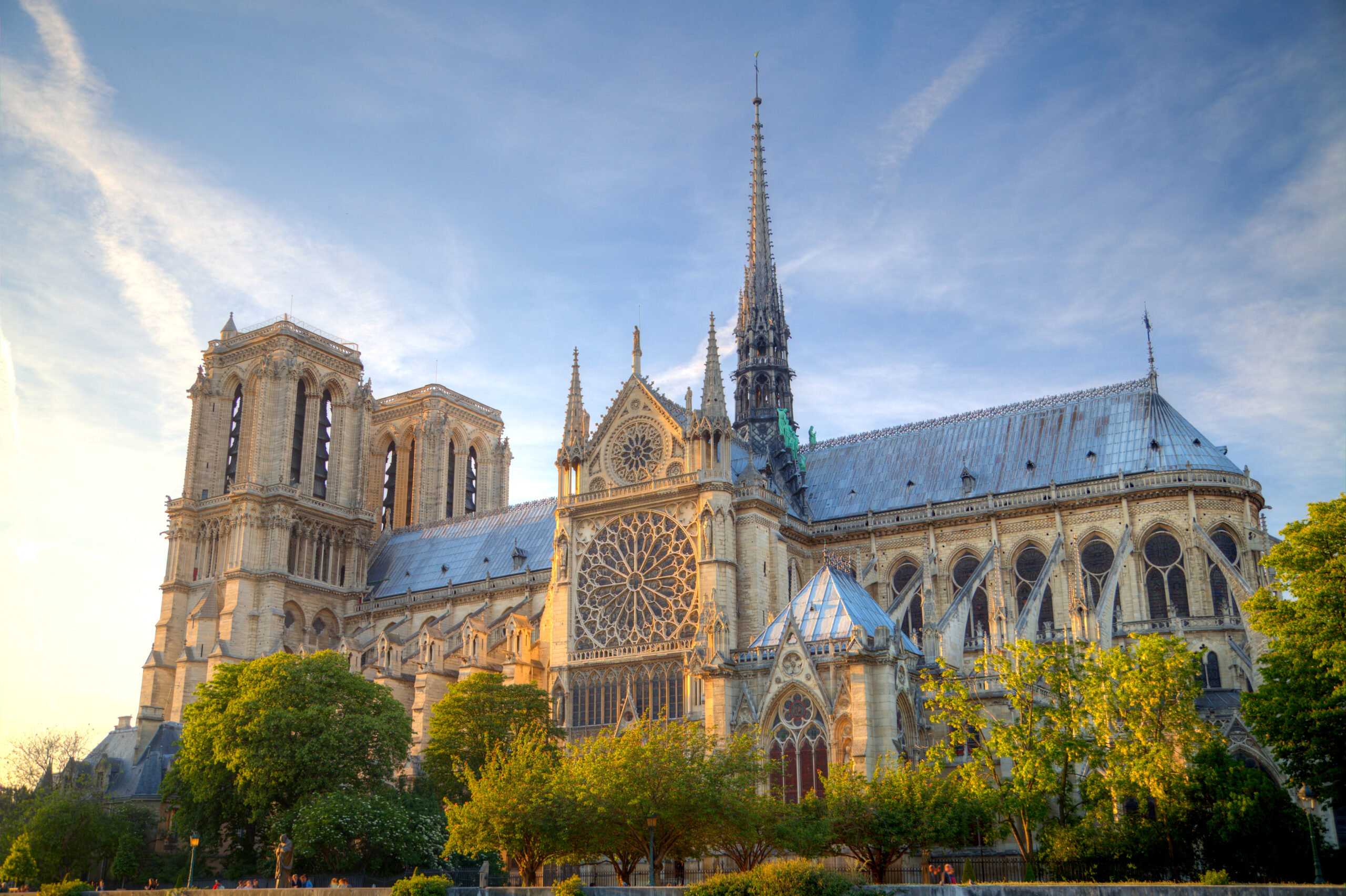
Created between 1805 and 1807, this monumental work was commissioned directly by Napoleon Bonaparte himself, at the height of his authority. It captures the coronation ceremony held at Notre-Dame Cathedral in 1804. From the very beginning, the intention was clear: this was not simply about documenting history, but about shaping how history would be remembered.
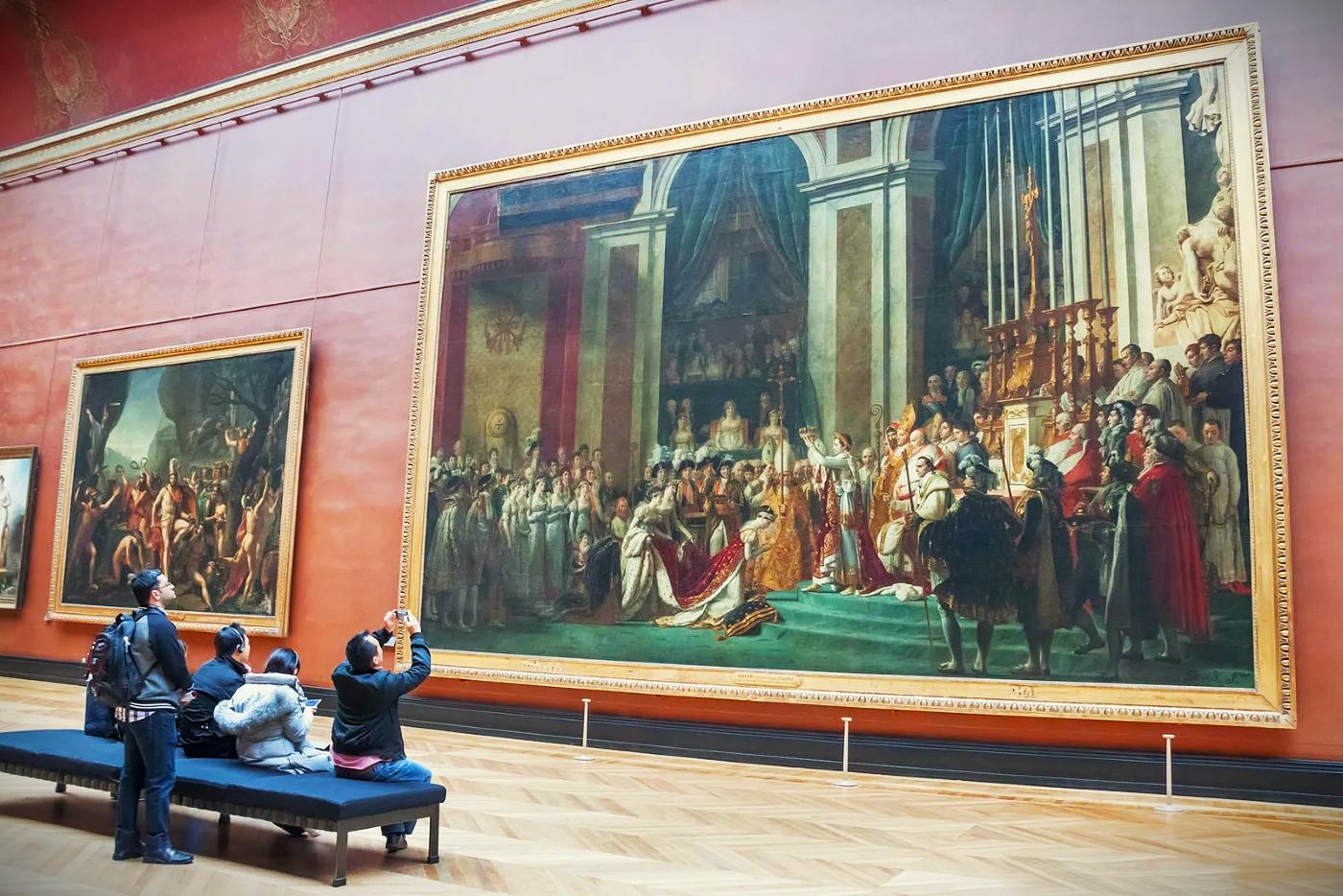
As you stand before The Coronation of Napoleon by David, you are immediately struck by its extraordinary scale at over 20 feet wide. It dominates the room, with visitors immediately gravitating to it. This was deliberate. David, a leading artist of his time, designed the composition to immerse you in the grandeur of the ceremony, almost as if you were seated among the elite guests inside Notre-Dame Cathedral.
What makes this masterpiece particularly fascinating is its dual nature. On one hand, it presents a highly detailed, almost documentary-like scene of the coronation with detailed representations of attendants. On the other, it subtly manipulates reality, such as adding or enhancing certain figures and omitting others.
This is precisely what makes The Coronation of Napoleon by David unforgettable. It is a political narrative you experience, especially if you understand the history behind the event and figures.
Who Was the Artist, Jacques-Louis David?
Widely regarded as the leading Neoclassical painter, David championed a return to the ideals of ancient Rome and Greece: clarity, order, and moral seriousness. His works are defined by their precision, dramatic composition, and almost theatrical intensity, all qualities you will immediately recognize in The Coronation of Napoleon by David.
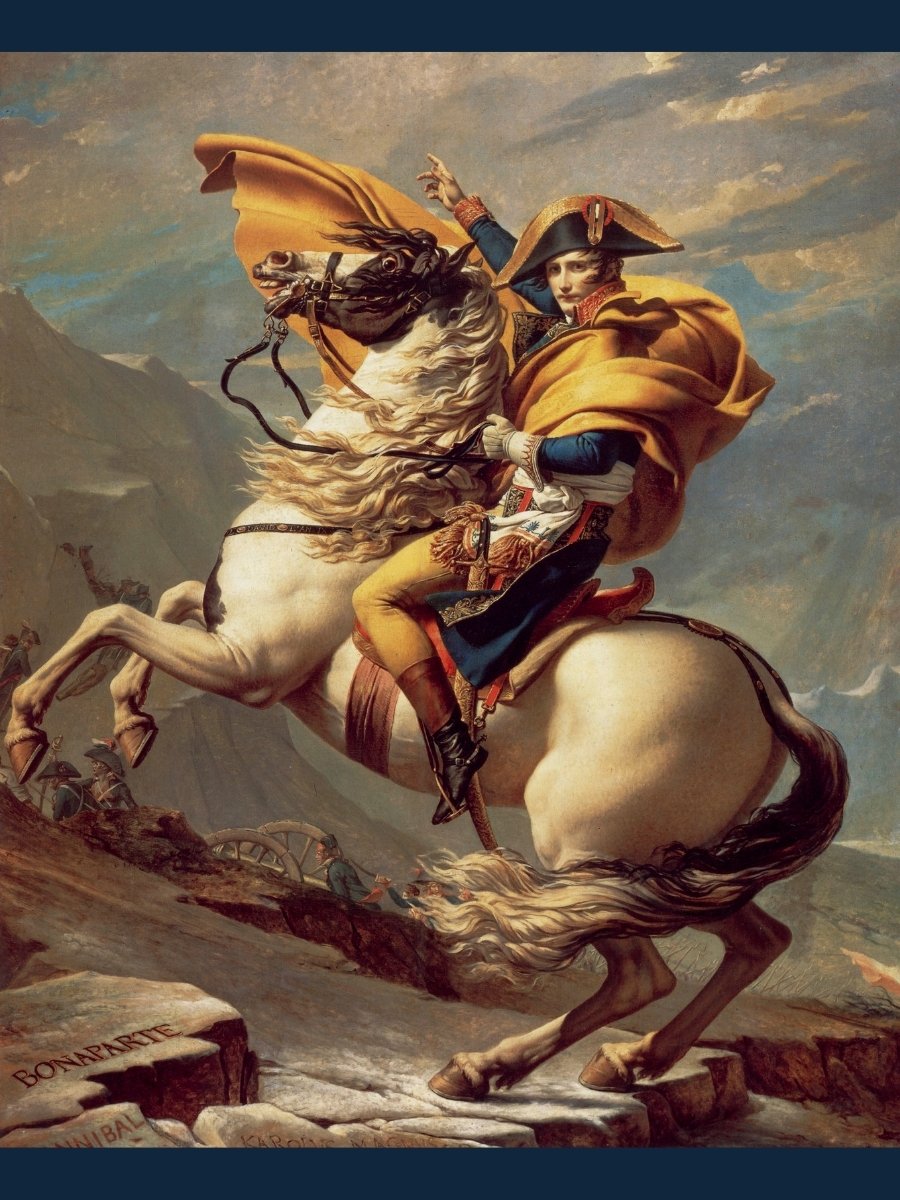
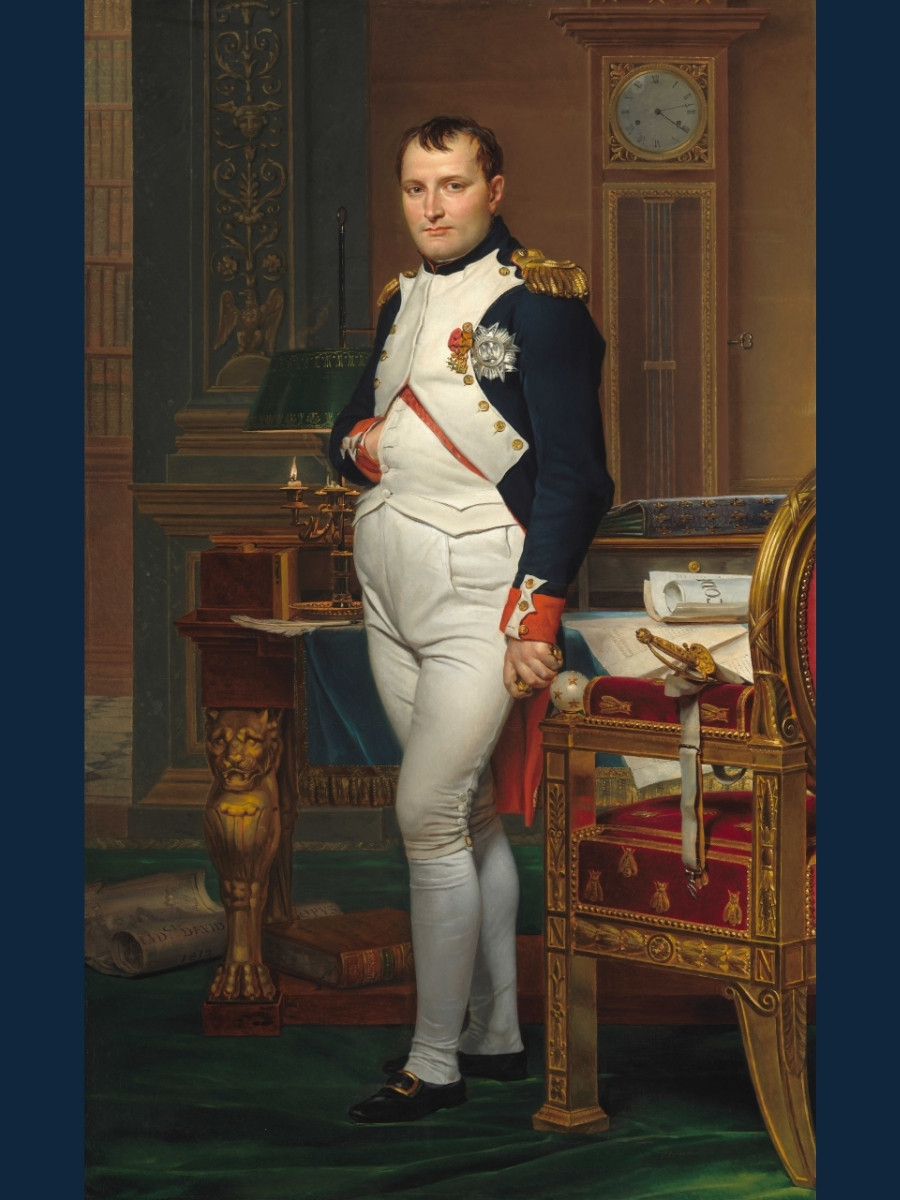
David was not merely an artist, but a political actor. He was previously involved in Revolutionary activities, serving as a close ally of Maximilien Robespierre, and was instrumental in the creation of the Louvre as a public museum. This political involvement allowed him to seamlessly transition into becoming Napoleon’s visual propagandist. Perhaps you are familiar with some of his other portraits of the infamous French general?
The Historical Context Behind "The Coronation of Napoleon" by David
Despite the name of the painting, The Coronation of Napoleon captures the moment that Napoleon crowned Empress Joséphine, who is seen kneeling before the Emperor. Just before this, Napoleon famously took the laurel crown from Pope Pius VII and placed it on his own head before crowning Joséphine.
This moment is highly symbolic.
Traditionally, the French kings would be crowned by the church in the Cathedral of Reims in Champagne. Yet Napoleon chose for it to be inside Notre Dame de Paris. It was planned that the coronation would follow the Roman Pontifical as Pope Pius VII agreed to attend and perform the ceremony, but Napoleon implemented several changes such as the inclusion of several prayers and formulas from the coronations of French kings, to bless the regalia as it was delivered.
While Pius VII was reciting some text, Napoleon took the symbolic laurel wreath and crowned himself, before crowning Josephine. By doing so, he asserted that his authority and legitimacy came from himself and the French people, not the Church. Napoleon’s ascension to emperor was overwhelmingly supported by the French people as seen in the 1804 French constitutional referendum. Although the validity of this election has been called into question by historians.
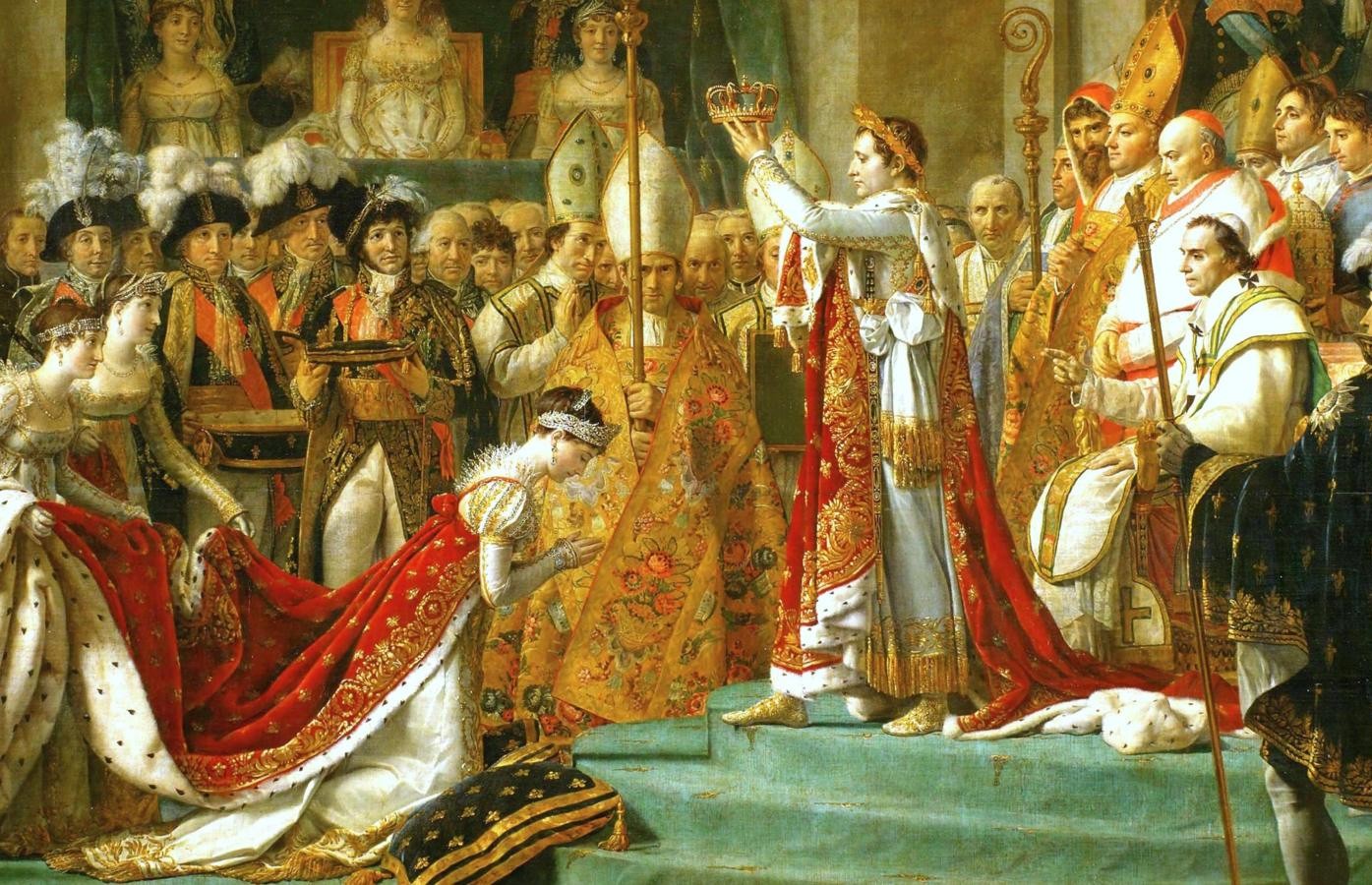
David amplifies this narrative. Napoleon stands tall and composed, while Pope Pius VII appears passive, almost secondary. It is thought that Pius VII was aware beforehand that Napoleon would do this, but for the crowd it was unexpected.
Napoleon's Coronation and the Roots of French Laïcité
We can also analyze The Coronation of Napoleon through a modern lens, as it is related to sometimes complicated French principle of laïcité (secularism), which would only officially become law in 1905, nearly a century later.
In 1789, the Declaration of the Rights of Man and of the Citizen established the principle of freedom of conscience and religion. The Revolution continued developing these secularist ideas, aligned with the Enlightenment, even dismantling/destroying churches and religious relics.
When Napoleon came to power, he restored some authority to the Church with the Concordat of 1801 and maintained complex relationships with religion. However, when Napoleon takes the crown from Pope Pius VII and places it upon his own head, he continues redefining the relationship between Church and State. Political power no longer derives from divine authority granted by the Church. Instead, it emanates from the individual, the nation, and the will of the people, as maintained in the Declaration.
This moment, immortalized in The Coronation of Napoleon by David, can be seen as an early expression of what would become a cornerstone of French identity: the clear separation between religious influence and state power.
In our view, this is what makes The Coronation of Napoleon by David so compelling for today’s audience. It captures a turning point where France begins to move toward a system where the State stands independent from the Church, while highlighting the cultural entanglement and ties with the Catholic Church that also still persist today.
A Visual Analysis of "The Coronation of Napoleon" by David
Composition and Structure of "The Coronation of Napoleon"
As you approach The Coronation of Napoleon by David, your eye is immediately drawn to the center of the scene, where Napoleon stands, poised and authoritative, in the act of crowning Empress Josephine. This is no accident. David masterfully constructs the composition to ensure that your gaze follows the narrative of power.
The composition relies heavily on symmetry and hierarchy, two defining principles of Neoclassical art. The figures are arranged in a structured, almost architectural manner, creating a sense of order, control, and inevitability. Every character has a precise place, reflecting the rigid social and political order Napoleon sought to impose.
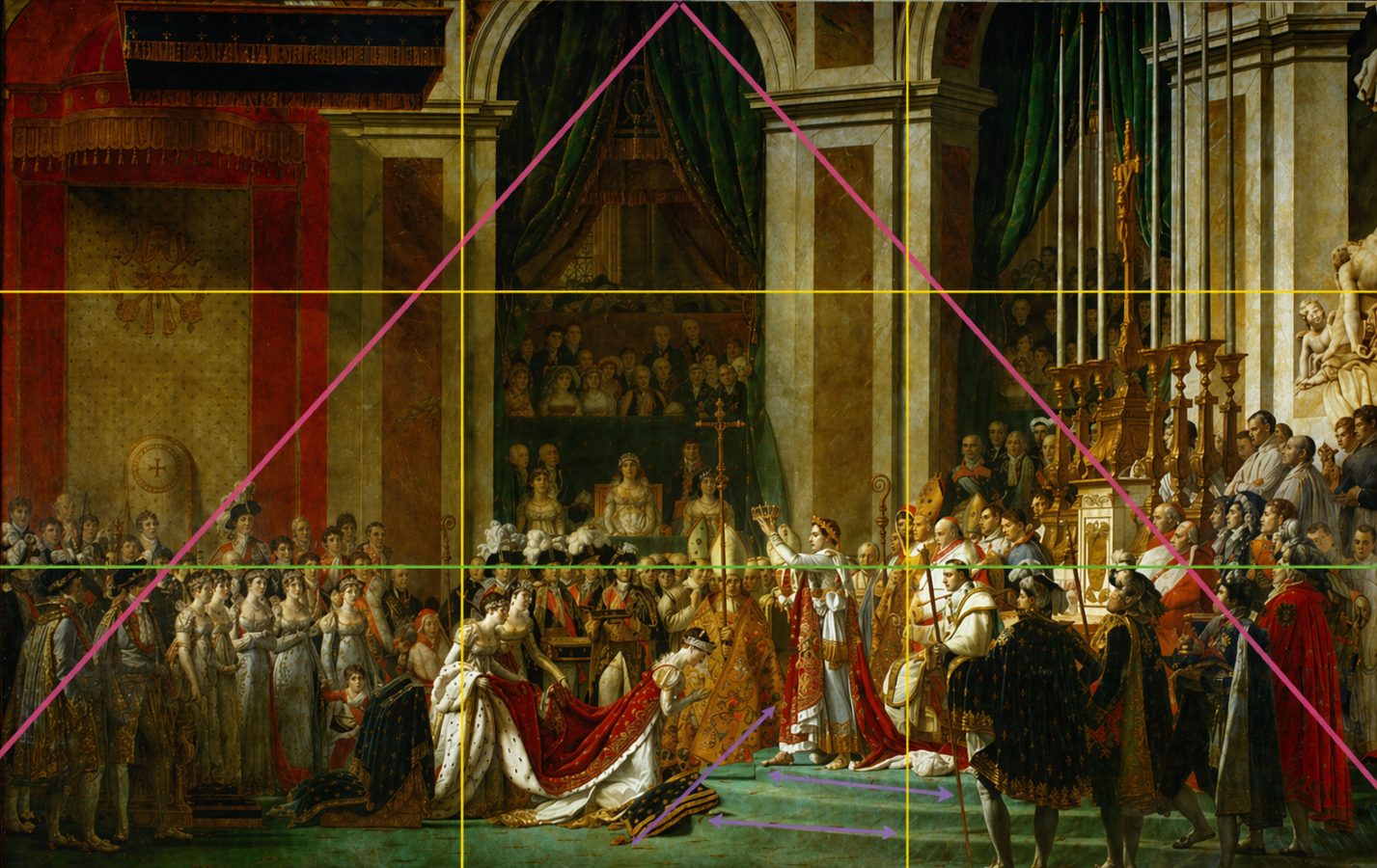
Look more closely, and you will notice how David uses lines, gestures, and gazes to guide you. Arms extend, heads turn, and fabrics flow, all converging toward the central act. Even the grand setting of Notre-Dame becomes a theatrical backdrop rather than a religious site, framing the ceremony like a stage designed for imperial spectacle.
Who can we see at Napoleon's Coronation?
Because of its grand size, one of the most captivating aspects of “The Coronation of Napoleon” by David is its full size depictions of people, with over 100 figures represented.
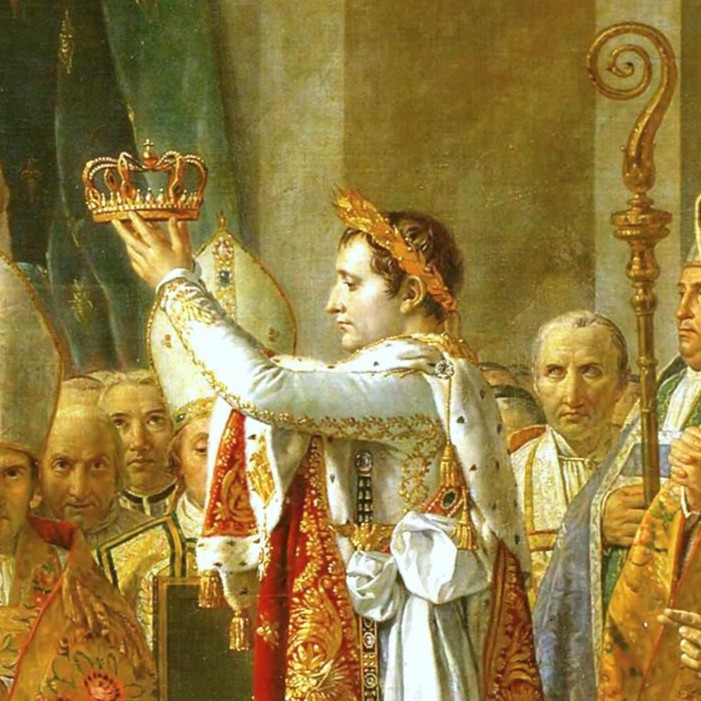
Napoleon Bonaparte – At the very center of this grand painting, Napoleon stands as the ultimate architect of his own destiny. Draped in imperial regalia, he radiates absolute authority and control, choosing to crown Joséphine himself, a bold visual declaration that his power is self-made, not granted.
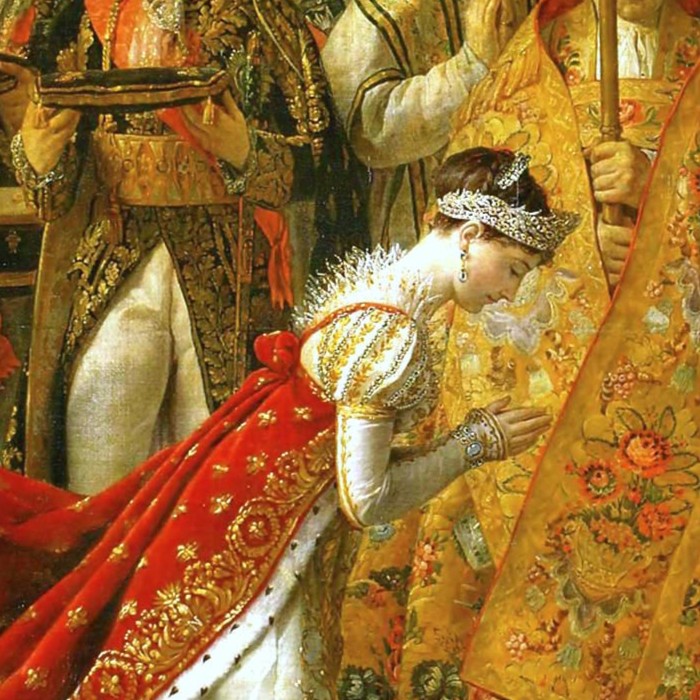
Empress Joséphine – Kneeling gracefully before Napoleon, Joséphine embodies both elegance and submission within the imperial narrative and new social norms under the French Civil Code. While she is elevated to Empress, her position reinforces Napoleon’s dominance. Yet David paints her with remarkable dignity and serenity, softening the political message with emotional nuance.
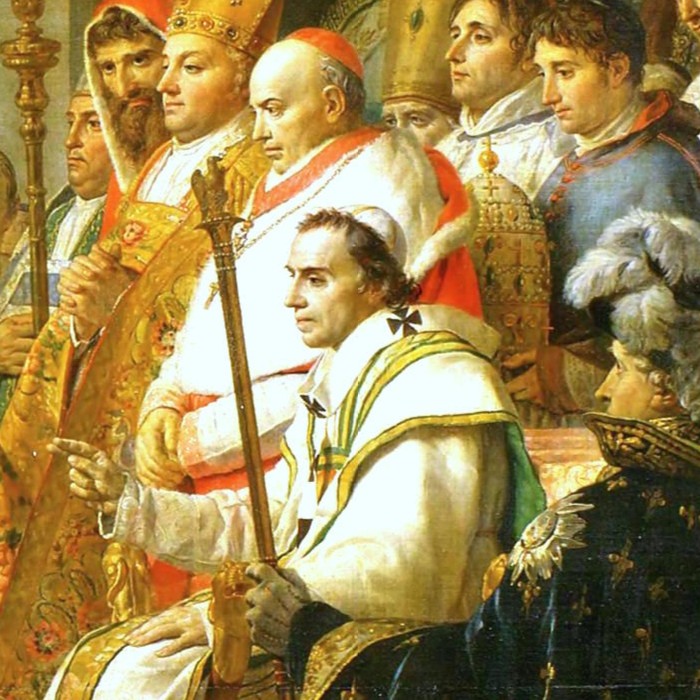
Pope Pius VII – Although present at this historic ceremony, the Pope is visually diminished and passive. Seated and offering a restrained gesture of blessing, he appears almost secondary. This subtle staging reinforces a powerful message. Napoleon stands above the Church, redefining the traditional balance between spiritual and political authority.
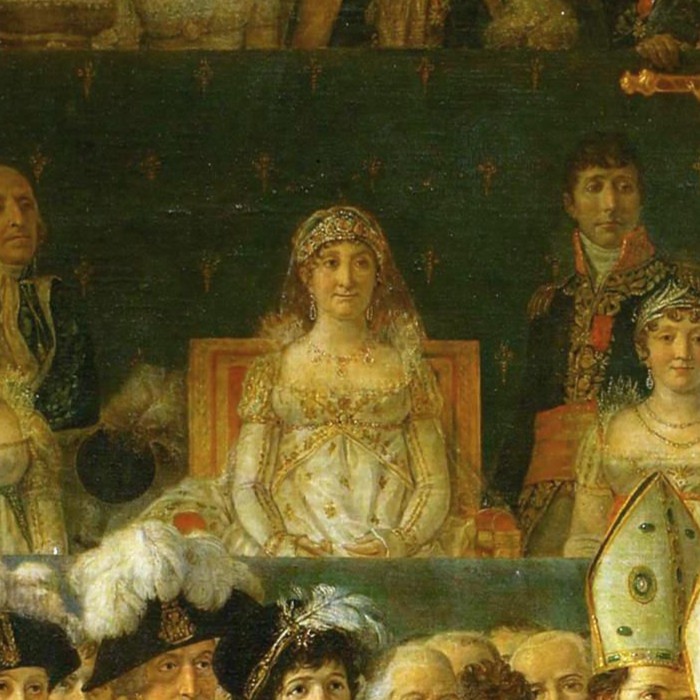
Napoleon’s Mother, Maria Letizia Ramolino – Positioned prominently in the stands, Napoleon’s mother appears as a composed and dignified witness. In reality, she did not attend the ceremony. Her inclusion here is entirely strategic. Napoleon uses David’s canvas to project an image of family unity and legitimacy, reinforcing his dynastic ambitions.
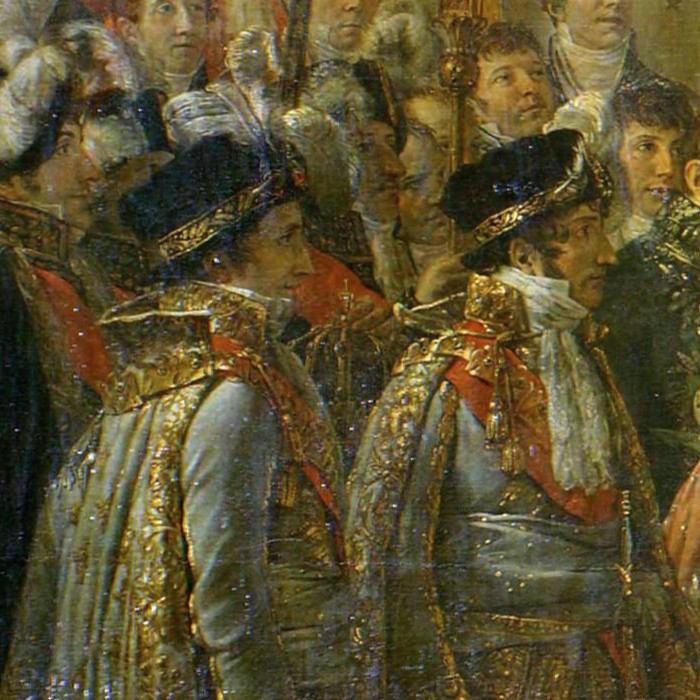
Napoleon’s Brothers, Joseph and Louis – Placed among the elite figures, Joseph and Louis represent the extension of Napoleon’s power through family ties. Louis, notably the future father of Napoleon III, hints at the continuity of the Bonaparte dynasty. Their presence underscores the transformation of a revolutionary general into the founder of a ruling lineage. Their other brother Lucien is absent from the scene because he was in a self imposed exile.
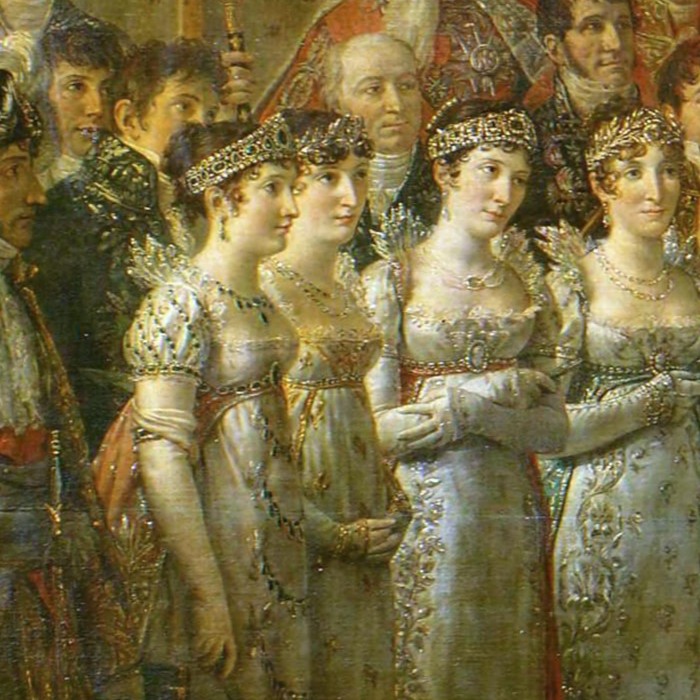
Napoleon’s Sisters, Caroline, Pauline and Elisa – Elegantly dressed and carefully arranged, Napoleon’s sisters contribute to the theatrical grandeur of the scene. Beyond their decorative role, they symbolize the integration of the Bonaparte family into imperial nobility, reinforcing the image of a new court.
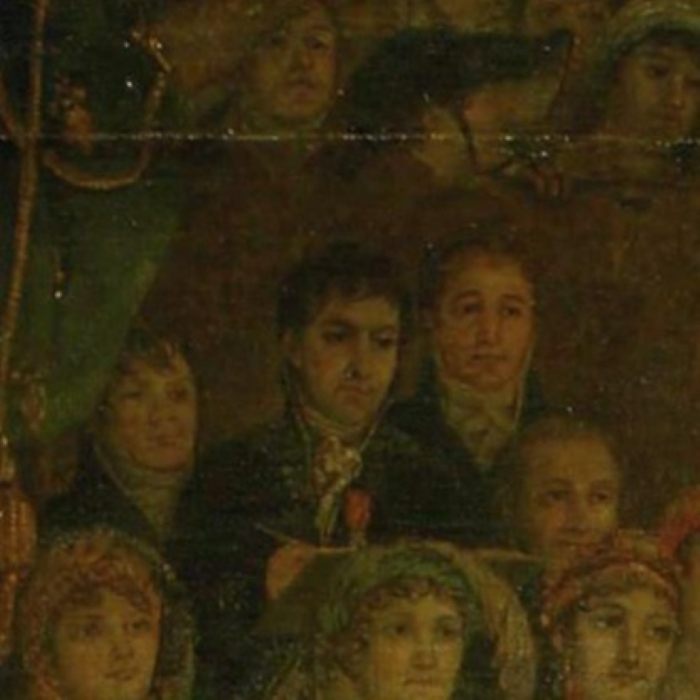
Jacques-Louis David (Self-Portrait) – Look closely into the crowd, and you will find David himself, quietly observing the scene. This discreet self-portrait is both a signature and a statement: the artist positions himself as a witness to history and a key architect of its visual legacy.
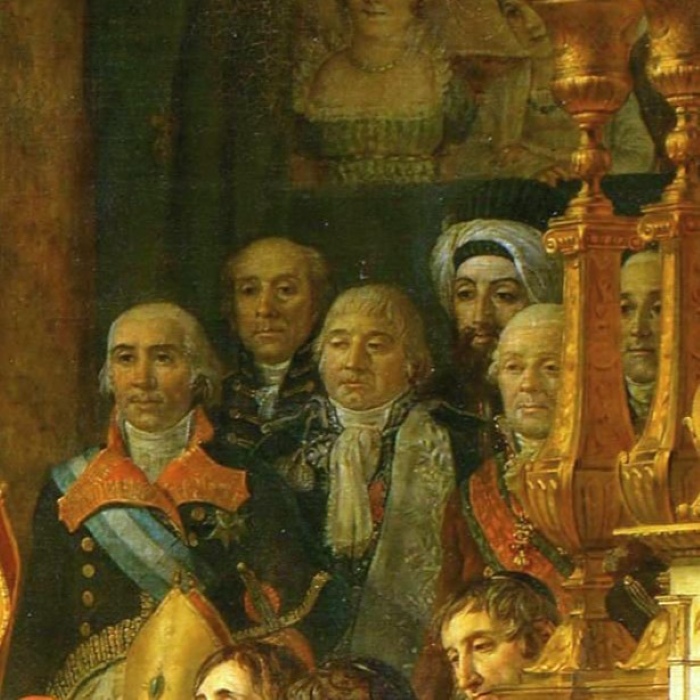
Foreign Ambassadors (Austria, Ottoman Empire, United States) – Scattered in the back of the assembly, these diplomats signal the international recognition of Napoleon’s rule. Their presence transforms the ceremony into a global event, suggesting that the rise of Napoleon is not merely French, but a shift observed by the entire world order.
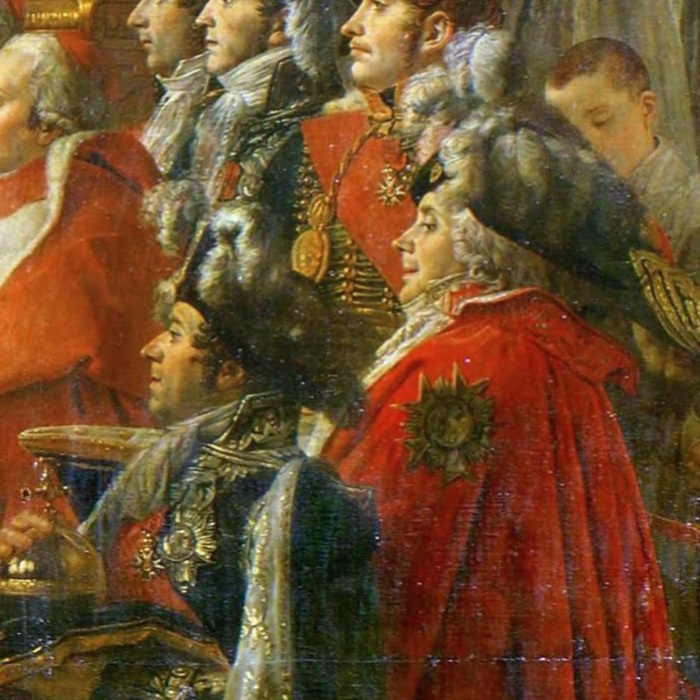
on the right in red – Charles-Maurice de Talleyrand-Périgord – a political chameleon, he serveed as Minister of Foreign Affairs, and was considered a master diplomat. He is holding a basket containing Napoleon’s robes of state
on the left – Louis-Alexandre Berthier – Marshal of France and the chief of staff of the Grande Armée. He is holding a globe representing the French Empire.
Where can you see the Coronation of Napoleon Today?
After the fall of Napoleon and political exile of David, the painting became a part of the national collection and was put on display at Versailles. Then, in 1889 it was transferred to the Louvre. A replica, also done by David during his exile, is found at the Chateau de Versailles.
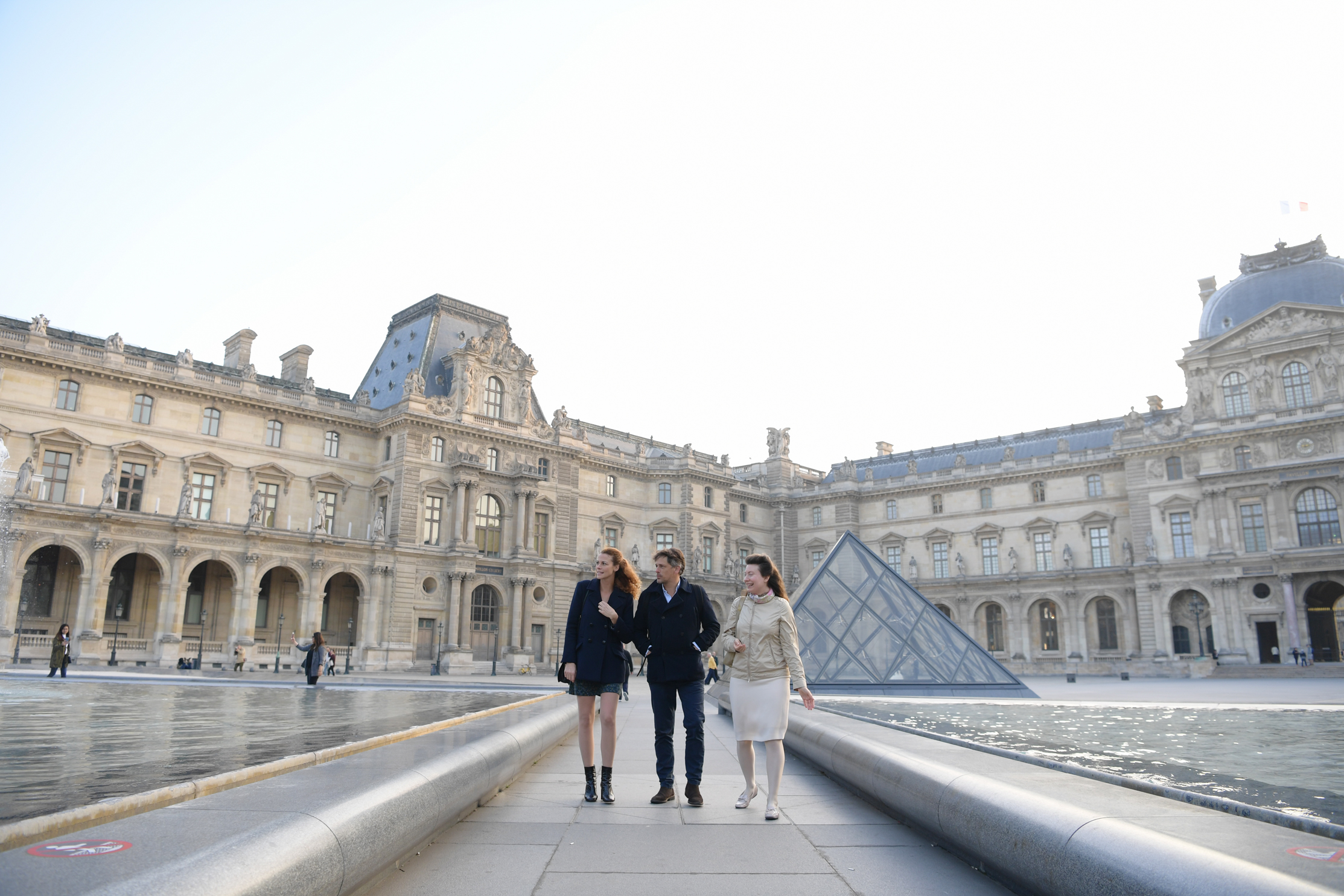
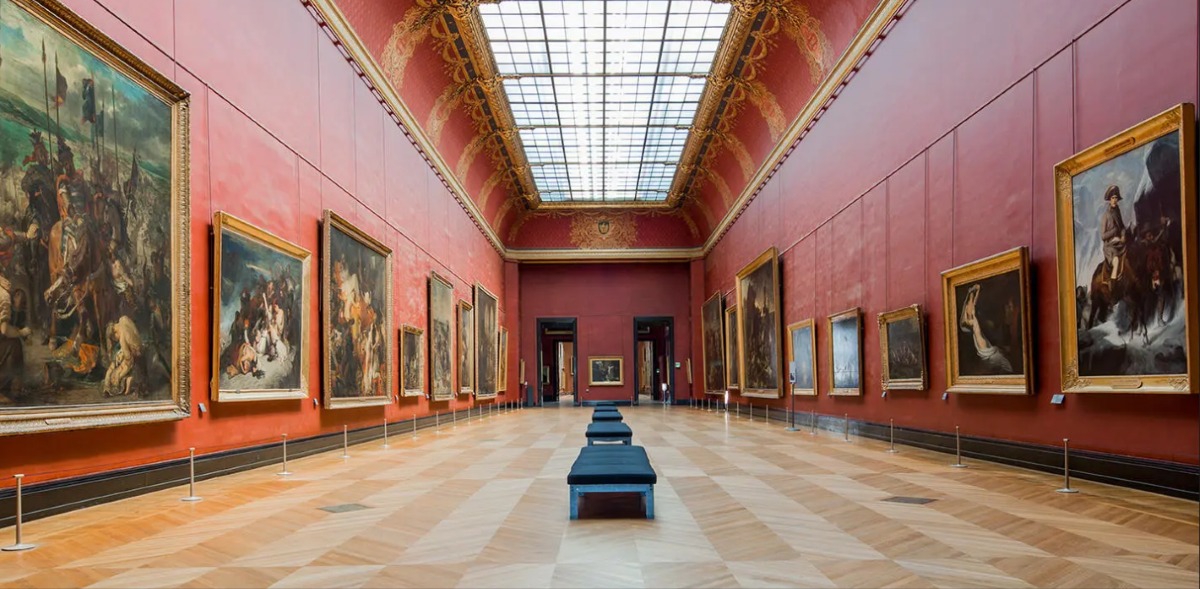
The painting stands out in the Denon Wing, Room 702. To find it, enter the Louvre through the Pyramid entrance, then follow signs toward the Denon Wing, which the most visited and prestigious section of the museum, home to iconic works such as the Mona Lisa and Winged Victory of Samothrace. From the Denon entrance hall, take the stairs up toward the Italian paintings and continue following signs for “Peintures Françaises” (French Paintings).
As we move deeper into the museum, we will reach the Salle Daru (Room 702), a series of richly decorated red-walled galleries often referred to as the “Red Rooms.” These spaces are dedicated to large-scale historical paintings, designed to impress and immerse you. It is here, surrounded by other monumental works, that The Coronation of Napoleon by David reveals its full impact.
Understanding the layout of the Denon Wing is essential. It is the Louvre’s grand narrative route, guiding you through the most celebrated masterpieces. In our view, arriving at this painting after passing through these iconic spaces heightens the experience.
While many visitors pass quickly through the Louvre, this masterpiece deserves time, context, and perspective. We strongly recommend experiencing it slowly. There are benches located in front of the painting, which allows you to sit and interact with the figures on a deeper level.
It is also best to visit early in the morning or in the Louvre museum at night to enjoy a less crowded viewing. The scale of the painting requires open space to fully appreciate.
FAQs about The Coronation of Napoleon by David
In the Coronation of Napoleon, David painted the moment Napoleon crowned Josephine to demonstrate Napoleon’s power as self-made and independent from the Church.
The Coronation of Napoleon measures approximately 6.21 meters high (20 feet) and 9.79 meters wide (30 feet). It is one of the largest paintings in the Louvre. The Wedding of Cana 6.77 meters (22.2 ft) by 9.94 (32.6 ft) is only slightly larger!
Absolutely. The scale, detail, and atmosphere of this grand painting by David cannot be replicated digitally.
In this painting the Coronation of Napoleon, David painted many well known figures of the time, including Napoleon’s family such as his mother who was actually not present at the event!
Plan Your Visit to Step Inside this historical moment at the Louvre!
Standing before The Coronation of Napoleon by David is impressive. Understanding it transforms everything.
Imagine discovering this masterpiece with a licensed expert who reveals the hidden symbols, political staging, and human drama behind every figure. Imagine moving seamlessly through the Louvre, the world’s busiest museum.
From priority access to a private guide and chauffeur, every detail is crafted for discretion, comfort, and intellectual depth with Paris to Versailles Private Tours.
Louvre Through the Ages
Learn more about the fascinating history and lavish royal lives with your expert guide!