
Few paintings in the Louvre provoke as much emotion as The Raft of the Medusa. Monumental, dramatic, and realistic, Théodore Géricault’s masterpiece captures a moment of despair and hope that continues to fascinate visitors more than two centuries after its creation.
Found amidst some of the Louvre’s most famous works, art lovers will find themselves mesmerized by this enormous canvas depicting shipwreck survivors fighting for their lives. Behind its theatrical composition lies a true story of political scandal, human endurance, and artistic obsession.
Understanding The Raft of the Medusa before your visit will completely transform your experience at the Louvre and reveal why this work remains one of the most influential paintings in French art history.
Table of Contents
- 1 The Raft of the Medusa is a Monumental Masterpiece of French Romanticism
- 2 The Story Behind the Raft of the Medusa
- 3 The Obsessive Creation of Raft of the Medusa
- 4 Artistic Analysis of the Raft of the Medusa
- 5 Where to Find The Raft of the Medusa at the Louvre
- 6 FAQs about The Raft of the Medusa
- 7 Every figure on Géricault's raft tells a story. Discover The Raft of the Medusa through the eyes of an expert.
The Raft of the Medusa is a Monumental Masterpiece of French Romanticism
Painted between 1818 and 1819 by Théodore Géricault, The Raft of the Medusa is a defining work of early French Romanticism, an artistic movement that emphasized emotion, individual experience, and the dramatic power of nature over the rational ideals of the Enlightenment. The most famous Romantic-era painting, Liberty Leading the People, can be found hanging nearby in the same gallery.
Measuring 4.91 meters high by 7.16 meters wide (16 x 23 feet), the work immediately overwhelms viewers with its monumental scale and emotional intensity, drawing them into the chaos and darkness of the scene.
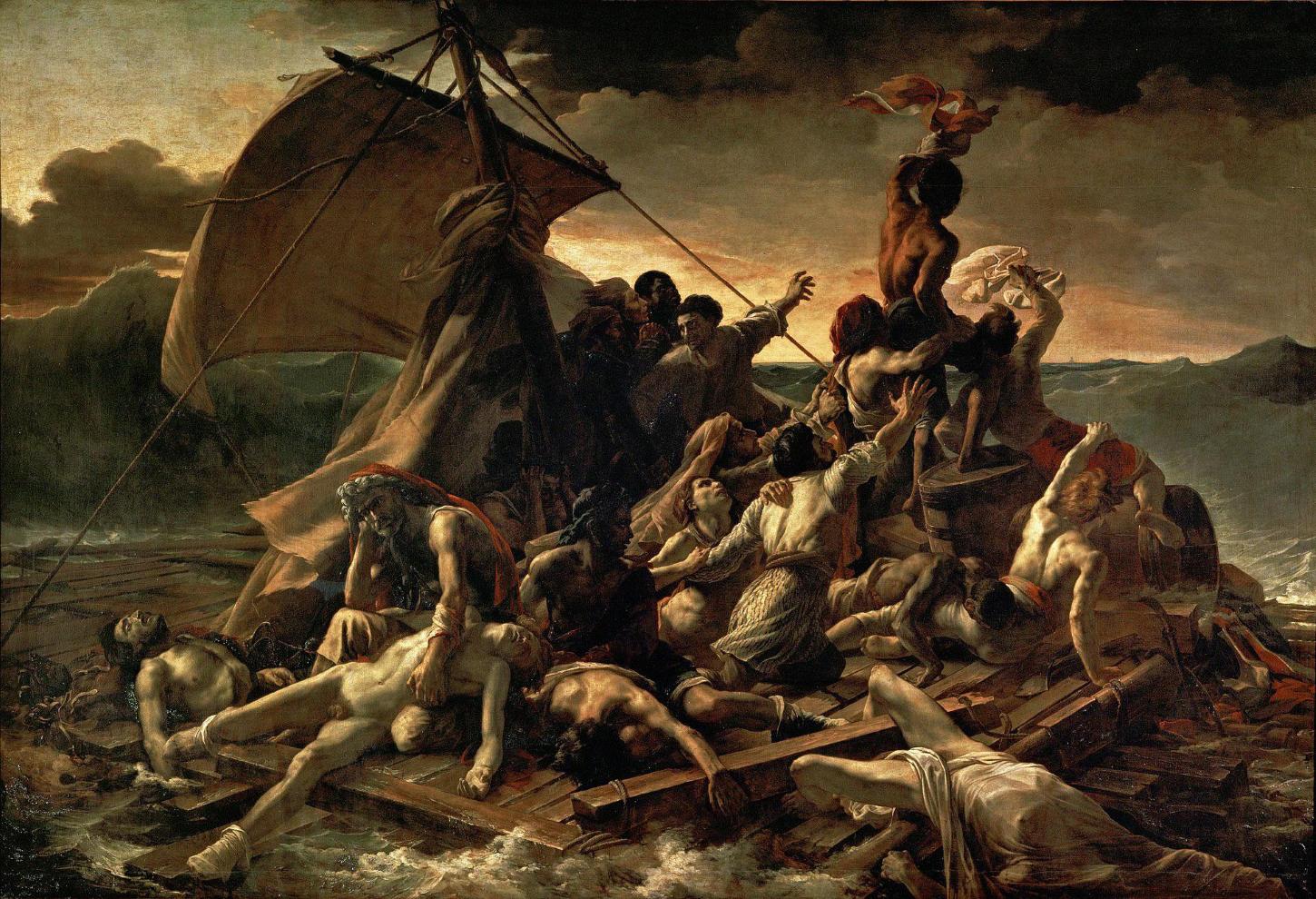
In a daring move, Géricault chose to depict a recent and highly controversial political scandal rather than a distant historical or mythological subject like his contemporaries. This bold decision challenged artistic conventions of the time and demonstrated how closely intertwined politics and art have always been, as also seen in works like The Coronation of Napoleon by Jacques-Louis David. This was also an un-commissioned work, which gave the young artist great creative freedom.
The painting captures the desperate moment when survivors stranded on a makeshift raft glimpse a rescue ship on the distant horizon after enduring nearly two weeks at sea. This dramatic instant between despair and hope gives the composition its dramatic tension and emotional power.
The Story Behind the Raft of the Medusa
The Shipwreck That Shocked France
The story behind Géricault’s artistic choices was a true, recent, and harrowing disaster at sea. In 1816, shortly after the restoration of the French monarchy, the French naval frigate Méduse departed for colonial Senegal under the command of Captain Hugues Duroy de Chaumareys. His appointment was widely criticized due to his lack of recent maritime experience and he had largely secured his position through political connections. This was unfortunately a common practice during this time, with offices awarded to loyal but often incompetent people. Off the coast of modern-day Mauritania, the ship ran aground on a sandbank, triggering panic among those on board and leading to a desperate evacuation for around 400 people.
The Raft of Despair
Unfortunately, there was not enough lifeboats for everyone aboard and approximately 147 passengers and crew members were placed on a large, hastily constructed raft. 17 crew members decided to stay aboard the partially sinking Méduse, rather than the raft. The initial plan was for the lifeboats to tow the raft to safety, but the highest ranking members on the life boats believed the raft was slowing them down and cut the ropes connecting them, leaving the raft adrift in the open Atlantic Ocean with little supplies.
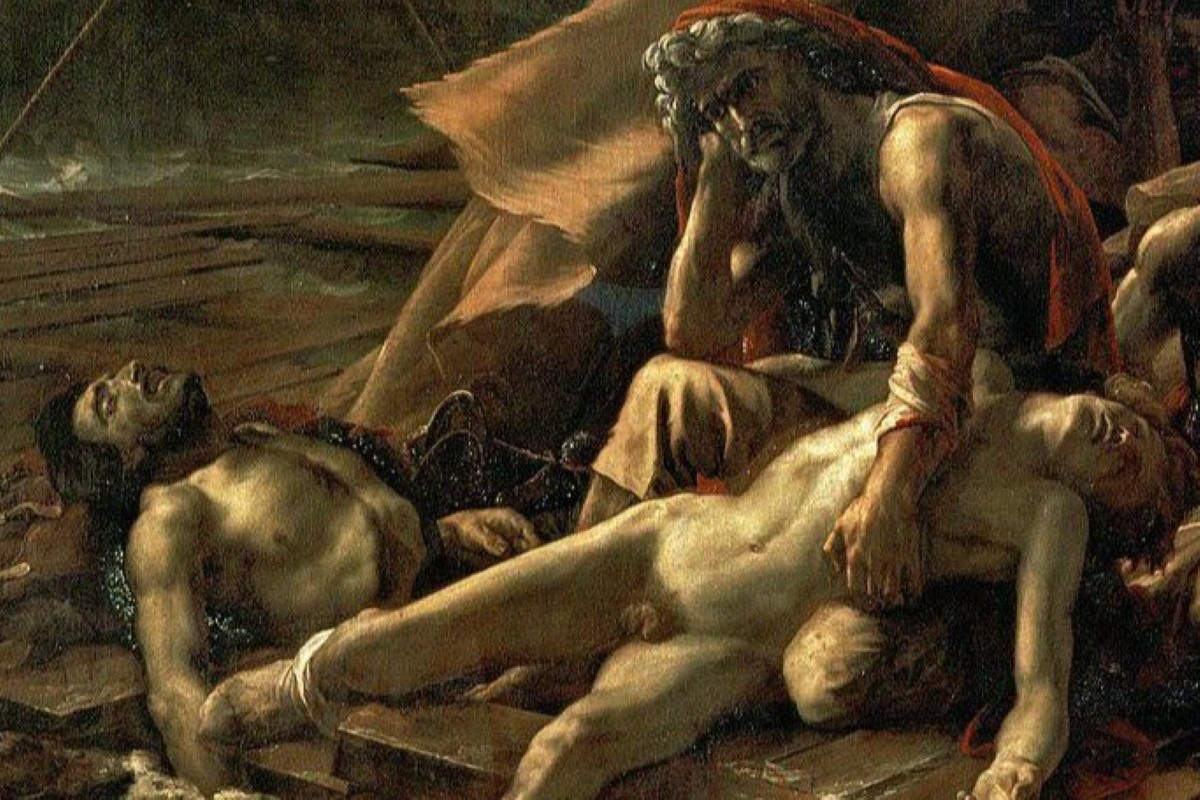
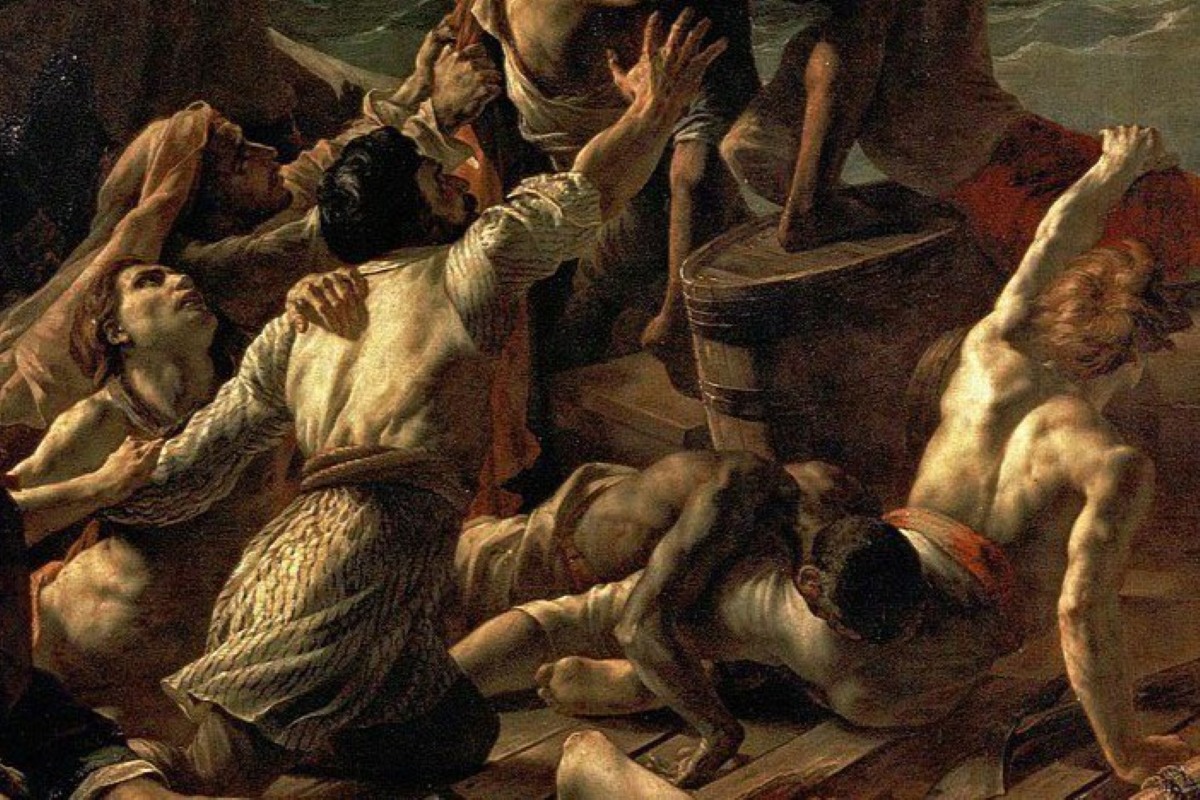
The occupants soon faced a horrific ordeal that would become one of the most infamous maritime disasters in French history. Over the course of thirteen days, the survivors endured starvation, extreme thirst, violence, suicide, hallucinations, and even cannibalism. No search party was sent for the raft but it was found accidentally by the rescue vessel Argus. Only fifteen people remained alive and several died shortly after reaching the mainland.
The scandal shocked France and highlighted common failures of the Bourbon government. For Géricault, the tragedy represented far more than a maritime disaster, especially as he personally had French maritime connections through family. It became a powerful symbol of human suffering and political incompetence.
The Obsessive Creation of Raft of the Medusa
An Artist Becomes an Investigator
What truly elevates the painting is the extraordinary dedication that Géricault invested in representing the event. Géricault approached the project with obsession and rigor, treating it like an investigation. He studied official reports, newspaper articles, and published narratives of the disaster, gathering every available detail about the events that unfolded on the raft.
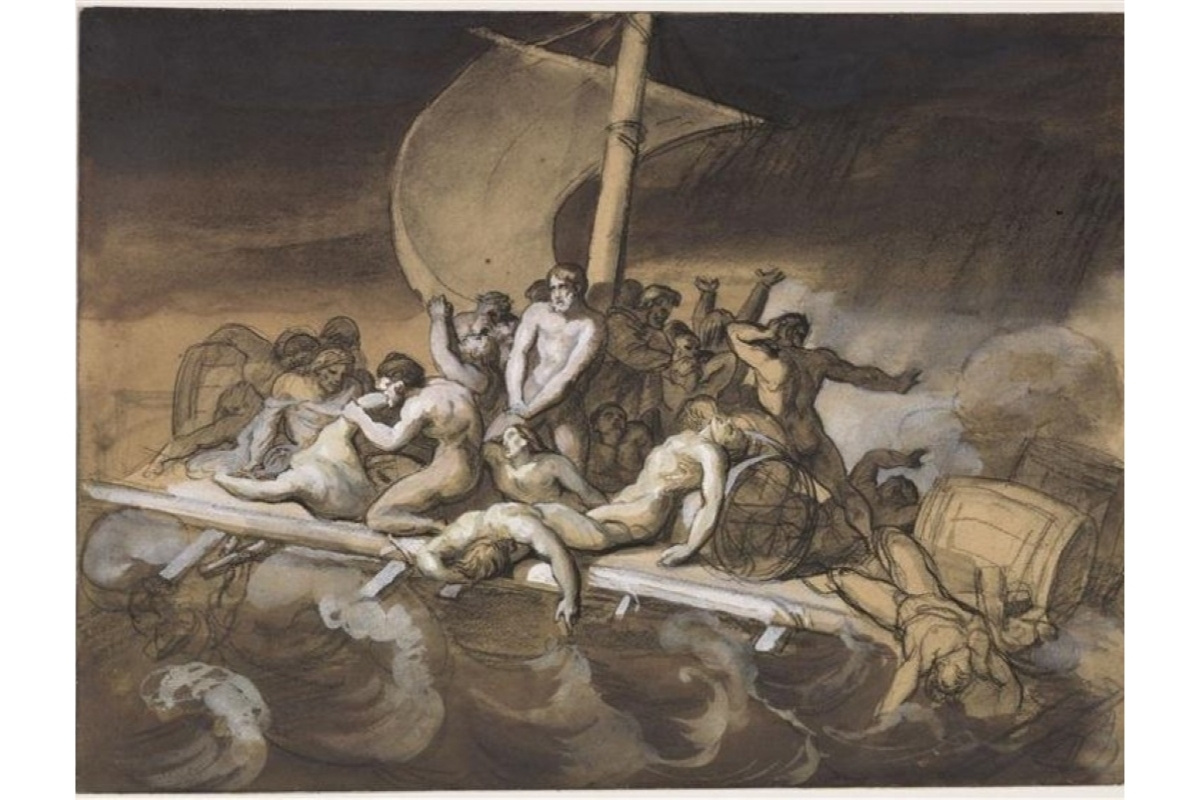
Beyond written sources, he interviewed survivors Alexandre Corréard and Henri Savigny, carefully recording their testimonies and cross-checking their accounts to ensure accuracy. He sought to understand the emotional and physical realities of the survivors, asking detailed questions about their positions, gestures, and expressions during key moments. His goal was not simply to paint a scene but to reconstruct history with accuracy, capturing both the factual truth of the tragedy and the psychological intensity experienced by those who endured it.
Building a Model of the Raft and Studying Human Anatomy
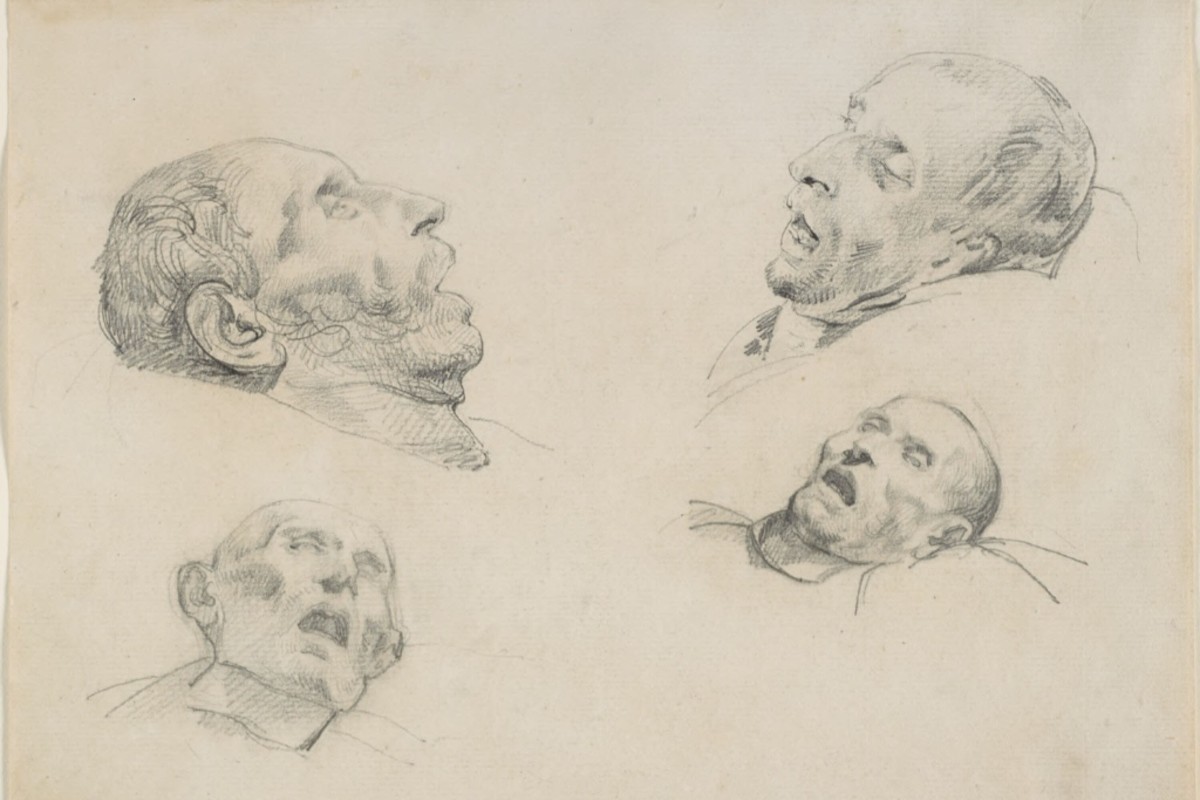
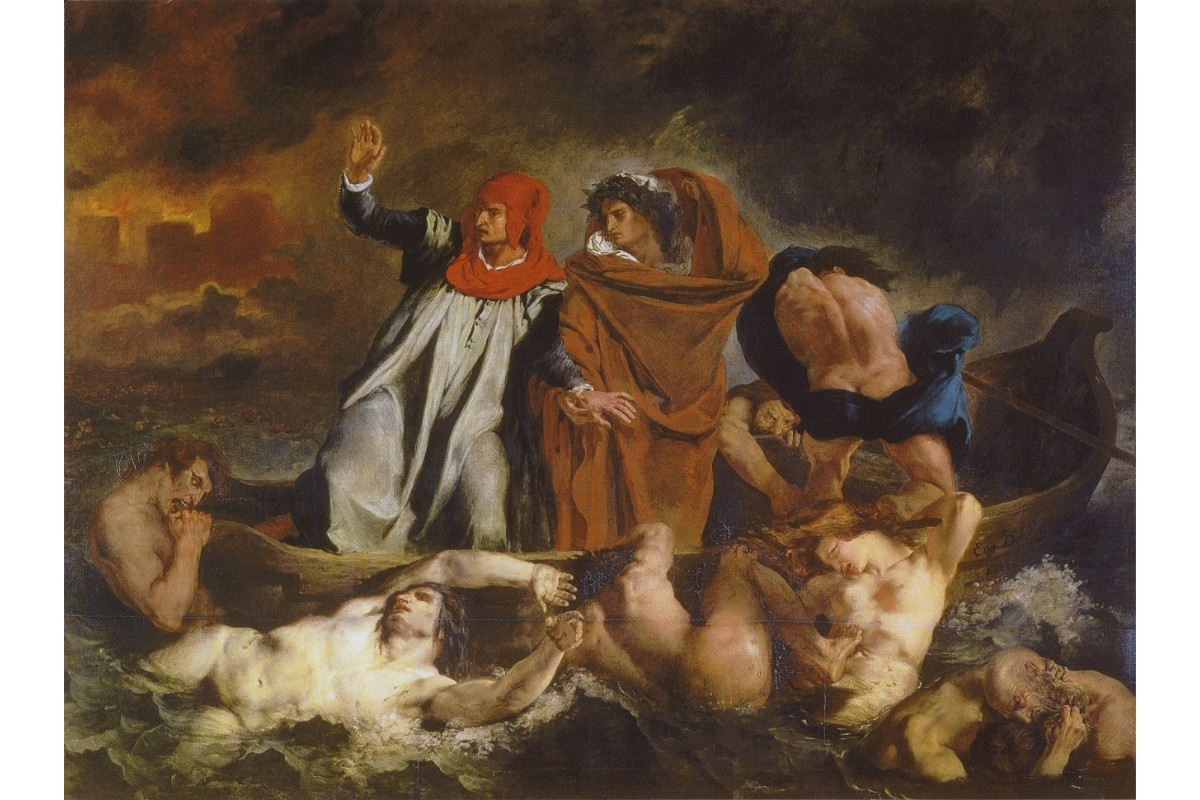
To understand the dynamics of the scene, Géricault constructed a detailed scale model of the raft, which allowed him to experiment with composition, lighting, perspective, and the placement of figures. He also created some life size semblance in his atelier, positioning human models, including his fellow artist and friend Eugene Delacroix, to lay for hours as he worked. Despite suffering from some illness, he also traveled to the coast of France in Le Havre to observe storms and the sea.
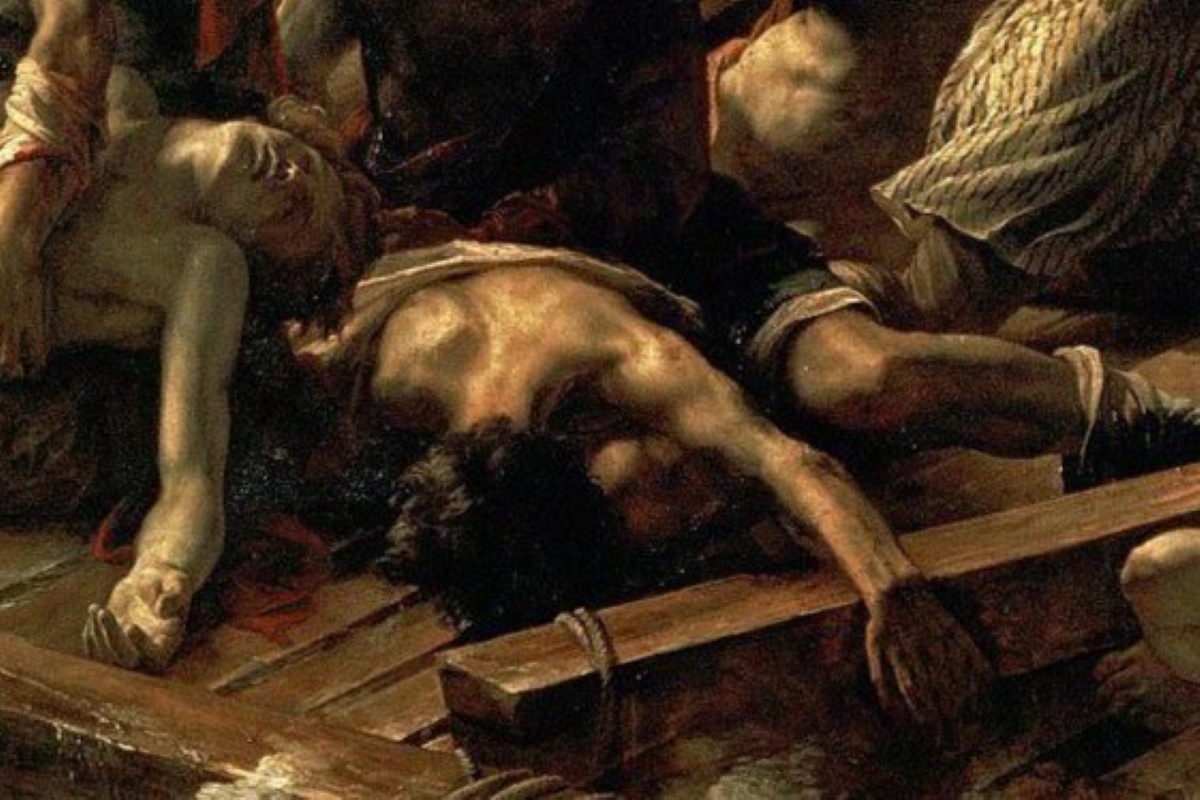
In addition, he pursued an intense study of the human body, spending time in hospitals and morgues observing corpses in various stages of decomposition. He wanted to capture the various colors and textures. Some accounts suggest he even brought anatomical specimens back to his studio to accurately depict death and suffering, an obsessive pursuit of realism unlike anything seen in French painting at the time.
Géricault devoted almost two years exclusively to the project, isolating himself from society and focusing entirely on the canvas, which was probably to his own detriment. However, the result is a painting filled with layers of symbolism and artistic innovation.
Public Reception for the Raft of the Medusa
When The Raft of the Medusa was first exhibited at the Paris Salon of 1819, it provoked intense reactions from both critics and the public. Interestingly, it was an event sponsored by King Louis XVIII, who is said to have praised Géricault’s painting (despite the political message around it).
Viewers could immediately recognize the subject of this shipwreck and were shocked by its raw depiction of suffering and death, which contrasted sharply with the idealized subjects typically favored at the time. Some critics praised Géricault’s bold realism and emotional power, recognizing the painting as a groundbreaking work that pushed the boundaries of historical painting.
Others, however, were deeply uncomfortable with its subject matter and political implications. The painting’s connection to a recent national scandal made it controversial, as did the inclusion of several black figures as abolition was a question of debate during this period.
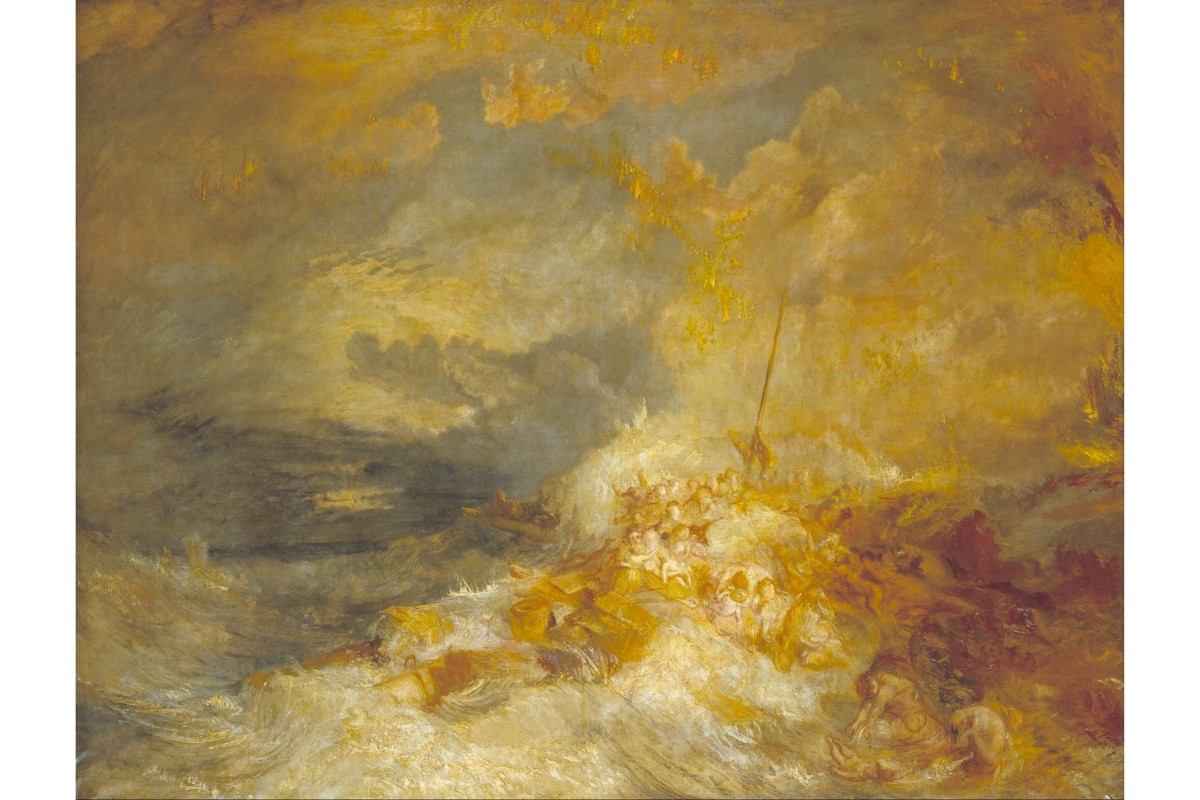
Despite the mixed reception, the work quickly gained attention across Europe. It was even more popular when it was later exhibited in London, where it attracted large crowds. English Romantic artist, J. M. W. Turner, probably saw Géricault’s painting while it was in London and would later paint a similar scene, A Disaster at Sea
Artistic Analysis of the Raft of the Medusa
A Composition Built on Two Pyramids
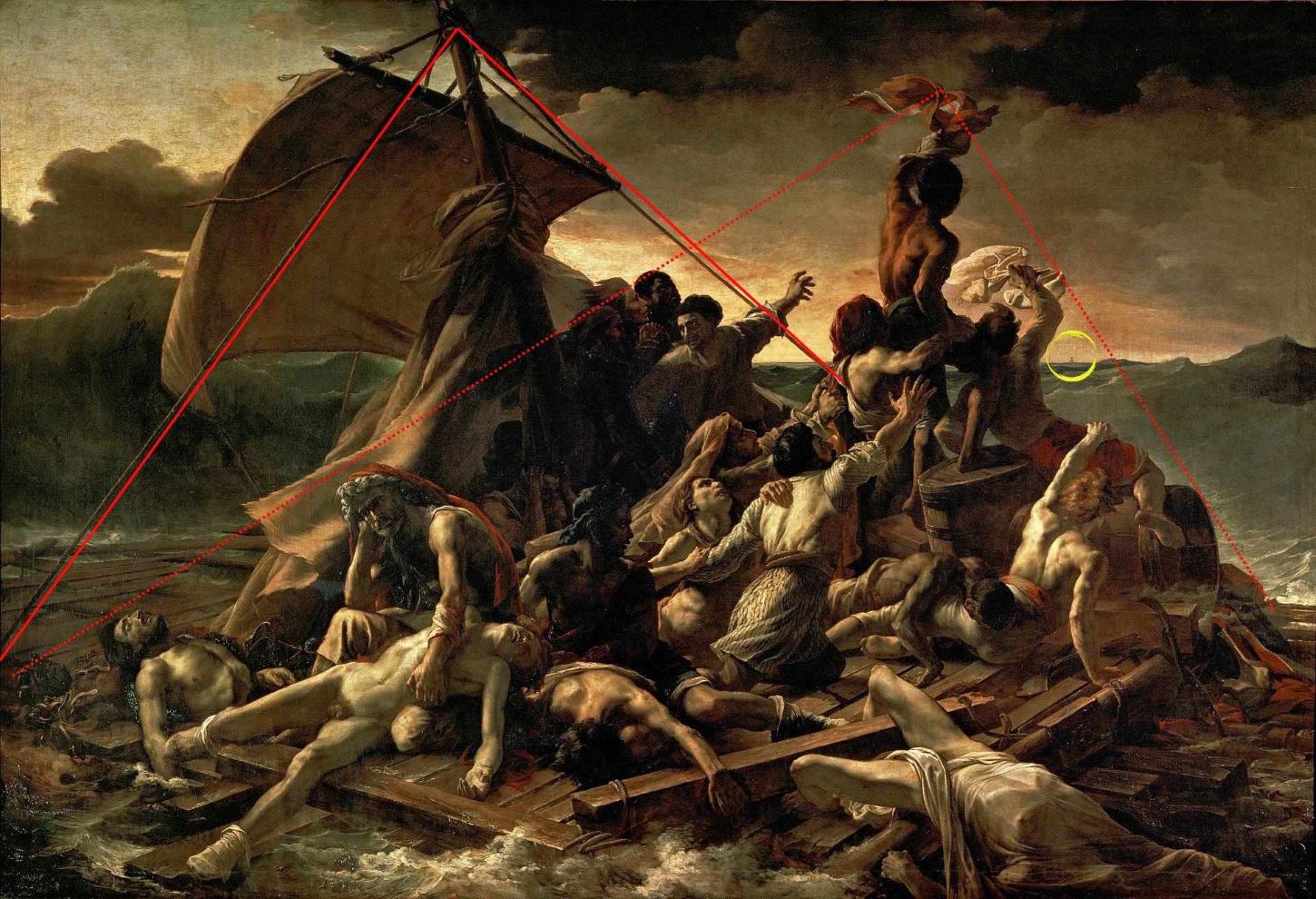
One of the most remarkable aspects of The Raft of the Medusa is its simple yet sophisticated structure, organized around two intersecting pyramids that guide the viewer’s eye and emotions. The lower section of the canvas forms the pyramid of death, populated by corpses and exhausted survivors, where dark colors and heavy shadows emphasize despair and hopelessness. From this base, the composition rises toward the upper right corner, forming the pyramid of hope, where survivors desperately signal the distant rescue ship. This upward movement creates a powerful emotional progression from death toward salvation, culminating in the tiny dot on the horizon that represents both rescue and fragile hope.
The Romantic Sublime
Géricault perfectly embodies the Romantic fascination with nature’s overwhelming power, presenting an ocean that appears immense and indifferent while humanity seems fragile in comparison. The towering waves, darkened sky, and unstable raft all contribute to a sense of chaos and unpredictability, reinforcing the idea that nature operates beyond human control. This striking contrast creates what Romantic artists called the sublime, a powerful mixture of awe, terror, and wonder that both overwhelms and captivates the viewer.
Géricault Painted with Experimental Materials
Géricault was only 27 years old when he completed the work and was primarily concerned with achieving dramatic visual effects rather than long-term conservation.
He painted rapidly, layering oil paint thickly in some places while using extremely thin glazes in others. X-rays suggest that he changed the painting multiple times throughout the creative process. He also experimented with bitumen, a dark, tar-like pigment popular among Romantic painters. While it created deep shadows and rich contrasts, bitumen never fully dries, causing paint layers to wrinkle, crack, and darken over time.
Unfortunately, as with all historical works, modern viewers will never experience the original in all of its glory. Rather than attempting to make the painting look “new,” conservators focus on stabilizing the work so future generations can experience it much as visitors do today.
Where to Find The Raft of the Medusa at the Louvre
The Raft of the Medusa’s Location in the Louvre
After Théodore Géricault’s death at the young age of 32, the painting was acquired by the French state and entered the Louvre’s collection, where it has remained one of its most powerful works. It briefly was outside of Paris, during World War II, like many masterpieces including Veronese’s Wedding at Cana and the Winged Victory of Samothrace, it was carefully evacuated from Paris to protect it from potential looting.
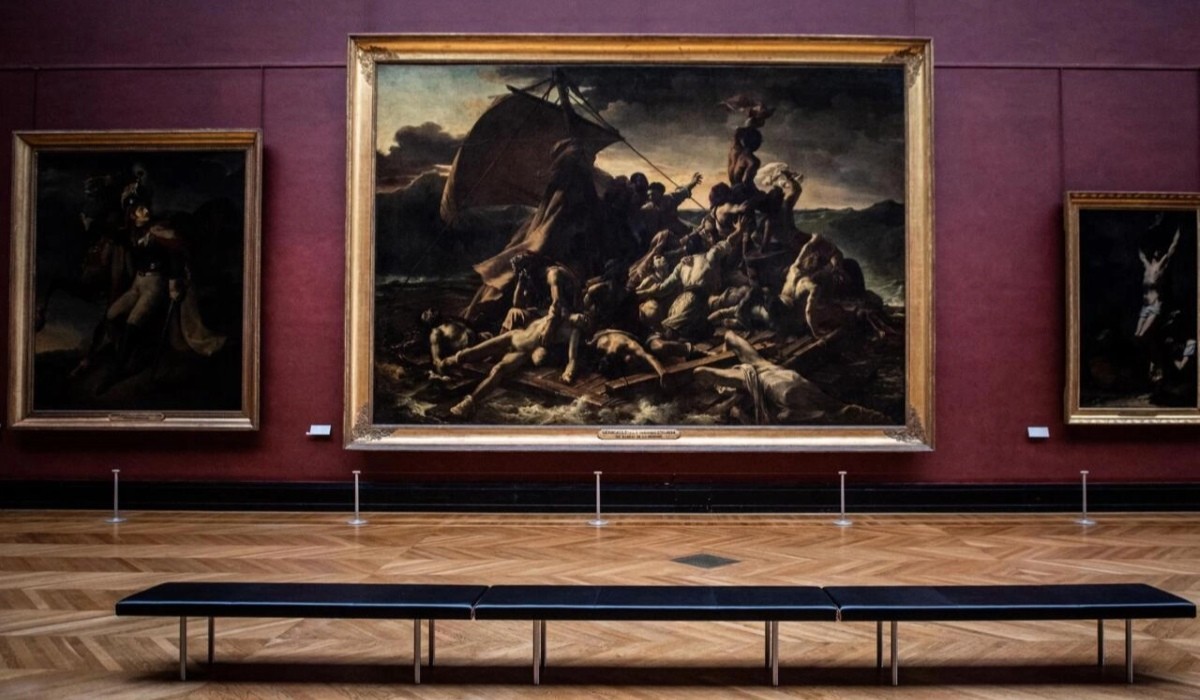
Today, you can find The Raft of the Medusa, in the Denon Wing on Level 1, in Room 700 (Salle Mollien), alongside other great French works. Because of its monumental size, it is impossible to miss, and usually has a crowd. Our recommendation is to first observe it from a distance to appreciate the composition, and then move closer to discover the extraordinary details and expressive brushwork.
While there are always at least some admirers in this busy gallery, a good time to visit the Louvre Museum is at Night.
Why Modern Audiences Still Connect with The Raft of the Medusa
What makes the painting timeless is the figures are not idealized heroes but exhausted, frightened, and vulnerable individuals struggling to survive. Their emotions feel strikingly contemporary, allowing modern visitors to connect with them instantly and on a deeply human level. Seeing the painting in person is an unforgettable experience.
The Secret Version in Père Lachaise Cemetery
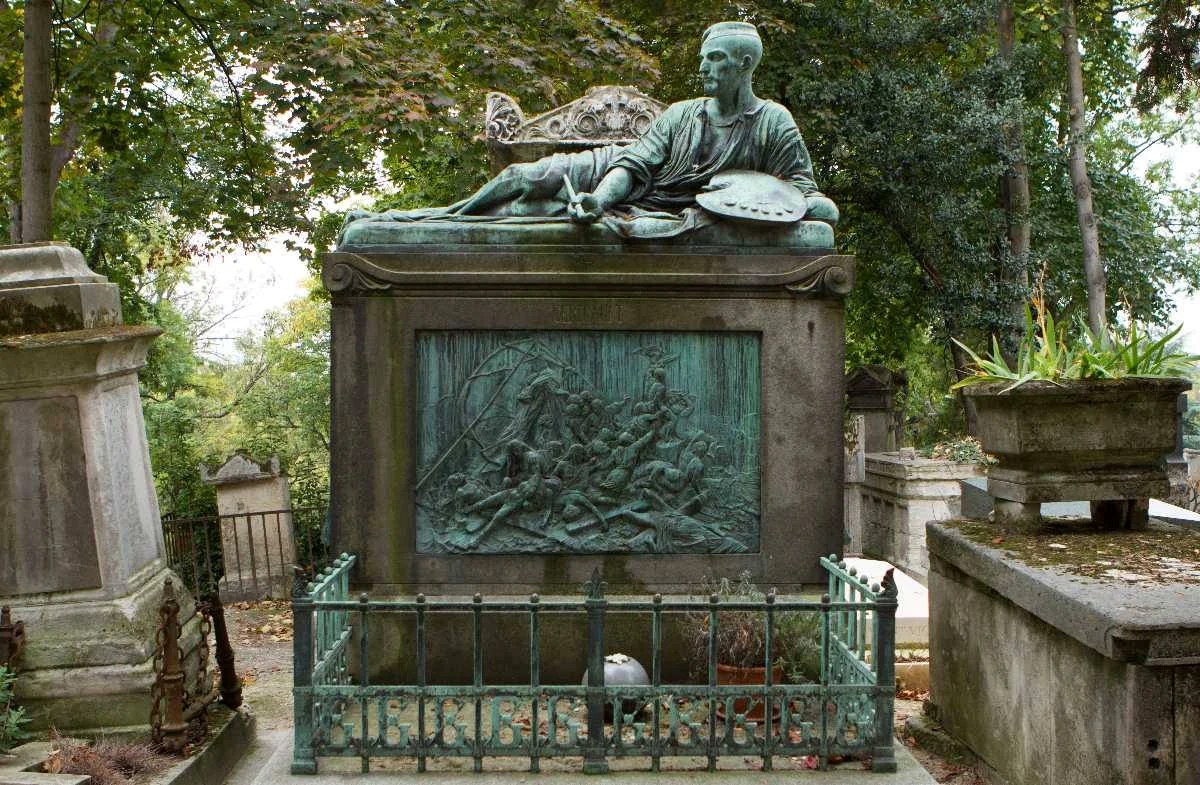
Most visitors do not realize that another tribute to The Raft of the Medusa exists elsewhere in Paris. At Père Lachaise Cemetery, Théodore Géricault’s final resting place features a sculptural relief inspired by his masterpiece.
Combining the Louvre with a visit to Père Lachaise offers a fascinating journey through French art history. There are many iconic French artists found in the cemetery, including Eugene Delacroix and Jacques Louis David. You can admire their paintings itself before paying tribute to the artists who created them. For travelers seeking a deeper appreciation of Paris beyond its most famous monuments, this “hidden” site is well worth the detour.
FAQs about The Raft of the Medusa
The painting depicts survivors of the 1816 shipwreck of the French frigate Méduse desperately signaling a rescue ship after thirteen days adrift at sea.
The Raft of the Medusa was painted by French Romantic artist Théodore Géricault between 1818 and 1819.
It revolutionized historical painting by combining political criticism, emotional realism, and dramatic storytelling. It is one of the earliest Romantic works, serving as inspiration for other artists.
It is located in the Denon Wing, Level 1, Room 700 (Salle Mollien), surrounded by other iconic French works.
Yes. Géricault is buried at Père Lachaise Cemetery in Paris, where visitors can see a sculptural tribute inspired by The Raft of the Medusa.
Every figure on Géricault's raft tells a story. Discover The Raft of the Medusa through the eyes of an expert.
Seeing The Raft of the Medusa in person is unforgettable but understanding the fascinating story behind every detail makes the experience truly extraordinary. Join one of our private Louvre tours and discover Géricault’s masterpiece alongside the museum’s greatest treasures with your own licensed expert guide. See how to navigate the crowds, uncover the hidden stories behind the world’s most iconic artworks, and experience the Louvre through the eyes of a passionate art historian.
Louvre Through the Ages
Learn more about the fascinating history and lavish royal lives with your expert guide!