Why was Louis XIV called the Sun King? The answer goes far beyond a simple nickname. It reveals how one ruler used symbolism, architecture, ceremony, and political strategy to place himself at the center of an entire kingdom. When you unpack the question of why Louis XIV was called the Sun King, you discover a carefully constructed image of power that shaped France for more than seventy years.
Versailles was part of a deliberate political strategy. By concentrating the court at Versailles, Louis XIV was able to centralize power, keep the French nobility under close supervision, and ensure that their ambitions depended on royal favor rather than regional influence. The imagery of the sun helped communicate this clever system of rule: a kingdom organized around a single center of authority, designed to strengthen the king’s control over the country.
Table of Contents
- 1 Darkness before the Light ~ the Trauma that Shaped Louis XIV into the Sun King
- 2 The Performance That Transformed Louis XIV into the Sun King
- 3 The Sun King Creating His Own Orbit at Versailles
- 4 Versailles and its Symbols of the Sun King
- 5 The Final Legacy of the Sun King
- 6 FAQs about Louis XIV at Versailles
- 7 Plan Your Visit to Step Inside Absolute Power at Versailles Today!
Darkness before the Light ~ the Trauma that Shaped Louis XIV into the Sun King
To truly understand why Louis XIV was called the Sun King, we must first explore the king’s childhood fears, the political turmoil he witnessed in Paris, and the strategic decision that led him to transform a quiet hunting lodge at Versailles into the most powerful royal court in Europe.
Before Louis XIV became the confident monarch history remembers, he was a child who experienced instability and fear. These early experiences played a major role in shaping the ruler who would later adopt the powerful image of the sun.
The Fronde and a Young King in Danger
Louis XIV became king in 1643 when he was only four years old. Because he was so young, France was governed by his mother, Anne of Austria, acting as Queen Regent and Cardinal Mazarin as chief minister.
During Louis’s childhood, France was shaken by a series of civil wars known as the Fronde (1648–1653). Powerful nobles and members of the Parlement of Paris challenged royal authority, leading to political chaos and violent unrest.
At only ten years old, the young king was forced to flee Paris in the middle of the night with his mother. Crowds surrounded the royal palace, and the monarchy suddenly appeared fragile.
For Louis XIV, this moment left a lasting impression. Paris, the traditional seat of power, had become unpredictable and dangerous. The king never forgot how easily royal authority could be threatened.
Why Louis XIV Distrusted Paris
Historians often see this trauma as the starting point for understanding why Louis XIV was called the Sun King. The image of the sun symbolized stability, order, and absolute authority, everything the young king had seen threatened during the Fronde.
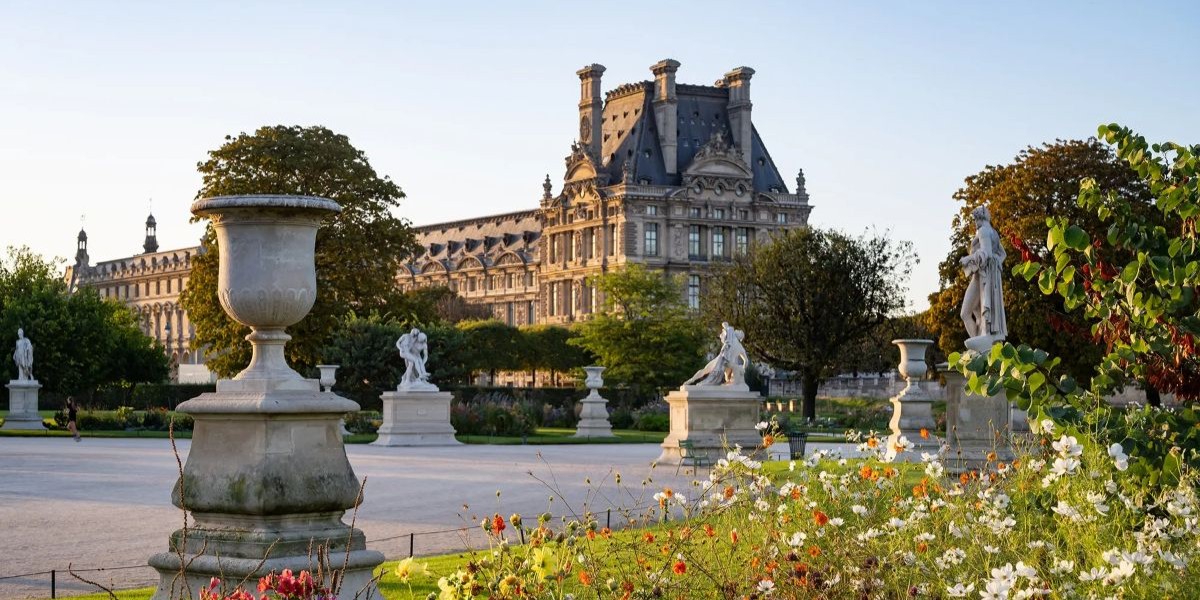
Growing up in the Tuileries Palace, Louis XIV witnessed firsthand how political factions could challenge royal power. He saw palace gates forced open by crowds, nobles openly defying the crown, and royal decisions negotiated rather than obeyed.
These experiences shaped his identity as a ruler. As an adult, Louis XIV would create a system where his royal authority could not easily be challenged and access to the king was carefully controlled.
The Performance That Transformed Louis XIV into the Sun King
The title “Sun King” was not simply a flattering nickname invented later by historians. It was part of a carefully designed royal image created by Louis XIV himself.
The Ballet Where the Sun King Was Born
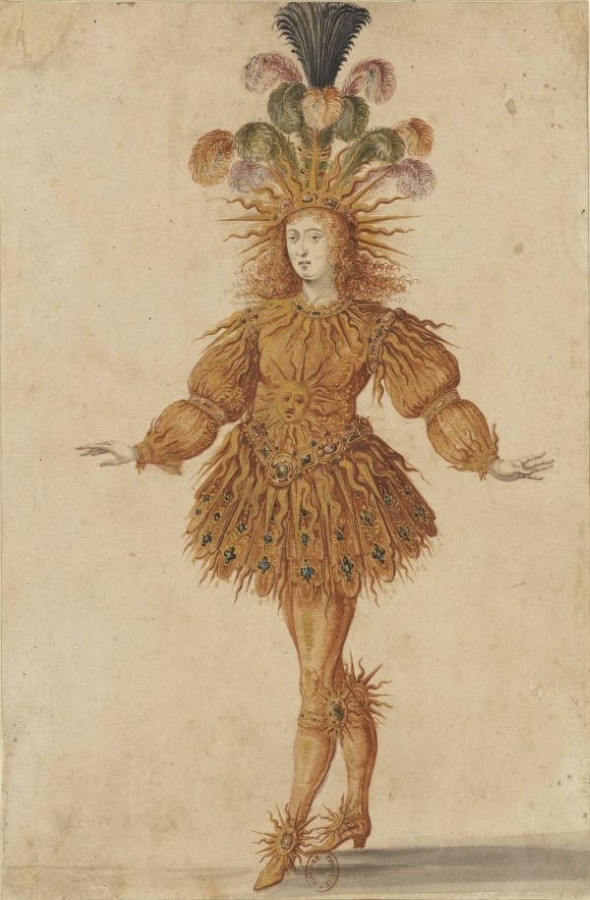
In 1653, when Louis XIV was still a young king, he performed in a court ballet called Ballet de la Nuit.
During the performance, the young king appeared as Apollo, the god of the sun, rising at dawn after a night filled with chaos and darkness. The symbolism was powerful and easy to understand.
Just as the sun brings light and order to the world, Louis XIV would bring order and stability to France after years of civil conflict.
From that moment on, the imagery of the sun became closely linked to the king.

The Meaning Behind the Sun Symbol
The sun was the perfect symbol for Louis XIV’s political vision. In the natural world, the sun represents life and energy, order in the universe, and a central force around which everything revolves. Louis XIV wanted his kingdom to function in exactly the same way. In his ideal political system, all authority would radiate outward from the monarch. By presenting himself as the Sun King, Louis XIV communicated a clear message: the stability of France depended on the king at its center.
This is why Louis XIV is the classic example of an absolutist monarchy.
An absolutist monarchy is a political system in which the king holds supreme authority over the state. Legislative, judicial, and executive powers are concentrated in the hands of one sovereign. There is no constitutional limit, no representative parliament capable of overriding royal decisions, and no institutional counterweight strong enough to restrain the crown. Authority flows downward from the monarch, who often claims to rule by divine right, or the belief that his power is granted directly by God.
The Sun King Creating His Own Orbit at Versailles
To fully answer the question “why was Louis XIV called the Sun King”, we must also examine how the palace of Versailles itself reinforced this image.
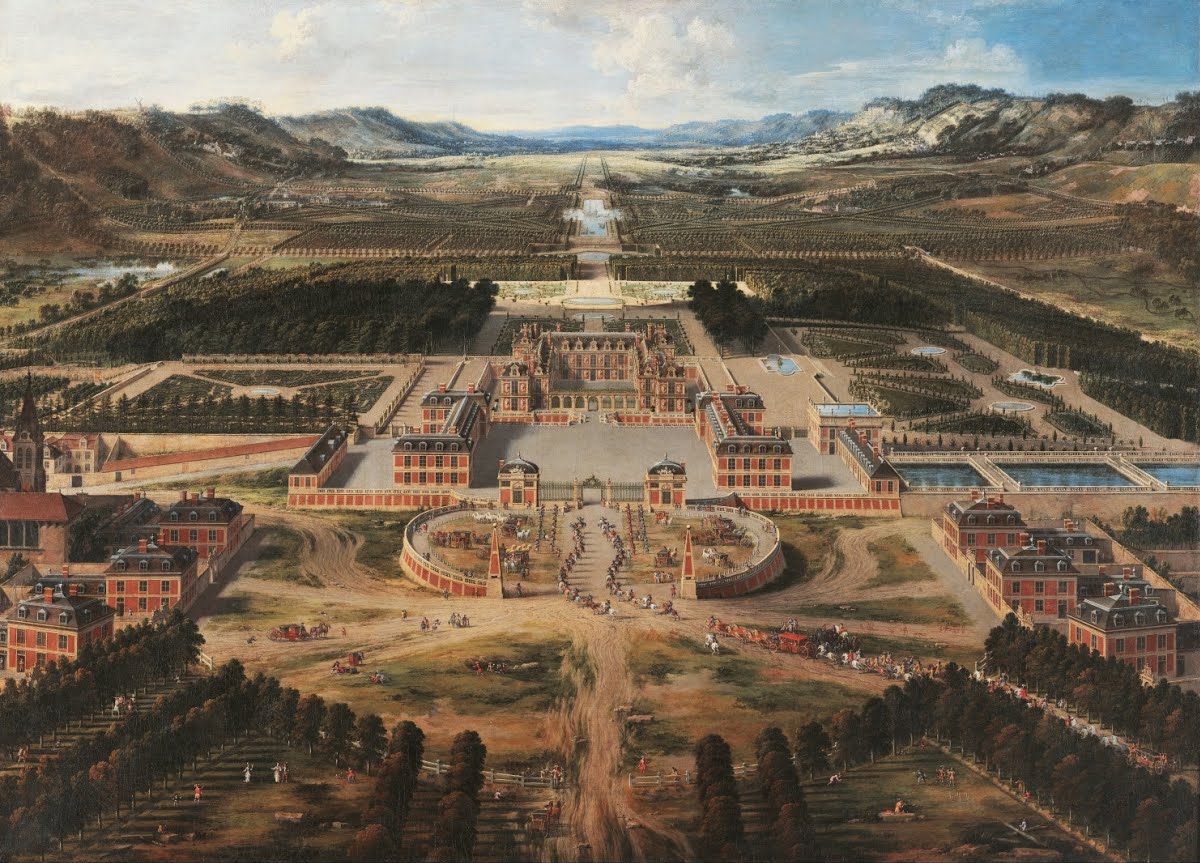
Originally, it was simply a modest hunting lodge built by Louis XIII, the father of Louis XIV, Versailles was not just a luxurious residence. It was a carefully designed political machine.
Versailles offered the opportunity to centralize power and keep the French nobility under Louis XIV’s watchful eye. By moving the court away from Paris and into a controlled royal environment, the king could gather the most powerful nobles of France in one place. At Versailles, their influence depended entirely on access to the monarch, which meant their ambitions could be managed and their independence quietly reduced.
This video from the Chateau de Versailles shows the Versailles from above. What used to be a small hunting lodge in the woods transformed into a grand display of power.
A Separate Universe - Distance from Paris
Versailles was located about 20 kilometers from Paris, surrounded by forests and open land. This distance offered Louis XIV two major advantages.
First, it removed the court from the volatile political environment of the capital. Second, it allowed the king to design an entirely new royal environment where he controlled every aspect of daily court life.
When Louis XIV officially moved the royal court to Versailles in 1682, it was a strategic move that allowed him to reshape French politics.
Nobles from across France were encouraged, sometimes required, to spend long periods at court.
Much like planets orbit around the sun, the nobles now orbited around Louis XIV.
This dynamic reinforced the symbolism behind the king’s famous nickname. The monarch was the radiant center of the kingdom, and the court revolved around him.
A Test of Power and the Downfall of Nicolas Fouquet
Before Louis XIV fully concentrated his power at Versailles, he wanted to demonstrate one fundamental principle: magnificence belonged to the king alone.
The man who would learn this lesson first was Nicolas Fouquet.
Fouquet was the Superintendent of Finances, responsible for managing the kingdom’s treasury during a period of war and reconstruction. He commanded enormous financial resources, maintained networks of influence, and also served as a powerful cultural patron. In 1661, Fouquet unveiled his ambitious project, Vaux‑le‑Vicomte. The château represented the most advanced artistic collaboration of its time, with Architect Louis Le Vau designing the palace, painter Charles Le Brun decorating its interiors, and landscape architect André Le Nôtre creating gardens that would revolutionize European design.
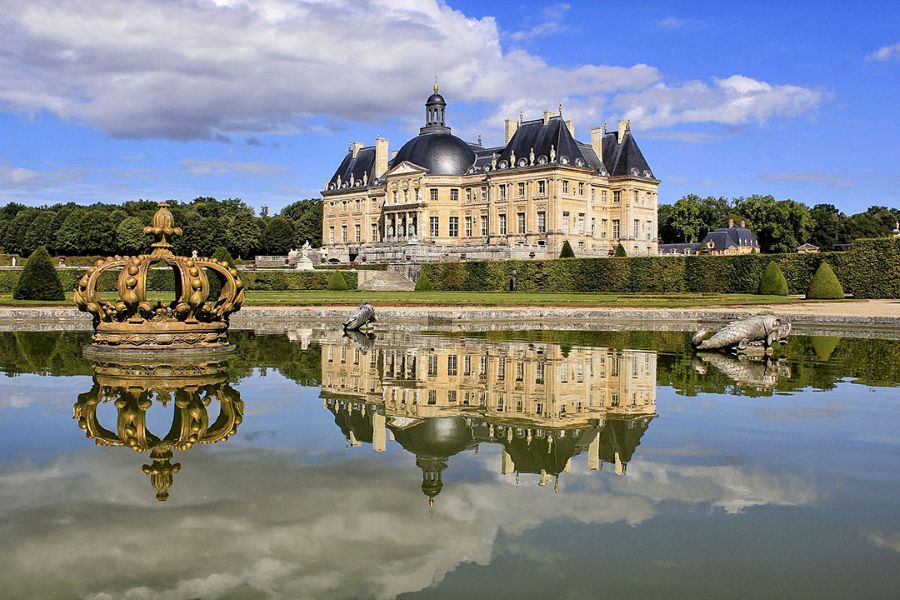
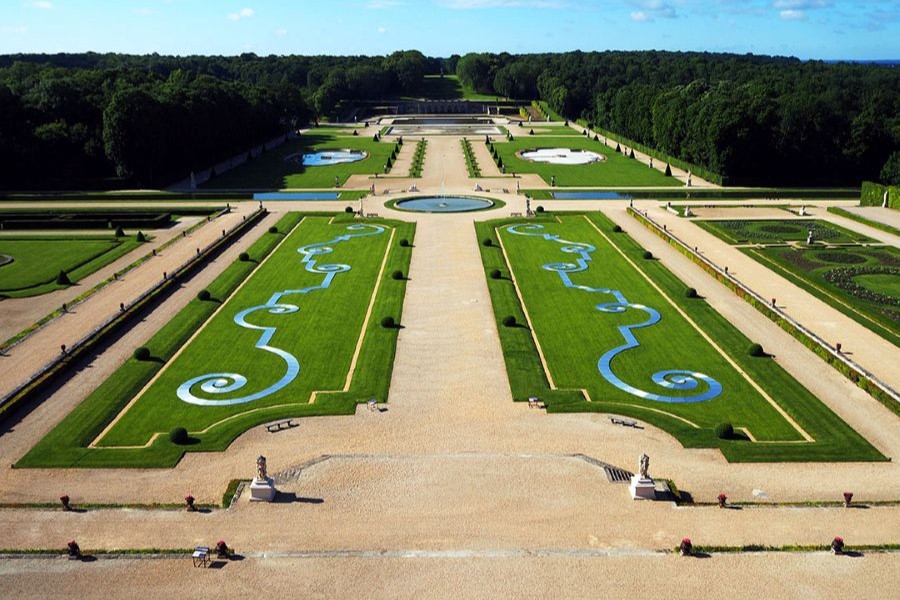
To celebrate the estate’s completion, Fouquet hosted an extraordinary fête in honor of Louis XIV. The evening included fireworks, theatrical performances by Molière, elaborate banquets, and illuminated gardens that dazzled the court. For the first time, a royal minister appeared capable of rivaling the king’s own magnificence. Fouquet had unintentionally demonstrated what independent aristocratic power could look like.
With his advisors whispering in his ear, Louis XIV reacted swiftly. Only weeks later, Fouquet was arrested on charges of using public funds for personal projects. After a long and highly publicized trial, he was convicted of corruption and sentenced to life imprisonment. The political meaning of the event reached far beyond the courtroom. The dramatic fall of Fouquet delivered the clear message to the French nobility that wealth and spectacle could no longer exist independently of the crown. If grandeur were to exist in France, it would flow from a single source.
Versailles and its Symbols of the Sun King
At Versailles, nothing was purely decorative. Both the architecture of the palace and the design of the gardens were carefully planned to promote the mythology of the Sun King. Through statues, perspectives, and symbols of Apollo, Louis XIV used art and landscape as a form of royal propaganda, reminding visitors that all power in France radiated from the king himself.
A Palace Built Around the King
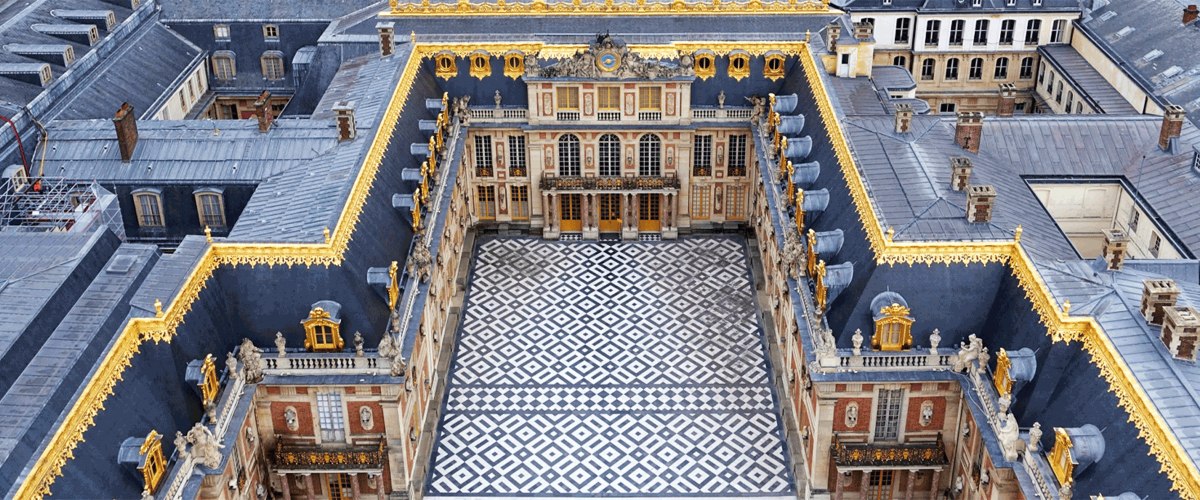
At Versailles, Louis XIV designed the palace as a cosmic map with the King’s Bedroom at its exact center.
Placed on the central axis of the palace, the royal bedchamber was not positioned there by chance. It aligned perfectly with the east–west perspective of the gardens, where the sun rises and sets. Each morning, light would enter along this axis, reinforcing the symbolic association between Louis XIV and the rising sun. Architecturally, the kingdom revolved around him.
From this central point, the State Apartments unfold in a sequence dedicated to classical deities such as Hercules, Venus, Diana, Mars, Mercury, and Apollo. These were not decorative choices. They were mythological statements. Apollo, god of the sun, music, and order, became Louis XIV’s divine alter ego. Mars evoked military strength. Mercury symbolized diplomacy. Each room projected a quality the king wished to embody.
This architecture itself enforced social order. The closer your apartments were to the King’s chambers, the greater your prestige. A difference of a few meters could elevate, or diminish, an entire career. Rank was measured spatially, and proximity became privilege.
Art as Royal Propaganda
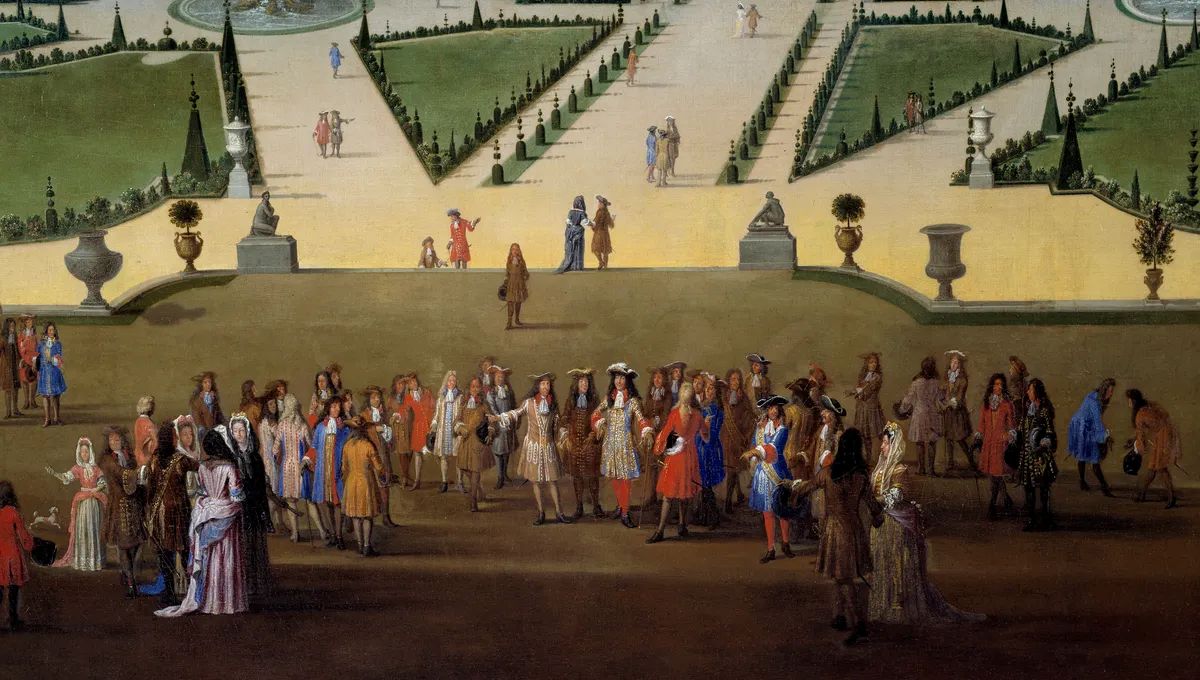
At Versailles, art played a central role in shaping the image of Louis XIV as the Sun King. Paintings, sculptures, ceiling frescoes, and mythological decorations throughout the palace were carefully commissioned to glorify the king and reinforce his authority. Artists such as Charles Le Brun filled the royal apartments with scenes celebrating Louis XIV’s victories, virtues, and divine status. Classical gods like Apollo frequently appear in these works, subtly linking the king to the power of the sun. Even the most famous gallery in the palace of Versailles, the Hall of Mirrors, formed part of this larger artistic program designed to impress visitors and project royal magnificence.
The Gardens: Mastery Over Nature
If the palace demonstrates control over men, the gardens proclaim control over nature itself. Commissioned to André Le Nôtre, the gardens of Louis XIV at Versailles were engineered as a vast geometric composition where forests were cleared, marshland drained, and terrain reshaped to obey mathematical order. What appears effortless today required enormous hydraulic innovation and human labor.
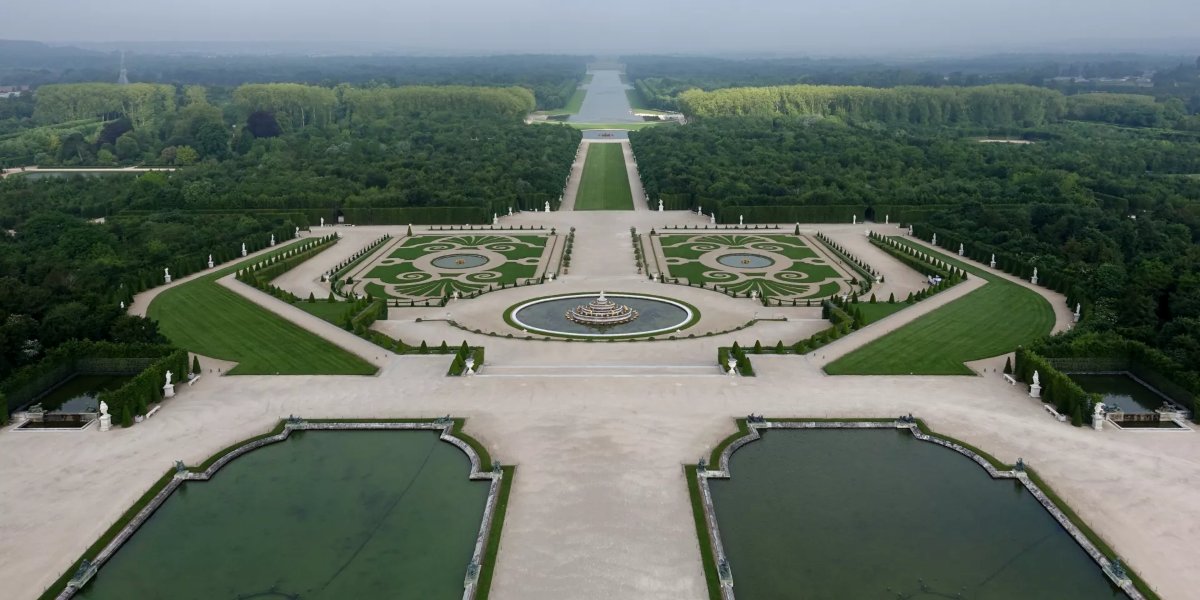
This domination carried political meaning. In the 17th century, nature symbolized chaos. By imposing symmetry, perspective, and axial alignment stretching from the King’s Bedroom to the Grand Canal, Louis XIV presented himself as the sovereign who brings order to disorder.
Mythology is also woven throughout this landscape. The fountains are not decorative ornaments but allegories. The most powerful of these is the Latona Fountain, positioned along the central axis between the palace and the Grand Canal. The sculpture depicts Latona, mother of Apollo and Diana, imploring Jupiter to punish peasants who mocked her and refused her water. As the story unfolds in stone, the peasants are transformed into frogs and lizards, creatures condemned to the mud.
The message to the nobility was unmistakable. Latona symbolized the Queen Mother, Anne of Austria and Apollo represented Louis XIV. Those who dared to rebel against royal authority, as nobles had during the Fronde, would be humiliated and metaphorically reduced. The fountain stands as a permanent warning: defy the Sun King, and you risk degradation.
The Final Legacy of the Sun King
When you understand the story behind why Louis XIV was called the Sun King, Versailles becomes far more than a beautiful palace.
Today, the Château de Versailles has become one of the most powerful cultural symbols of France. Millions of visitors from around the world come each year to walk through its halls, explore its gardens, and experience a place that represents French history, art, and craftsmanship. While Louis XIV created Versailles as a tool of royal power, the palace has long since grown beyond the king himself.
Once you recognize the symbolism built into Versailles, every detail begins to take on new meaning. A sculpture is no longer just decoration, a garden axis is no longer simply landscape design, and a royal apartment becomes part of a larger story about how architecture, art, and politics shaped a nation.
This is why narrative matters so much in cultural heritage. When visitors understand the historical vision behind Versailles, the palace becomes not only impressive but emotionally powerful. Instead of simply observing rooms and artworks, you begin to experience one of the great monuments of French culture, a place that continues to fascinate visitors centuries after Louis XIV first imagined it.
FAQs about Louis XIV at Versailles
Louis XIV moved his court to distance himself from the political instability of Paris after the Fronde and to centralize power under his direct supervision. By bringing the nobility to Versailles, Louis XIV transformed proximity into control and reshaped the monarchy into a model of absolutist rule.
Louis XIV at Versailles demonstrated absolute monarchy by designing the palace as a symbolic and physical map of power. The King’s Bedroom stood at the architectural center, the State Apartments projected mythological authority, and the Hall of Mirrors amplified royal prestige — all reinforcing that sovereignty radiated outward from Louis XIV alone.
At Louis XIV at Versailles, rituals such as the lever and coucher transformed daily routine into political ceremony. By regulating access to his person and ranking nobles within highly structured events, Louis XIV ensured that ambition revolved around royal favor rather than rebellion.
Through dynastic marriages, diplomatic exchanges, and the prestige of French theatre and etiquette, Louis XIV at Versailles turned French language and court ceremony into European standards. Other royal courts adopted French as the language of diplomacy and imitated Versailles in architecture and ritual, extending Louis XIV’s influence far beyond France.
Although Louis XIV at Versailles successfully consolidated authority during his reign, the financial burden of wars and court expenditure created structural weaknesses. The very system that centralized power also concentrated risk, contributing to long-term instability within the monarchy.
Plan Your Visit to Step Inside Absolute Power at Versailles Today!
If you wish to experience Louis XIV at Versailles not as tourists but as privileged guests, our team will be honored to design your private royal journey.
Book your Versailles tour today and explore one of Versailles’ most iconic rooms. Your guided visit will bring history to life with expert insights, rich context, and stories you won’t find anywhere else. Secure your spot now and experience the real Versailles through the spaces that shaped the daily life of the French nobility.
Versailles Unmissables Private Tour
Learn more about the fascinating history and lavish royal lives with your expert guide!