
When you stand before the gilded gates of Versailles, it’s hard to believe it began as a simple hunting lodge. If you’ve ever wondered when the Palace of Versailles was built, the answer isn’t just one date, it’s rather a story that unfolds over decades.
From Louis XIII’s modest retreat in 1631 to the grand royal residence established by Louis XIV officially in 1682, Versailles evolved step by step. Developing a timeline helps you see the palace not only as a masterpiece of architecture, but as the result of very deliberate choices that shaped French history.
Table of Contents
When Was the Palace of Versailles First Built?
The story of Versailles begins in 1623, when King Louis XIII ordered the construction of a modest hunting lodge on a marshy stretch of land southwest of Paris. It was supposed to be a royal retreat, chosen for its abundant game and strategic distance from the political turbulence of Paris, where court intrigues, aristocratic rivalries, and periodic uprisings regularly threatened royal authority and reminded the monarchy of its vulnerability.
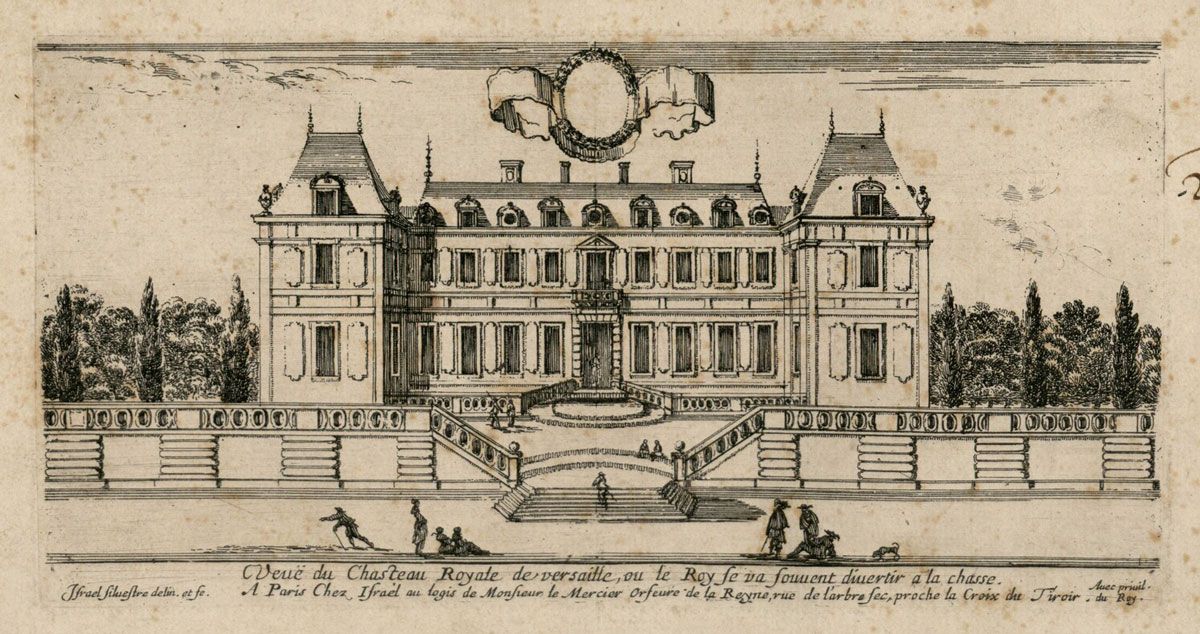
In 1634, the original brick-and-stone lodge was rebuilt and expanded into a small château. Its architectural style: a blend of red brick, white stone, and slate roofing, still survives today in what is known as the “Old Château”, which was carefully preserved within the later grand palace.
At this stage, Versailles was rather cozy. No one in 1623 could have imagined that this quiet hunting residence would become the most powerful symbol of absolute monarchy in Europe.
The Major Expansions Under Louis XIV
First, Who Was Louis XIV?
To grasp why Versailles became what it is, it helps to look closely at the character and ambitions of the king who shaped it. Louis XIV, known as the Sun King, reigned for seventy two years, from 1643 to 1715, making him one of the longest reigning monarchs in European history. His reign is a prime example of what we now call absolute monarchy.

Having witnessed the instability of the Fronde rebellions during his childhood, a series of civil wars between 1648 and 1653 in which members of the nobility and the Parlement of Paris rose up against royal authority, Louis developed a deep mistrust of the Parisian nobility and a firm belief that royal authority had to be visible, theatrical, and unquestionable.

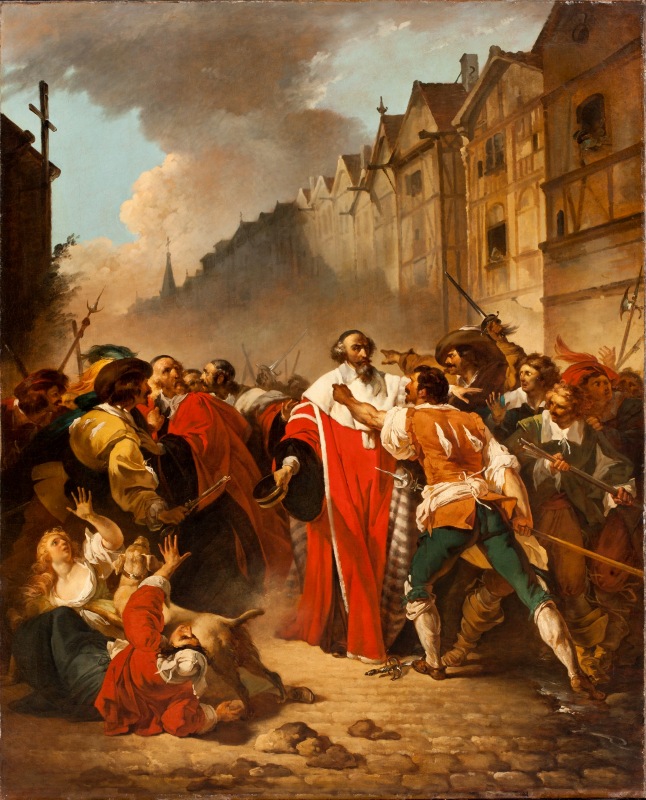
The young Louis XIV would eventually seek out architectural expression in response to his adolescent experiences, and would set forth to build a palace designed not merely to house a court, but to stage the daily performance of monarchy as a way to centralize his authority. Louis XIV’s goal was to showcase his divine authority as the King of France, and all he needed was the right piece of land.
Why Louis XIV Rebuilt Versailles
Why Did the Sun King Choose Versailles?
Versailles was not chosen by accident, nor purely for aesthetic reasons. For Louis XIV, it offered distance from Paris, and from any potential rebellion or instability. By establishing his residence outside the capital, he could physically separate himself from the Parlement and the turbulent urban crowds while remaining close enough to govern effectively.
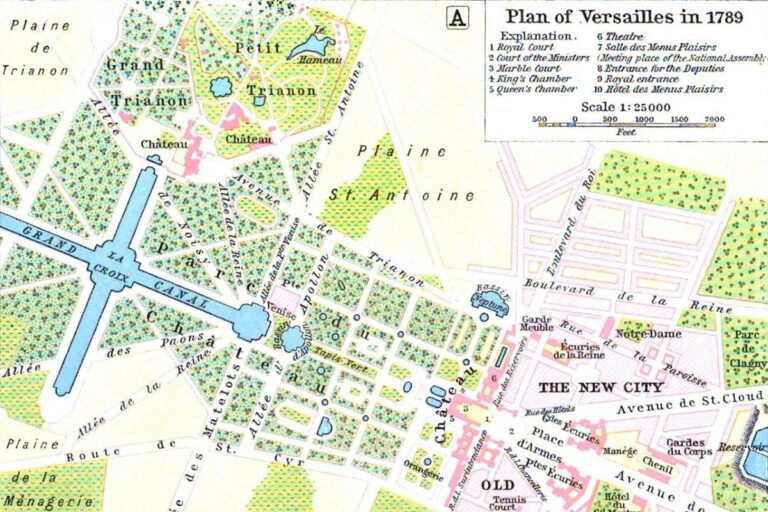
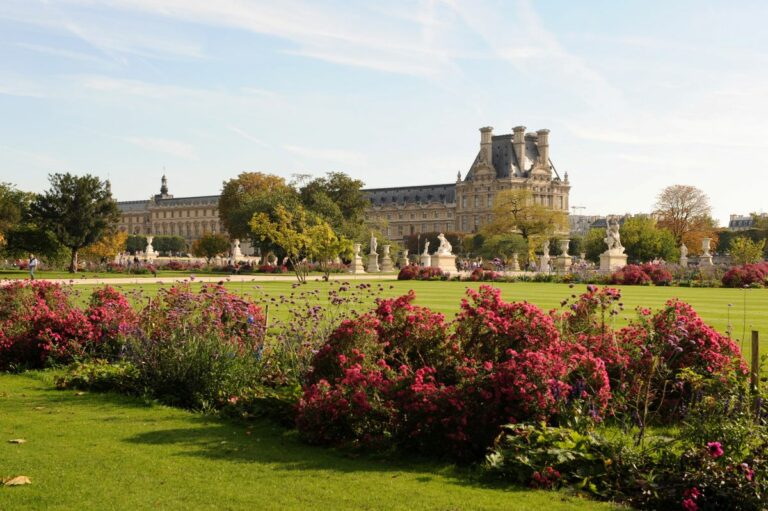
Versailles also provided something Paris could not: space. Space to build, to control the environment, and to design a residence entirely aligned with his political vision. Unlike the medieval Louvre or the Tuileries Palace, Versailles allowed Louis to construct a setting that reflected order, hierarchy, and ceremony from the ground up.
To read more about the ceremony at Versailles, you can read this article about why Louis XIV was called the Sun King!
In his Mémoires pour l’instruction du Dauphin (1661–1662), written for the education of his son, Louis XIV stated plainly: “I resolved to establish my court at Versailles.” — Louis XIV, Mémoires pour l’instruction du Dauphin (1661–1662). The remark is concise but decisive. It reflects a deliberate choice rather than a gradual drift toward Versailles. The relocation was intentional, strategic, and personal.
The First Renovations of the 1660s
Beginning in 1661, shortly after the death of his powerful minister Cardinal Mazarin, Louis XIV was let off the leash and promptly launched the first major campaign of expansion. With Mazarin gone, the young king chose to rule without a chief minister, consolidating and legitimizing his power after years of conservatorship. It was the hunting lodge at Versailles that became the central setting through which this new style of personal rule would be asserted and made visible. He entrusted architect Louis Le Vau, painter and decorator Charles Le Brun, and landscape designer André Le Nôtre with the task of enlarging his father’s quaint château, effectively assembling one of the most brilliant artistic teams in Europe.
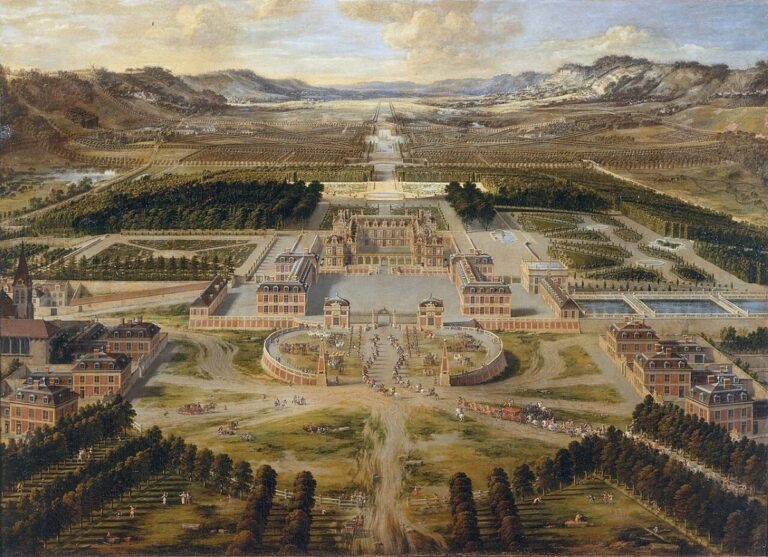
Le Vau designed the structural enlargement of the palace, Le Brun orchestrated an ambitious decorative program celebrating the glory of the king, and Le Nôtre reimagined the surrounding landscape into a masterpiece of controlled perspective and symmetry.
The original hunting lodge was enveloped within a new stone façade, creating what became known as the “envelope” of Versailles. Rather than demolish Louis XIII’s château, Louis XIV chose to incorporate it into a grander architectural composition. This decision was both practical and symbolic: preserving dynastic continuity while dramatically increasing the scale, coherence, and magnificence of the residence. The transformation marked the moment when Versailles ceased to be a retreat and began its evolution into a statement of royal ambition.
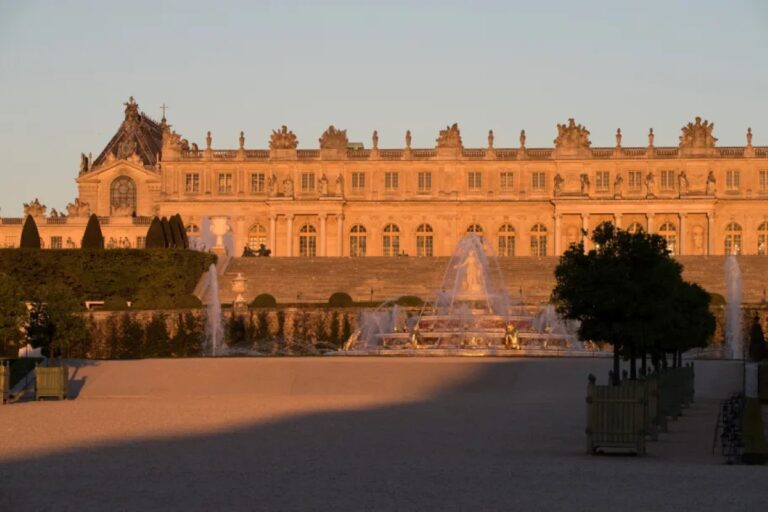
The Renovations of the 1670s and 1680s
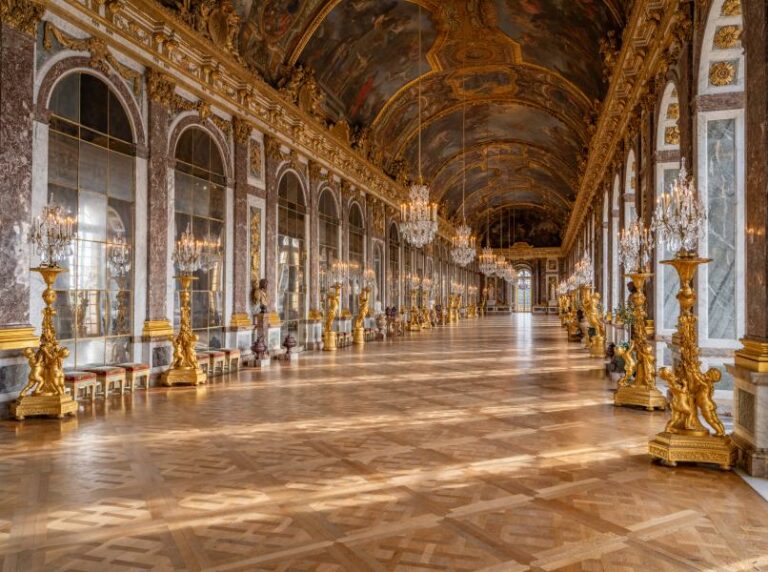
The most spectacular phase came in the 1670s and 1680s, when Versailles reached the scale and refinement we recognize today. During this period, architect Jules Hardouin Mansart took a leading role in expanding the palace. The most iconic addition was the Hall of Mirrors (Galerie des Glaces), which was completed in 1684. Stretching over 240 feet, lined with seventeen mirrored arches reflecting the gardens, it was both an artistic triumph and a political statement. At a time when mirrors were rare and extraordinarily expensive, their abundance proclaimed France’s economic strength and technical sophistication.
The North and South Wings were added to accommodate the growing court, housing princes, ministers, and high-ranking nobles who were now required to spend much of the year near the king. Simultaneously, André Le Nôtre’s gardens were extended on a monumental scale. Perfectly aligned avenues, sculpted groves, fountains, and water basins were engineered with mathematical precision, transforming previously marshy land into an ordered landscape that seemed to obey the will of the monarch.

The Permanent Move to Versailles
By 1682, Louis XIV officially moved the royal court and the machinery of government to Versailles. This was not merely a change of address. It marked the transfer of political gravity from Paris to a purposely-built royal city. Ministers worked in apartments within the palace, nobles sought favor in its galleries, and diplomatic ceremonies unfolded beneath painted ceilings celebrating the king’s victories.
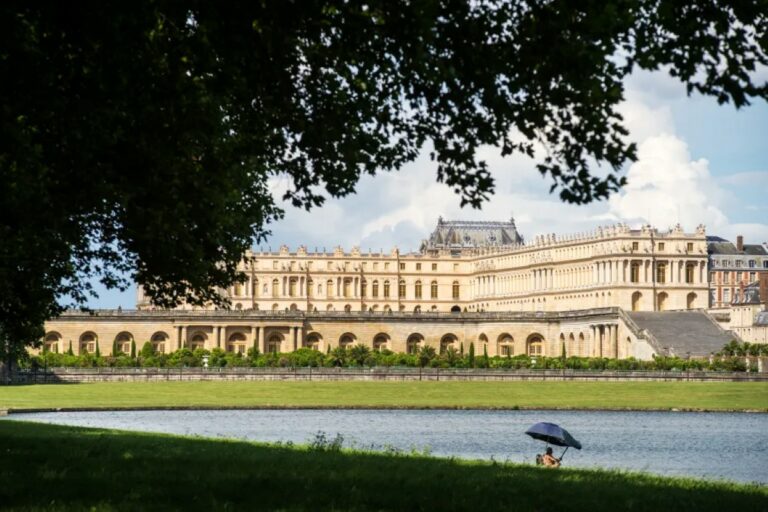
What had begun as a modest hunting lodge was now the largest and most ambitious palace complex in Europe. Its construction mobilized thousands of laborers, craftsmen, artists, engineers, and gardeners over decades. Versailles became not only a residence, but a fully functioning seat of power, reshaping French political culture and influencing court architecture across the continent for generations.
FAQs: When Was the Palace of Versailles Built?
The Palace of Versailles was originally built in 1631 as a hunting lodge for King Louis XIII. It was expanded into a small château in 1634 before undergoing major transformations under Louis XIV beginning in 1661.
Louis XIV began expanding Versailles in 1661, shortly after the death of Cardinal Mazarin. Major renovation campaigns took place during the 1660s, 1670s, and 1680s, including the construction of the Hall of Mirrors and the North and South Wings.
Versailles became the official royal residence in 1682, when Louis XIV permanently moved the royal court and government there from Paris.
Construction and expansion took place over several decades. While the original lodge was built quickly in the 1630s, the large-scale palace complex developed between 1661 and the early 18th century, with continuous additions and refinements.
Louis XIV chose Versailles for its distance from Paris, which had experienced political unrest during his childhood. Versailles also offered open land that allowed for controlled architectural planning and the creation of vast formal gardens aligned with his vision of royal authority.
Plan Your Visit to Step Inside Absolute Power at Versailles Today!
If you wish to experience Louis XIV at Versailles not as tourists but as privileged guests, our team will be honored to design your private royal journey.
Book your Versailles tour today and explore one of Versailles’ most iconic rooms. Your guided visit will bring history to life with expert insights, rich context, and stories you won’t find anywhere else. Secure your spot now and experience the real Versailles through the spaces that shaped the daily life of the French nobility.
Versailles Unmissables Private Tour
Learn more about the fascinating history and lavish royal lives with your expert guide!