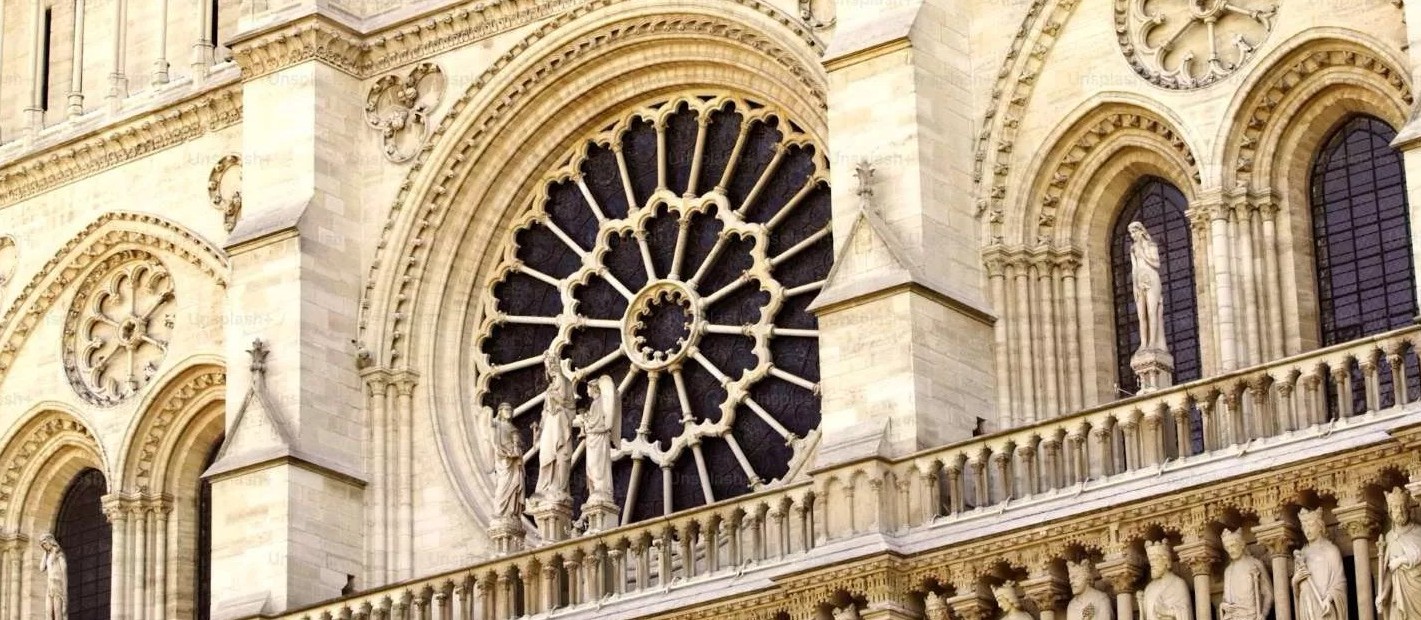
The Notre Dame Cathedral Stained Glass windows are far more than decorative masterpieces. They are luminous manuscripts, full of history and secrets. As you stand beneath their radiant blues and ruby reds, you are not simply observing medieval art, you are entering a historical dialogue that has shaped Paris for centuries.
For discerning travelers seeking depth beyond the surface, understanding the Notre Dame Cathedral Stained Glass transforms your visit into a profoundly intimate experience.
Let us guide you through their stories, craftsmanship, controversy, and rebirth.
Table of Contents
- 1 The Timeless Beauty of Notre Dame Cathedral's Stained Glass Windows
- 2 What are the Stories Found in the Stained Glass of Notre Dame Cathedral?
- 2.1 Here are some of the accessible narrative panels located around the back of the nave:
- 2.1.1 Stained Glass Window of the Prophets and Sibyls — Nicolas Coffetier (1884)
- 2.1.2 Stained Glass Window of the Life of the Virgin — Antoine Lusson (1855)
- 2.1.3 Stained Glass Window of the Pilgrimages to Notre-Dame — Alfred Gérente (1855)
- 2.1.4 Stained Glass Window of the Life of Saint Eustace — Edouard Didron (1863)
- 2.1.5 Stained Glass Window of the Life of Saint Louis — Edouard Didron (1865)
- 2.1.6 Stained Glass Window of the Tree of Jesse — Edouard Didron (1864)
- 2.1 Here are some of the accessible narrative panels located around the back of the nave:
- 3 Restoration Efforts of the Stained Glass after the 2019 Fire
- 4 Notre Dame Cathedral’s Controversial Competition for its New Stained Glass
- 5 Visiting Notre Dame Cathedral to Experience Its Stained Glass
- 6 FAQs About Notre Dame Cathedral Stained Glass
- 7 Plan Your Visit to See Notre Dame Cathedral's Stained Glass today!
The Timeless Beauty of Notre Dame Cathedral's Stained Glass Windows
The stained glass of Notre Dame has captivated visitors since the 13th century. Bathed in shifting Parisian light, these windows create an atmosphere that is both theatrical and contemplative.
Beyond their aesthetic brilliance, the Notre Dame Cathedral Stained Glass windows were designed to educate, inspire, and elevate the soul.
A Brief Historical Overview of Stained Glass
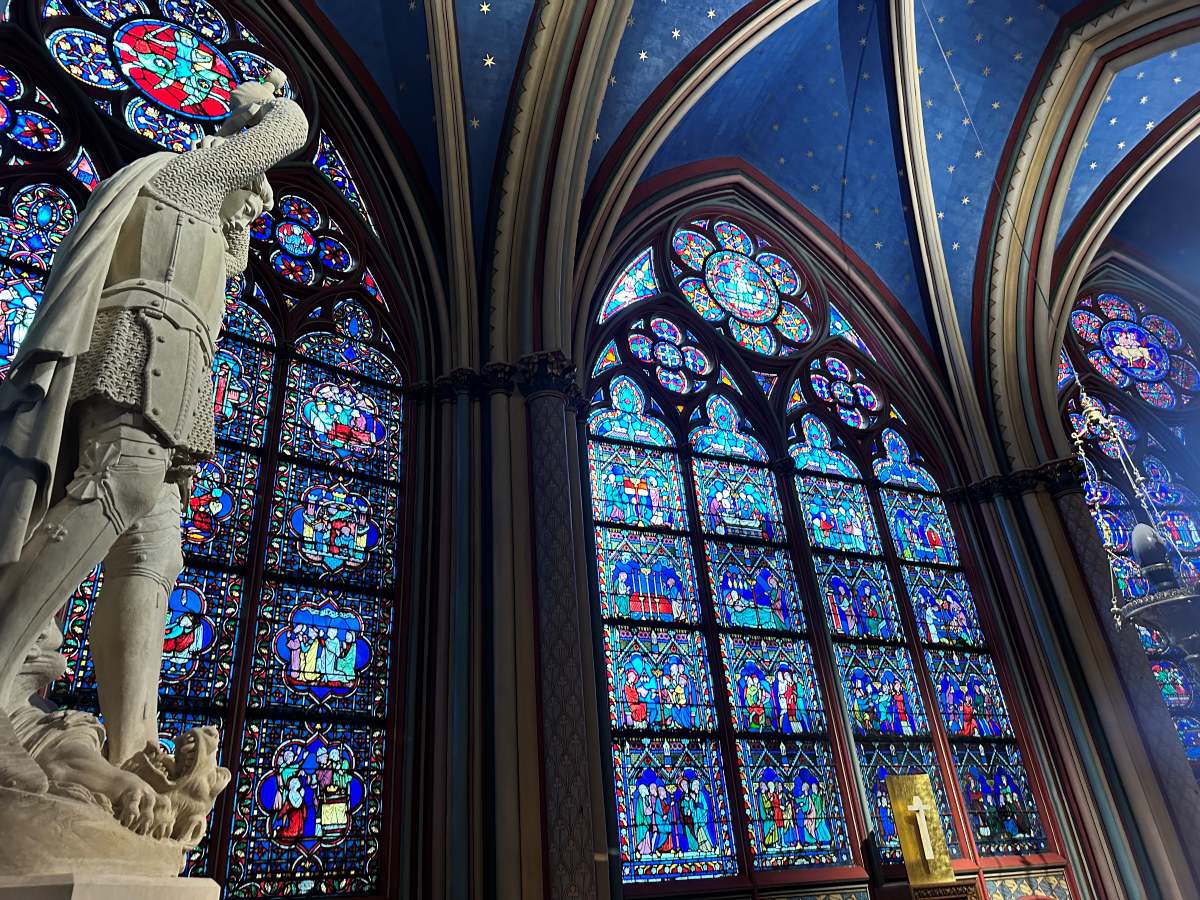
Stained glass flourished during the Gothic period, particularly in 12th- and 13th-century France. As architecture evolved with flying buttresses and ribbed vaults allowing taller walls, cathedrals became canvases for light.
In medieval society, where literacy was rare, stained glass served as the “Bible of the Poor.” Through vivid imagery, biblical narratives unfolded in color and light.
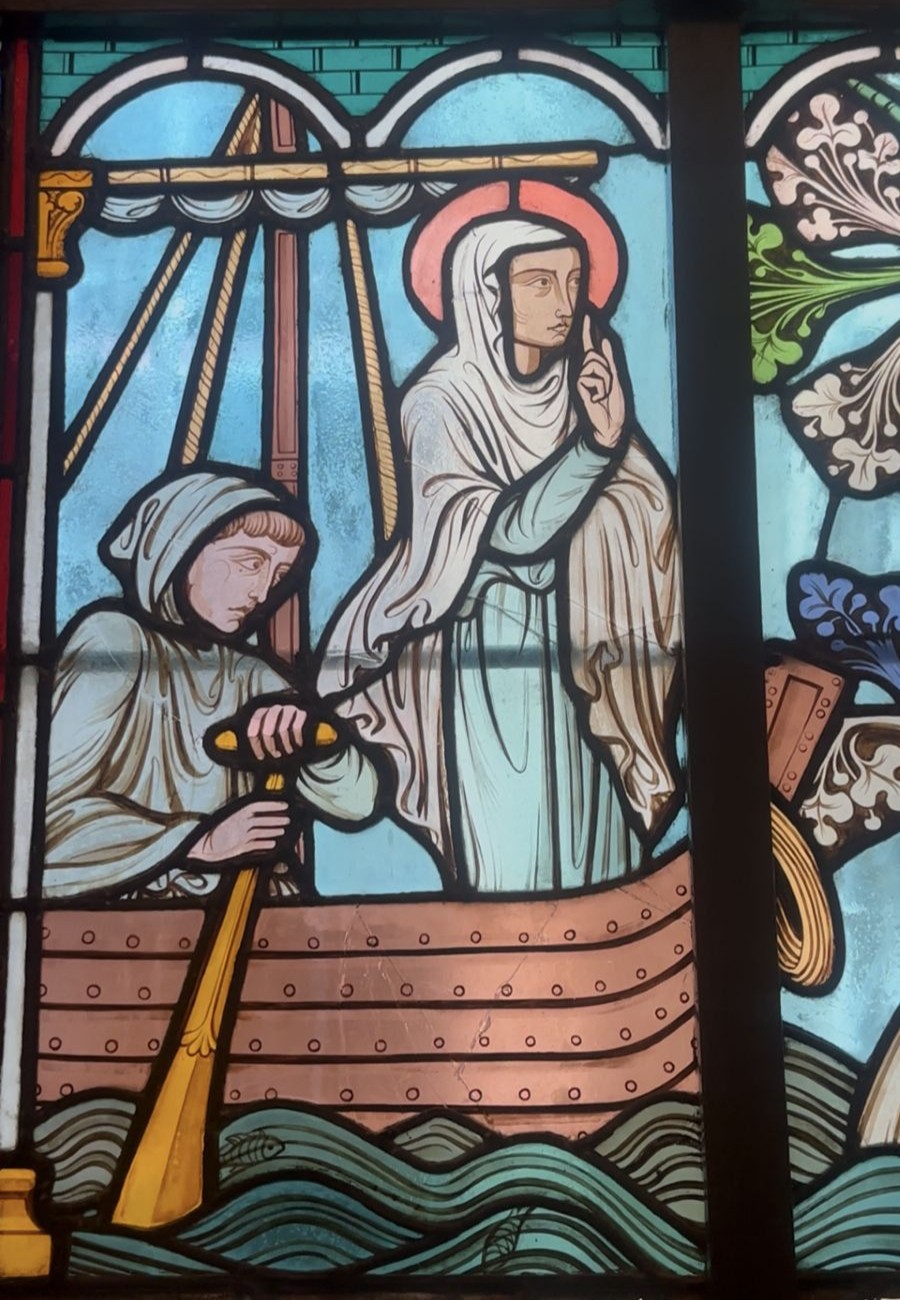
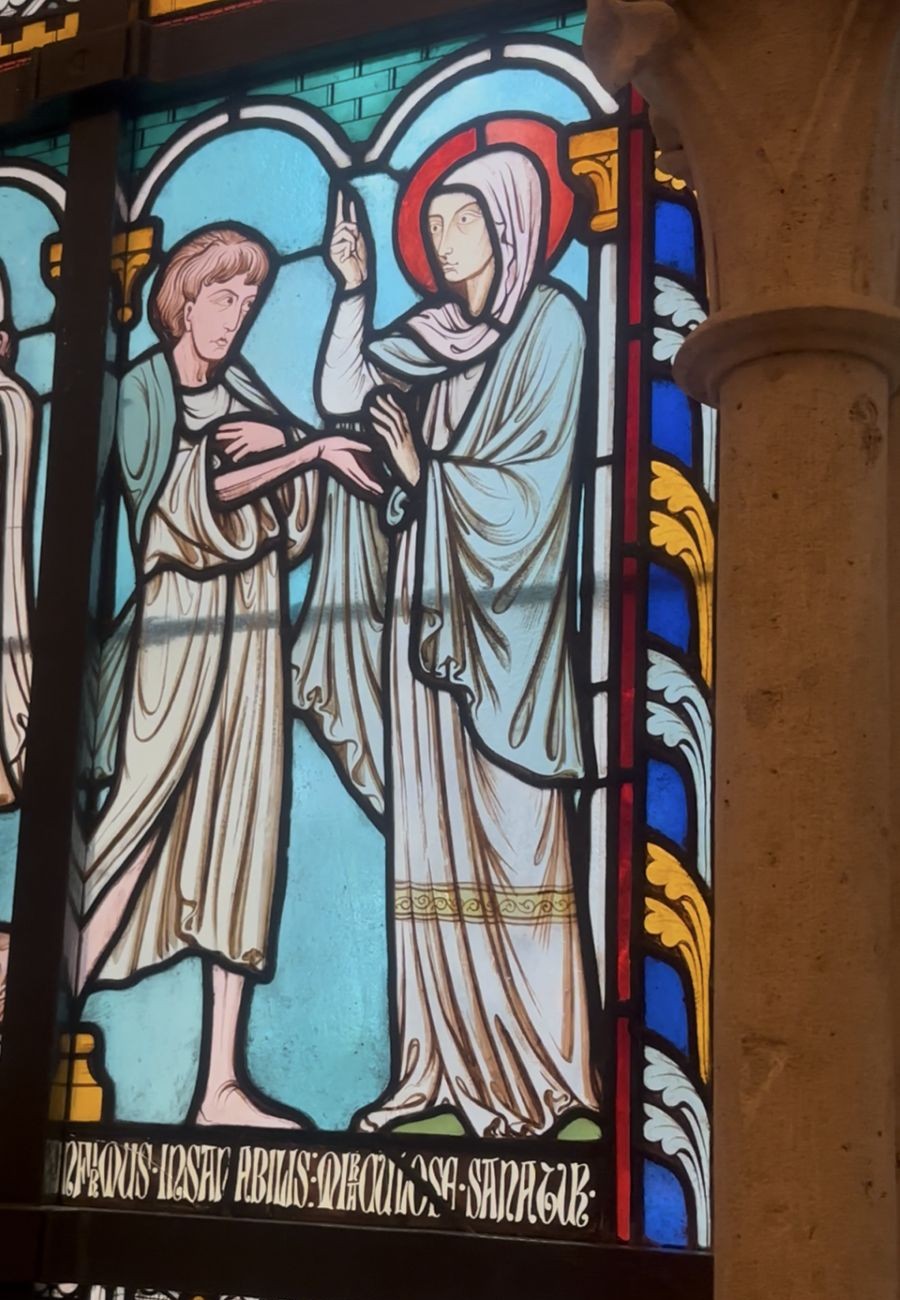
Notre Dame, whose construction begun in 1163, was a grand showcases of this innovation. Many of the windows were replaced or restored during the 19th century during the ambitious campaign led by architect Eugène Viollet-le-Duc (1844–1864). After the damage and neglect of the French Revolution, much of the medieval glass had been destroyed, dispersed, or heavily altered.
Viollet-le-Duc, driven by a Romantic vision of the Middle Ages, wanted to restore and elevate this important feature of the Cathedral.
Working with master glassmakers such as Antoine Lusson, Alfred Gérente, and Edouard Didron, he commissioned entirely new windows inspired by Gothic models yet infused with 19th-century artistic sensibilities. In some chapels, medieval fragments were integrated into new compositions; in others, complete replacements were installed.
This 19th-century intervention was not a neutral act of conservation. It was a reinterpretation shaped by nationalism, Catholic revival, and a desire to restore France’s medieval grandeur.
Symbolism and Spiritual Purpose Behind the Glass
Every color in the Stained Glass at Notre Dame Cathedral carries meaning:
Blue: Heaven, divinity, the Virgin Mary
Red: Christ’s sacrifice and martyrdom
Green: Renewal and resurrection
Purple: Royalty and penance
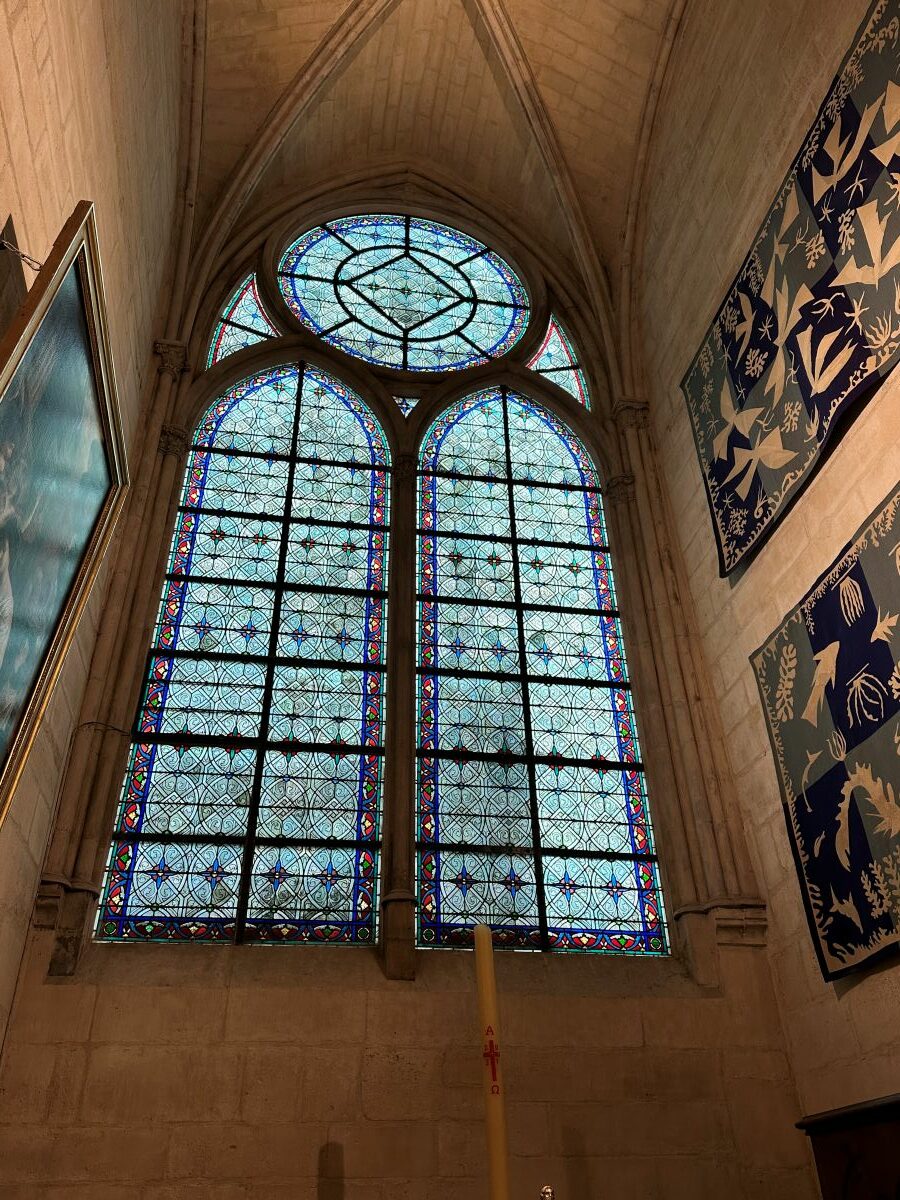
Not all windows in Notre Dame Cathedral’s Stained Glass are explosions of color. Often a technique is known as grisaille is used. Derived from the French word gris (gray), grisaille windows were composed primarily of clear or lightly tinted glass, delicately painted with subtle geometric or vegetal patterns in monochrome tones.
Why use restraint in a cathedral famous for radiant blues and reds? Grisaille served both a practical and spiritual purpose. Architecturally, it allowed more natural light to flood the interior, especially in areas where excessive color saturation would darken the nave. Spiritually, the softer, silvery illumination created a contemplative atmosphere, rather than something too rich or distracting.
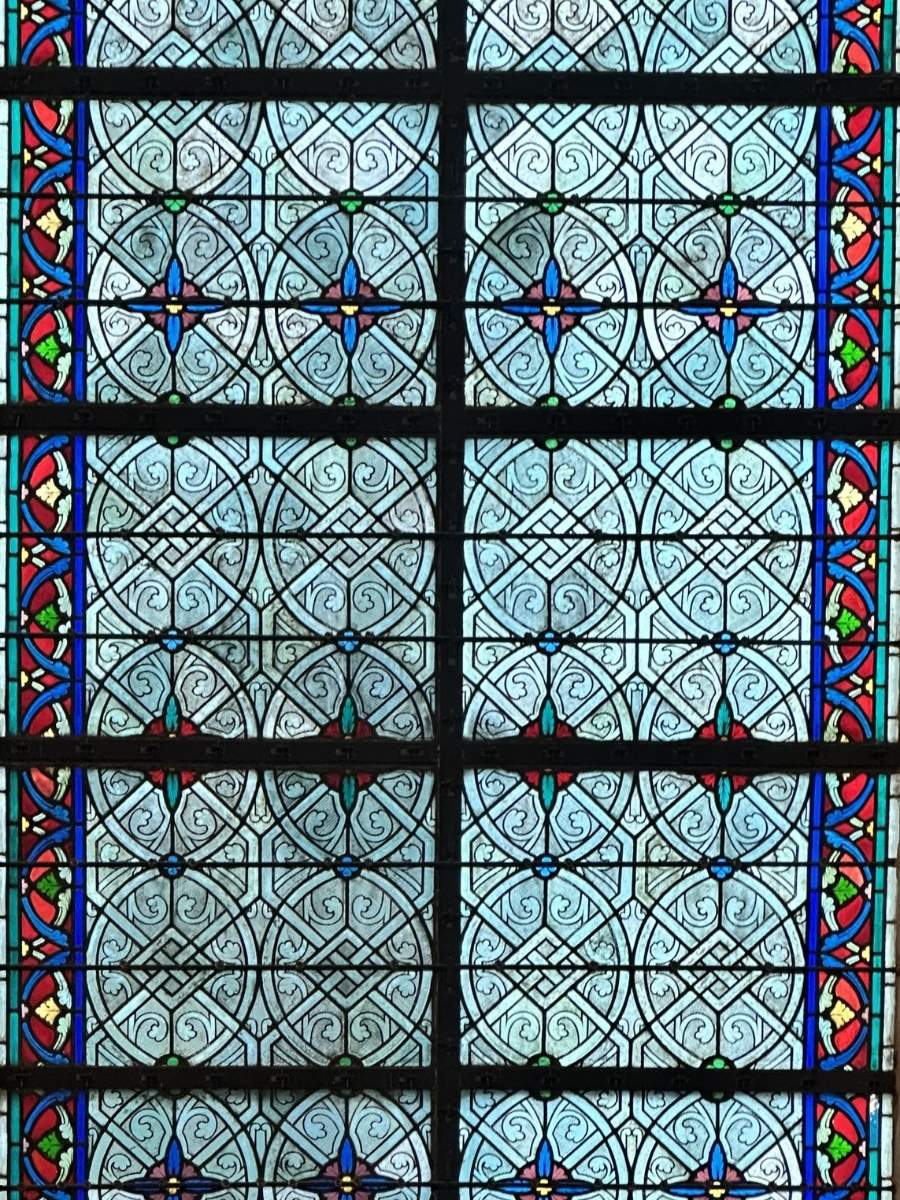
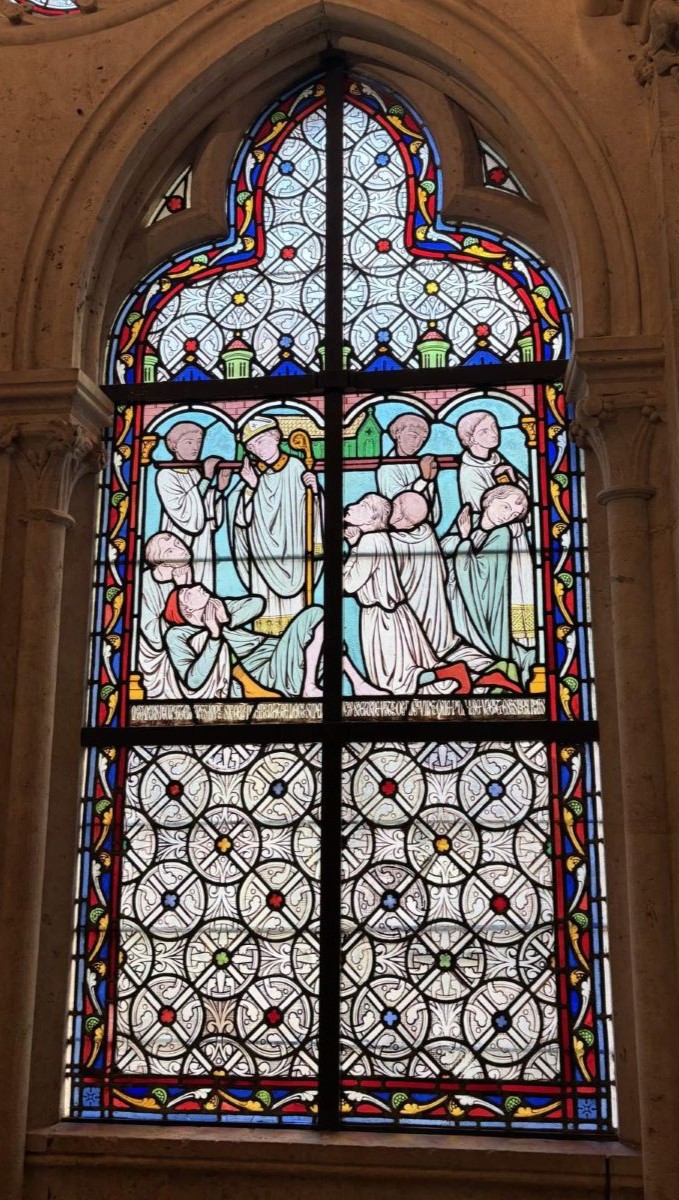
In Notre Dame, grisaille panels often frame or accompany more figurative compositions, creating rhythm and visual breathing space. They remind us that medieval aesthetics were not only about spectacle, but about balance. For refined observers, these understated windows reveal the sophistication of Gothic design: a masterful dialogue between brilliance and restraint.
The patterns themselves were never purely decorative. Vegetal motifs—vines, leaves, and stylized foliage—evoked the Garden of Eden, the Tree of Life, and Christ’s words, “I am the vine,” symbolizing spiritual growth and eternal renewal. Geometric forms—circles, quatrefoils, and interlacing lines—expressed divine order, perfection, and the harmony of creation. In this subtle monochrome language, the Notre Dame Cathedral Stained Glass reveals that even restraint carries theology: light filtered through pattern becomes a quiet meditation on cosmic balance.
Light itself was considered divine. Medieval theologians believed that colored light entering the cathedral symbolized God’s presence filtering into the human world.
When you observe the windows in silence, you begin to understand that this was architecture designed not only to impress but to transform.
Medieval Glassmaking Techniques
Creating the Notre Dame Cathedral Stained Glass required both scientific knowledge and artistic refinement. Medieval glassmakers began by combining silica-rich sand with potash and lime, additional elements to help the mixture melt and become strong and stable. Then the mixture was added in wood-fired furnaces that could reach temperatures above 2,000°F (1,100°C). Once molten, the glass was infused with metallic oxides to achieve its extraordinary colors, including cobalt that produced the cathedral’s legendary deep blues, copper creating reds and greens, manganese for purples, and iron that gave subtle ambers and browns.
The glowing material was then blown into cylinders or spun into crown glass before being flattened into sheets. From these sheets, artisans carefully selected each piece for color and texture and cut individual pieces according to a full-scale drawing known as a cartoon. Details such as facial expressions, drapery folds, and inscriptions were painted on using a mixture of ground glass and iron oxide, known as vitreous paint. This was permanently fused to the surface during a second firing in the kiln.
This video from the V&A Museum in London gives an overview of how stained glass is created from selecting the glass pieces to assembling the pieces with lead cames.
Finally, each fragment was assembled together using lead cames, slender H-shaped strips that held the composition together while also forming part of the visual design. The panel was waterproofed with putty, reinforced with iron bars, and installed high within the stone tracery of the cathedral. This painstaking, collaborative process between master designers and skilled glaziers ensured that every window of the Notre Dame Cathedral Stained Glass was both structurally resilient and spiritually expressive.
What are the Stories Found in the Stained Glass of Notre Dame Cathedral?
While much of the iconic Notre Dame de Paris Rose Windows are original stained glass from the 13th century, the other narrative panels were changed in the 19th century.
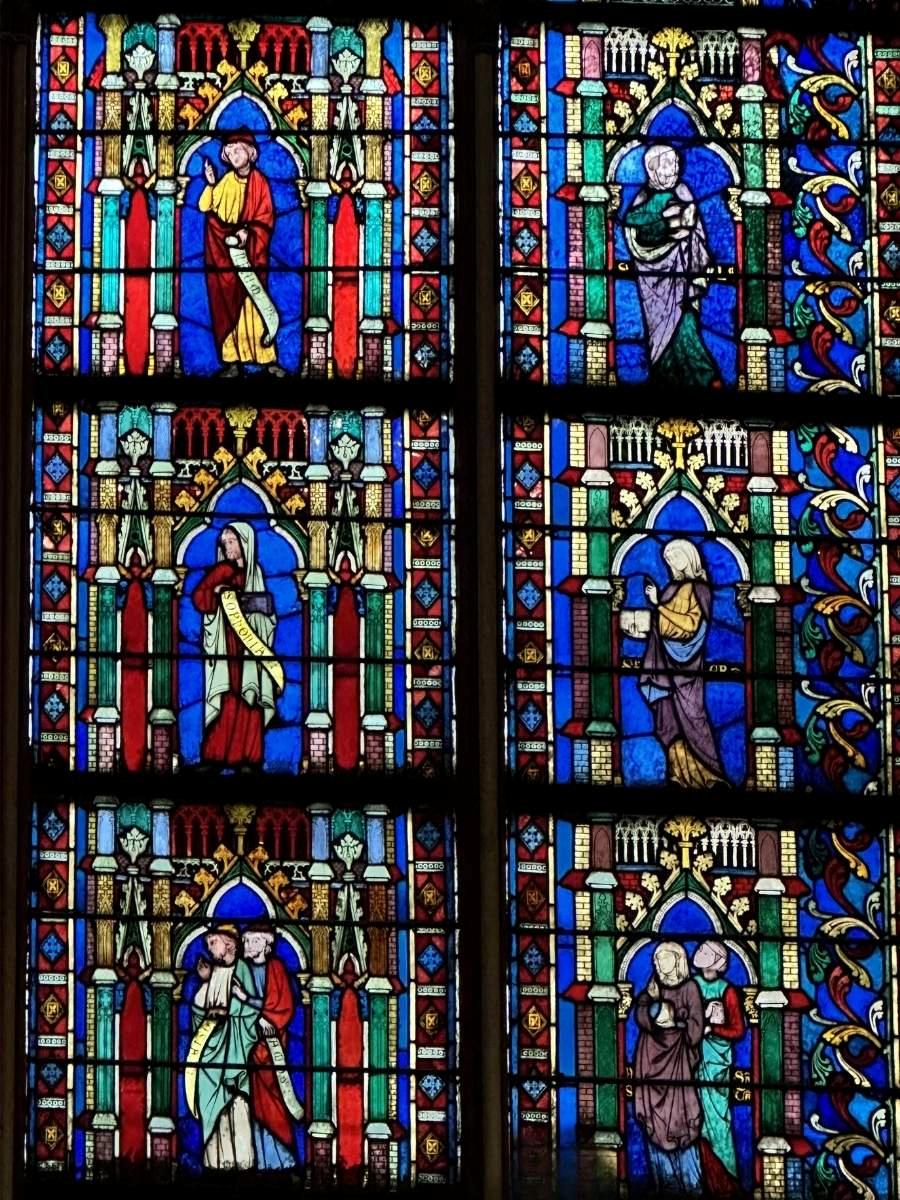
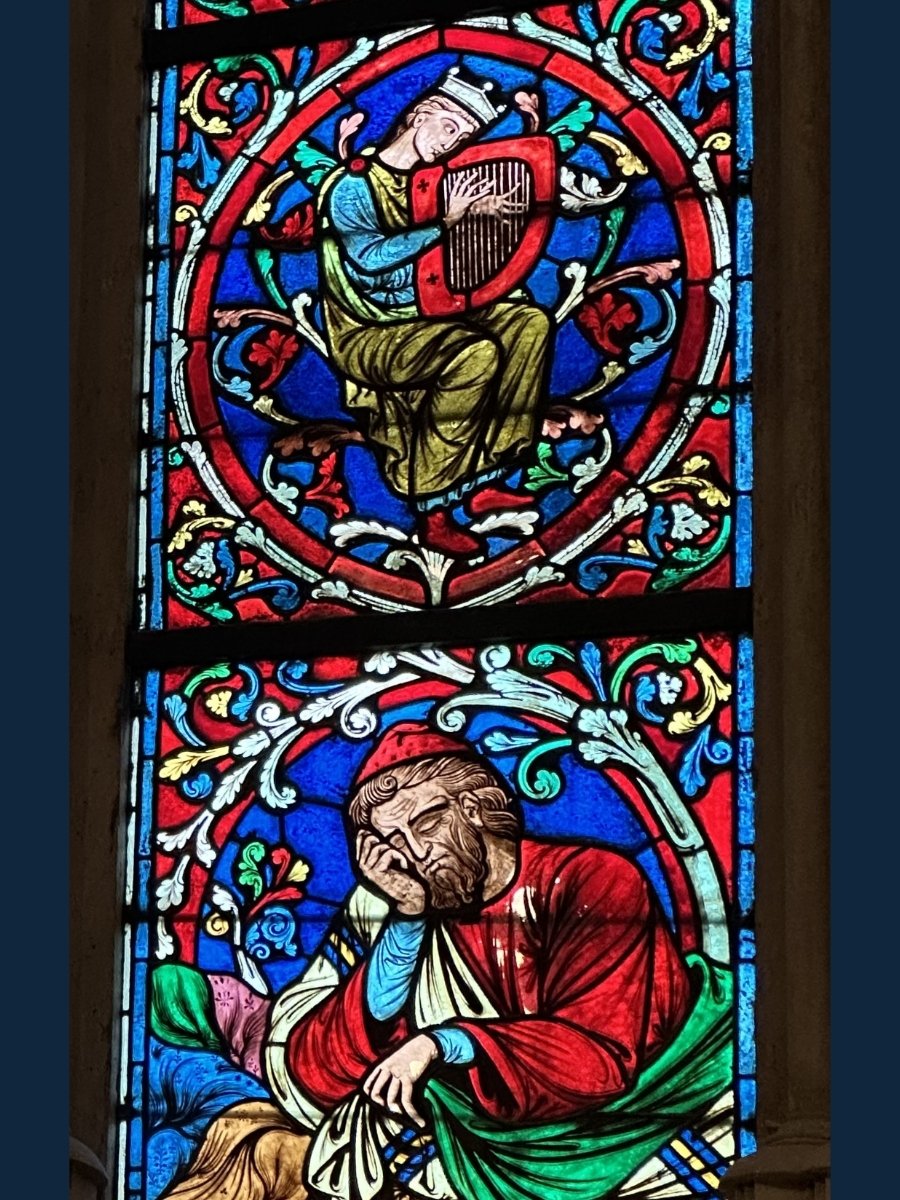
Stained Glass Window of the Prophets and Sibyls — Nicolas Coffetier (1884)
This remarkable composition brings together Old Testament prophets and classical sibyls (a pagan group of women who could foretell the future), linking Jewish prophecy and Greco-Roman wisdom to the coming of Christ. The inclusion of sibyls reflects Renaissance humanist influence revived in the 19th century. The window symbolizes continuity between civilizations and reinforces the theological message that Christ’s arrival was foretold across cultures.
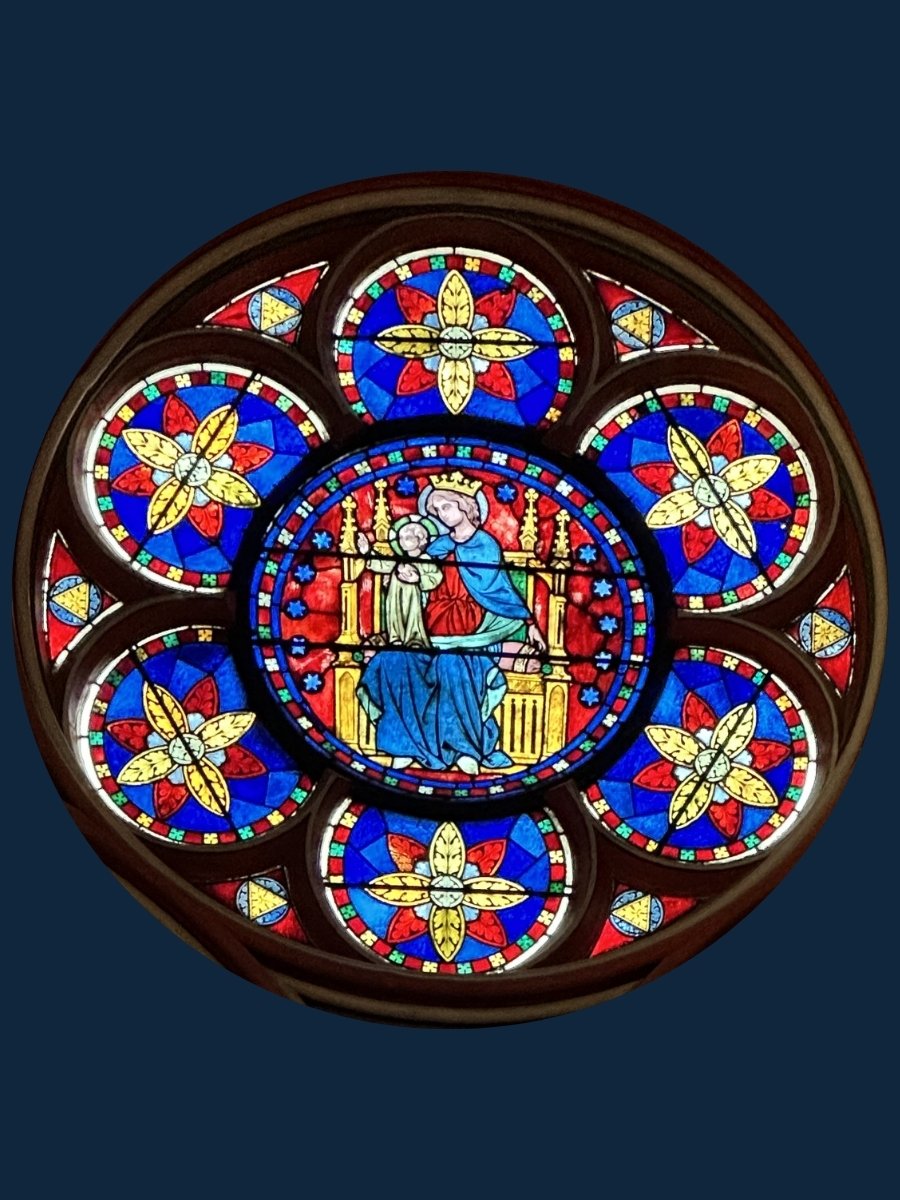
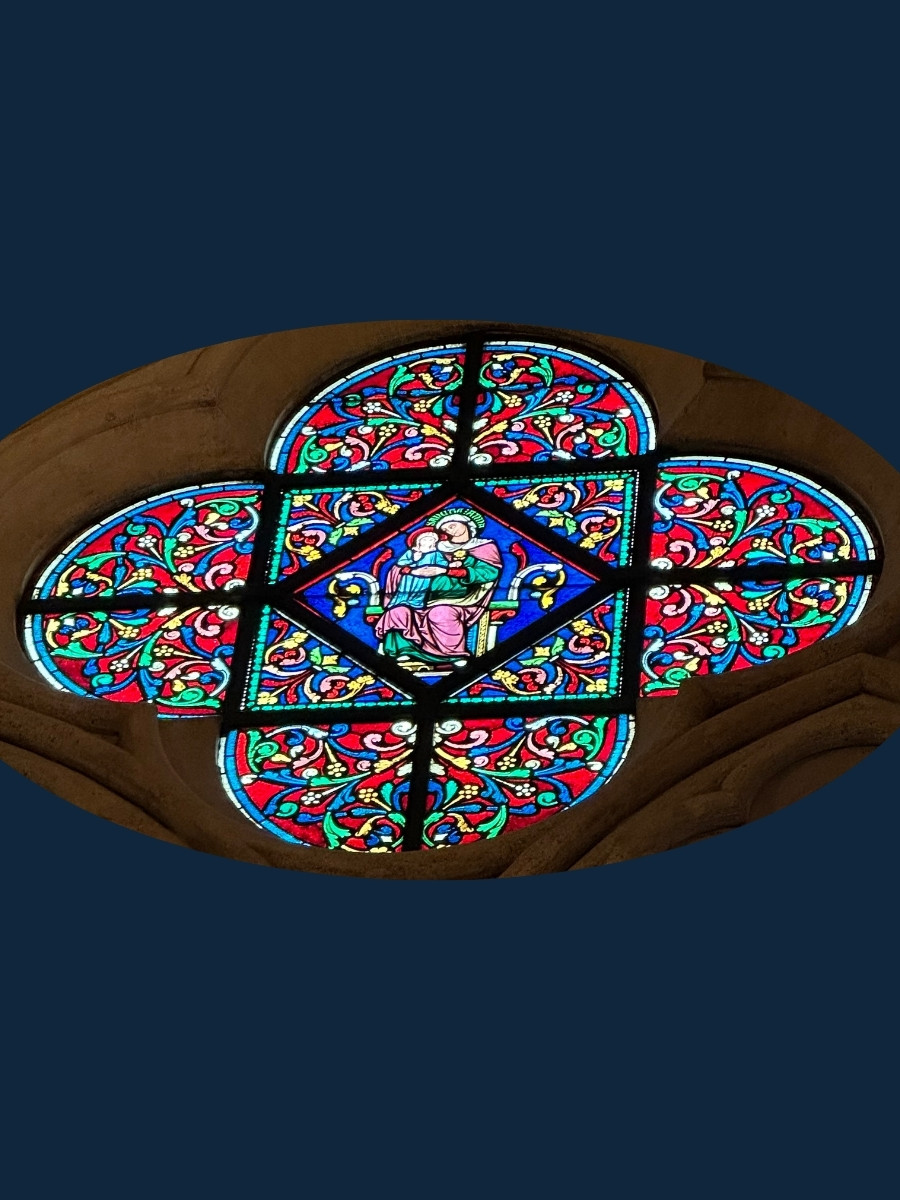
Stained Glass Window of the Life of the Virgin — Antoine Lusson (1855)
This window unfolds the life of the Virgin Mary from her birth to her Assumption into Heaven. Scenes of the Annunciation, the Nativity, and the Coronation of the Virgin are rendered with delicate expressions and refined gestures characteristic of mid-19th-century artistry. It covers the central themes of the spiritual identity of Notre Dame.
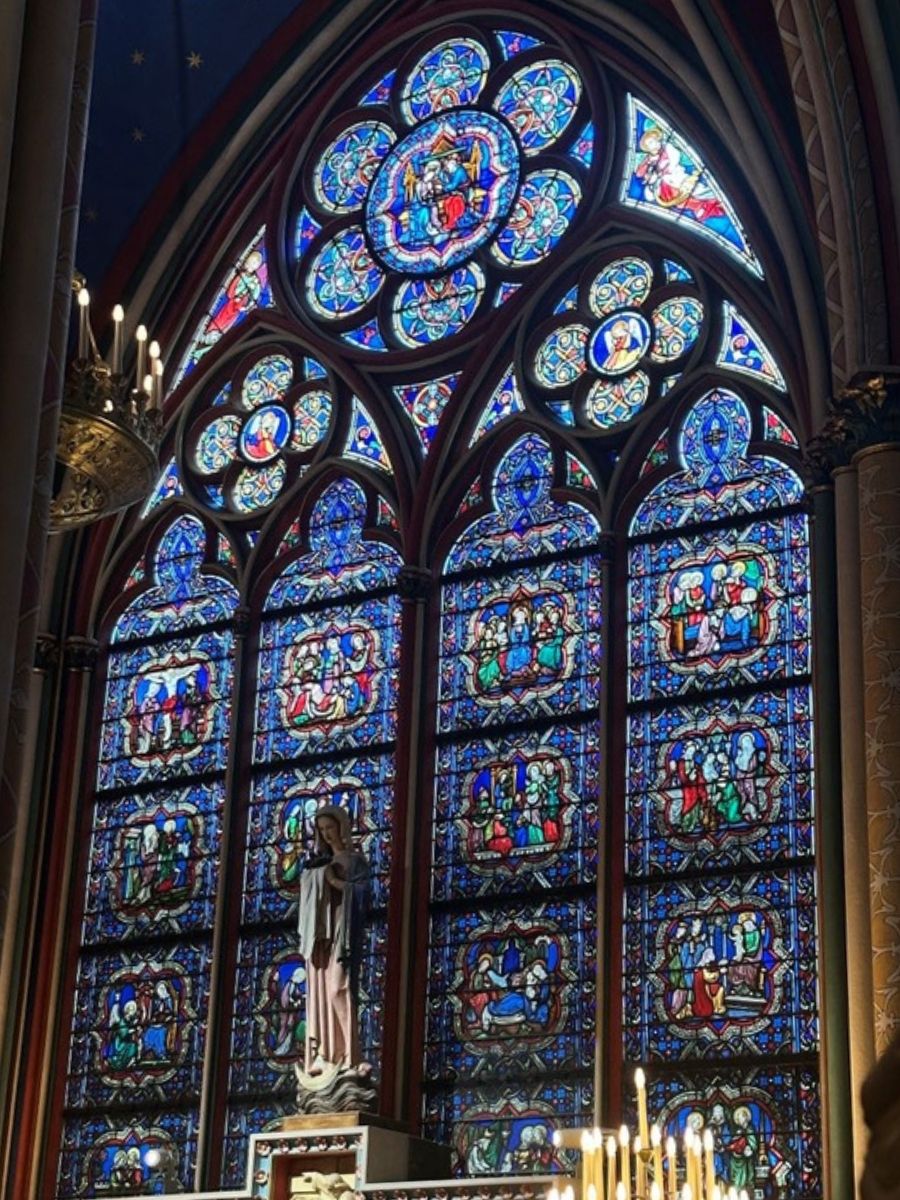
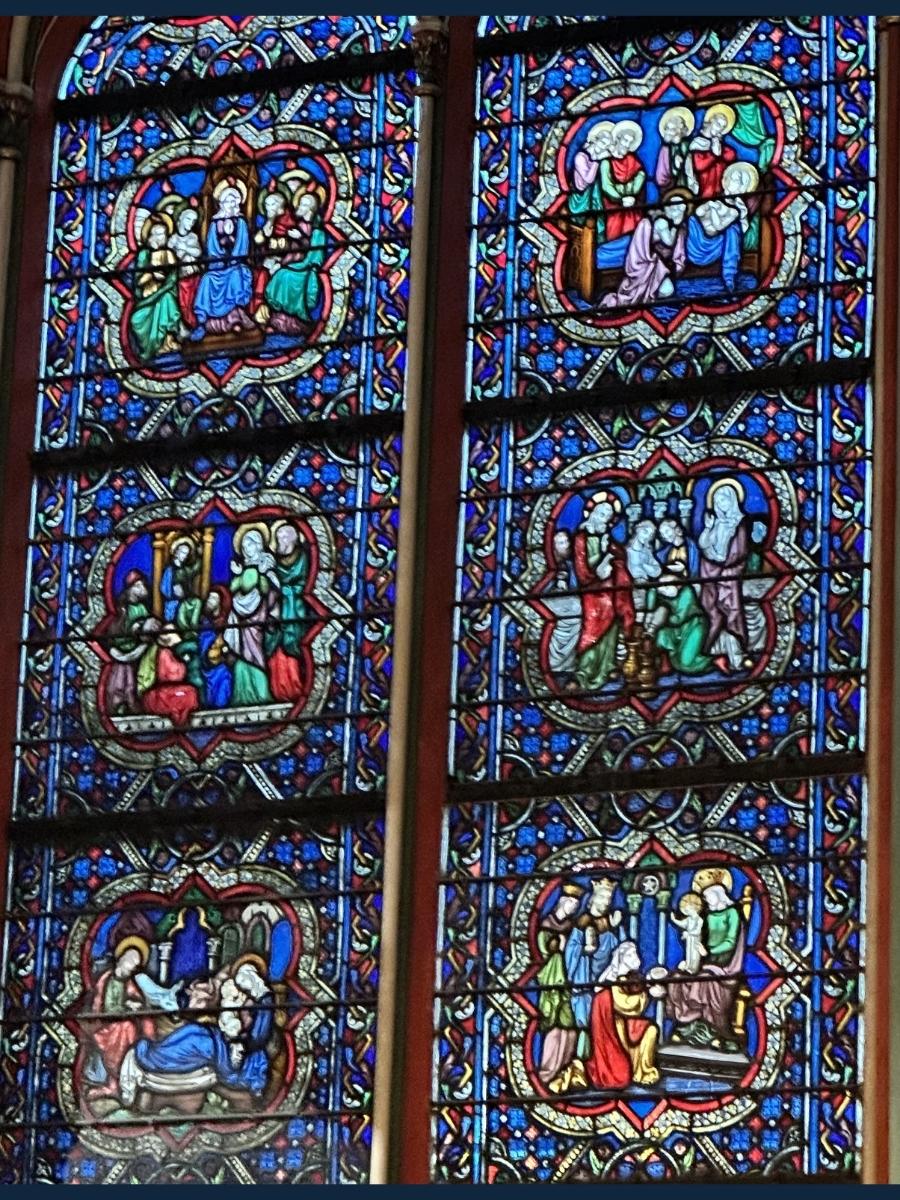

Stained Glass Window of the Pilgrimages to Notre-Dame — Alfred Gérente (1855)
This lesser-known but deeply evocative window depicts centuries of devotion to the cathedral itself. Pilgrims are shown arriving in faith, offering prayers and gratitude. It subtly transforms the cathedral into both subject and sanctuary, reminding you that Notre Dame has long been a destination of spiritual journeying.
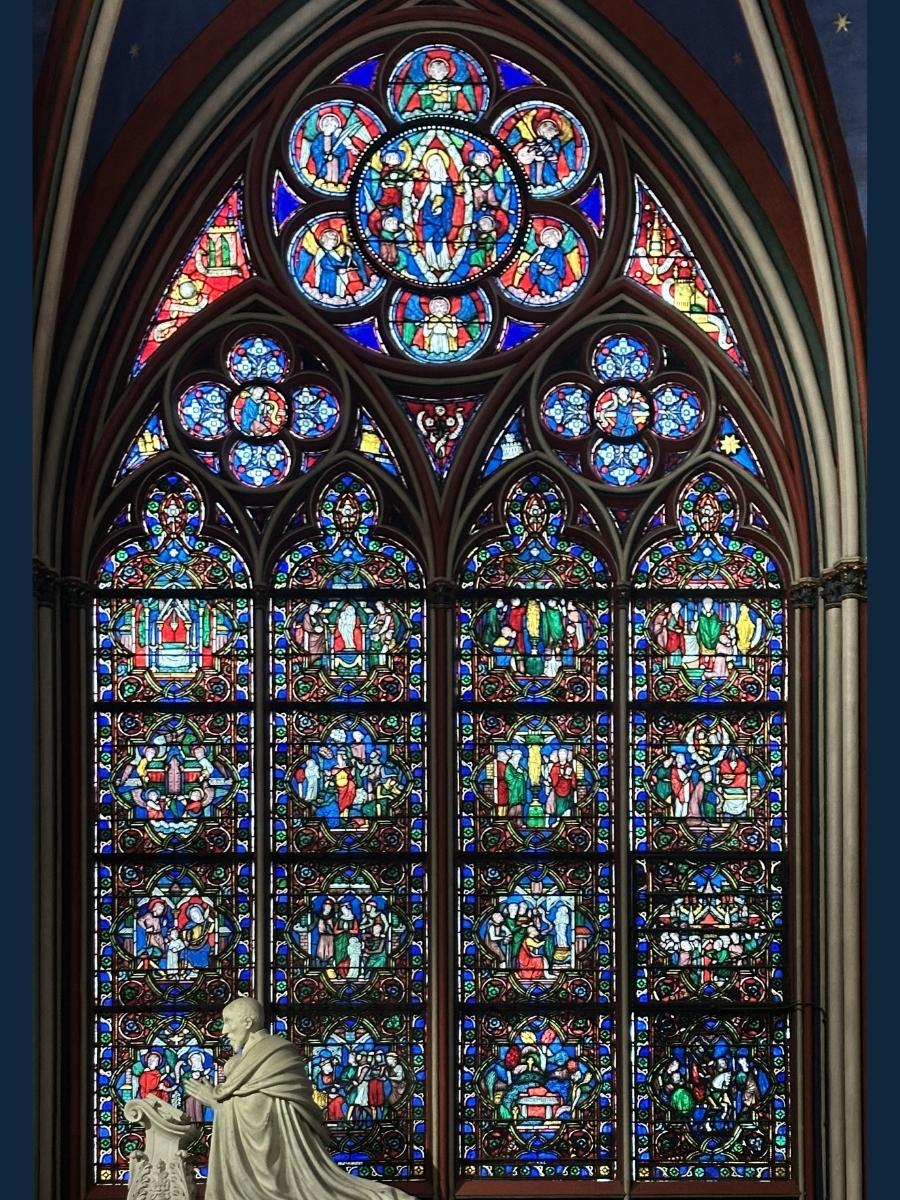
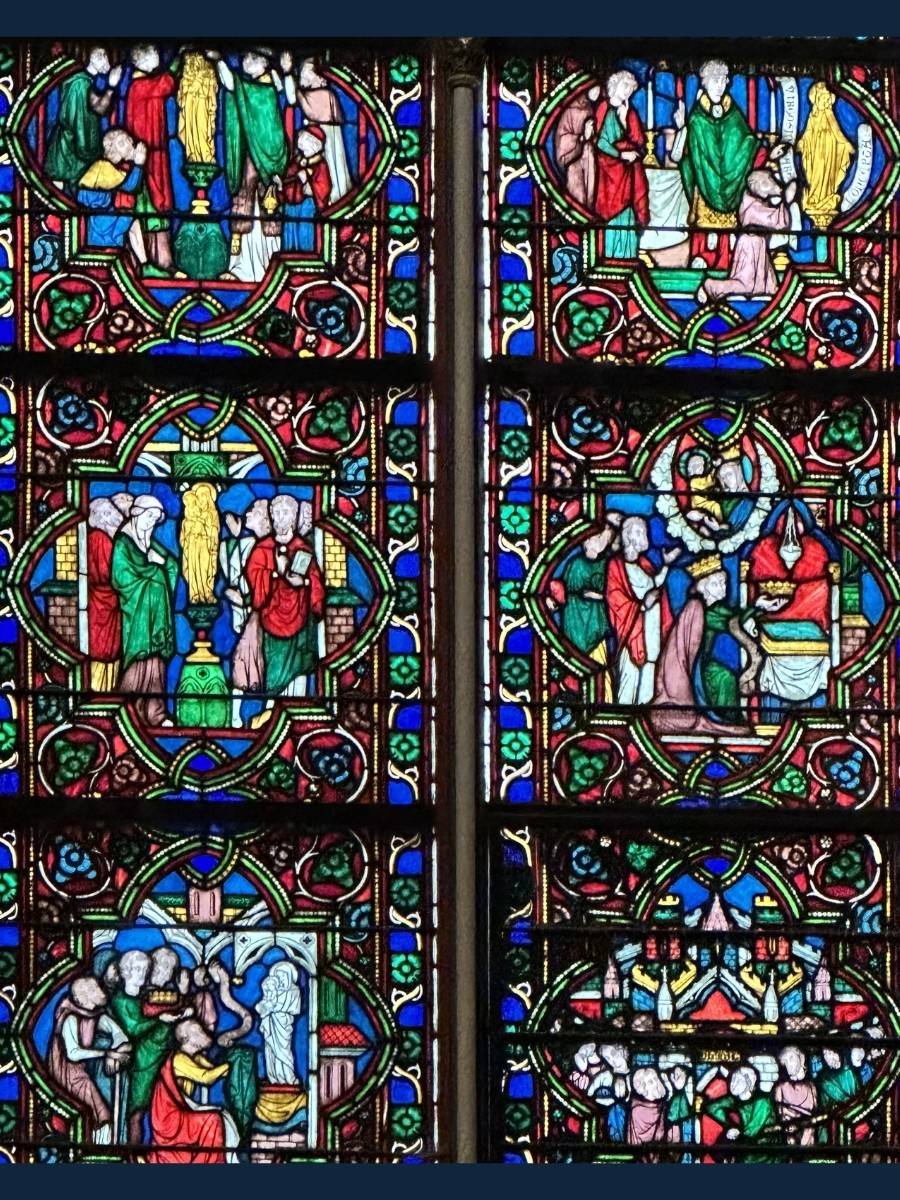
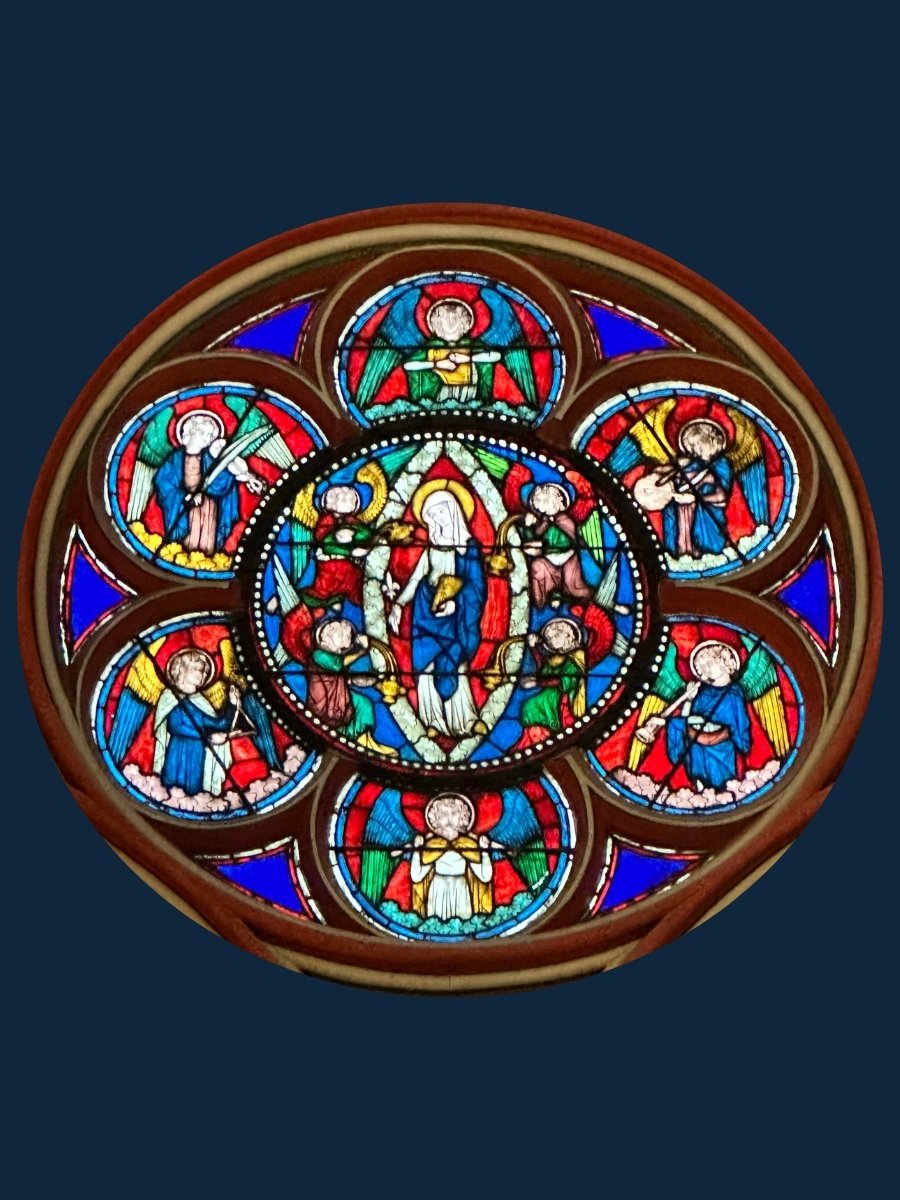
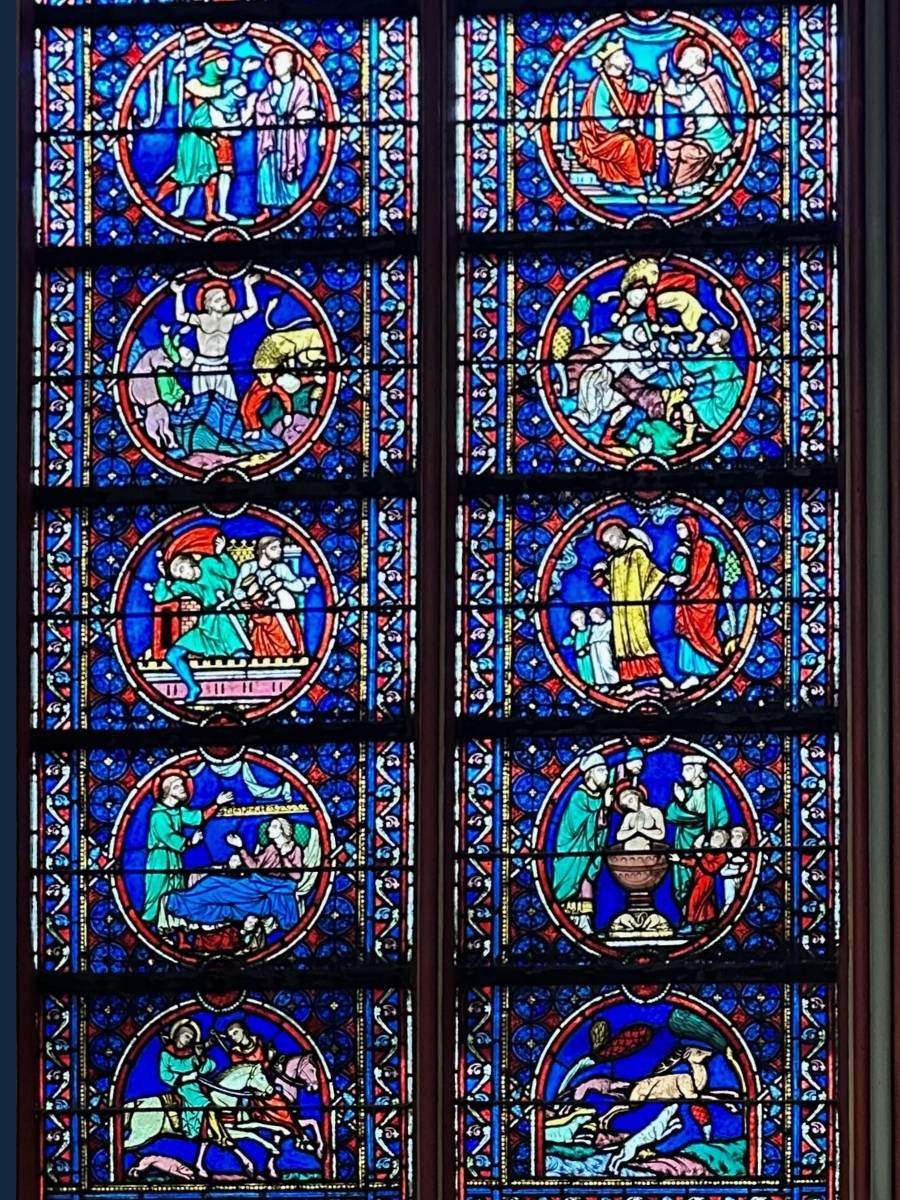
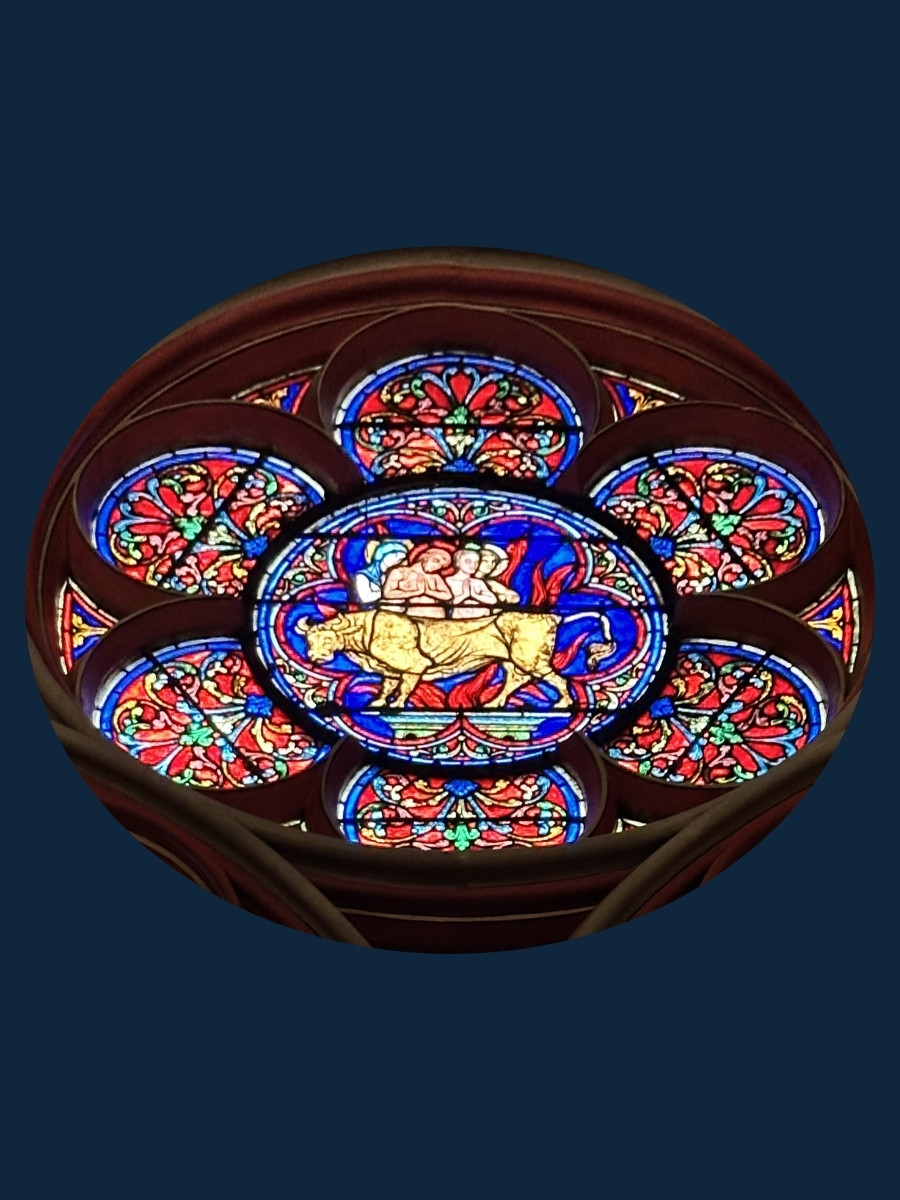
Stained Glass Window of the Life of Saint Eustace — Edouard Didron (1863)
The story of Saint Eustace recounts a Roman general who converted to Christianity after witnessing a vision of Christ between a stag’s antlers. The window captures this mystical moment and his subsequent trials. It is a narrative of faith tested through suffering, rendered with Romantic intensity.
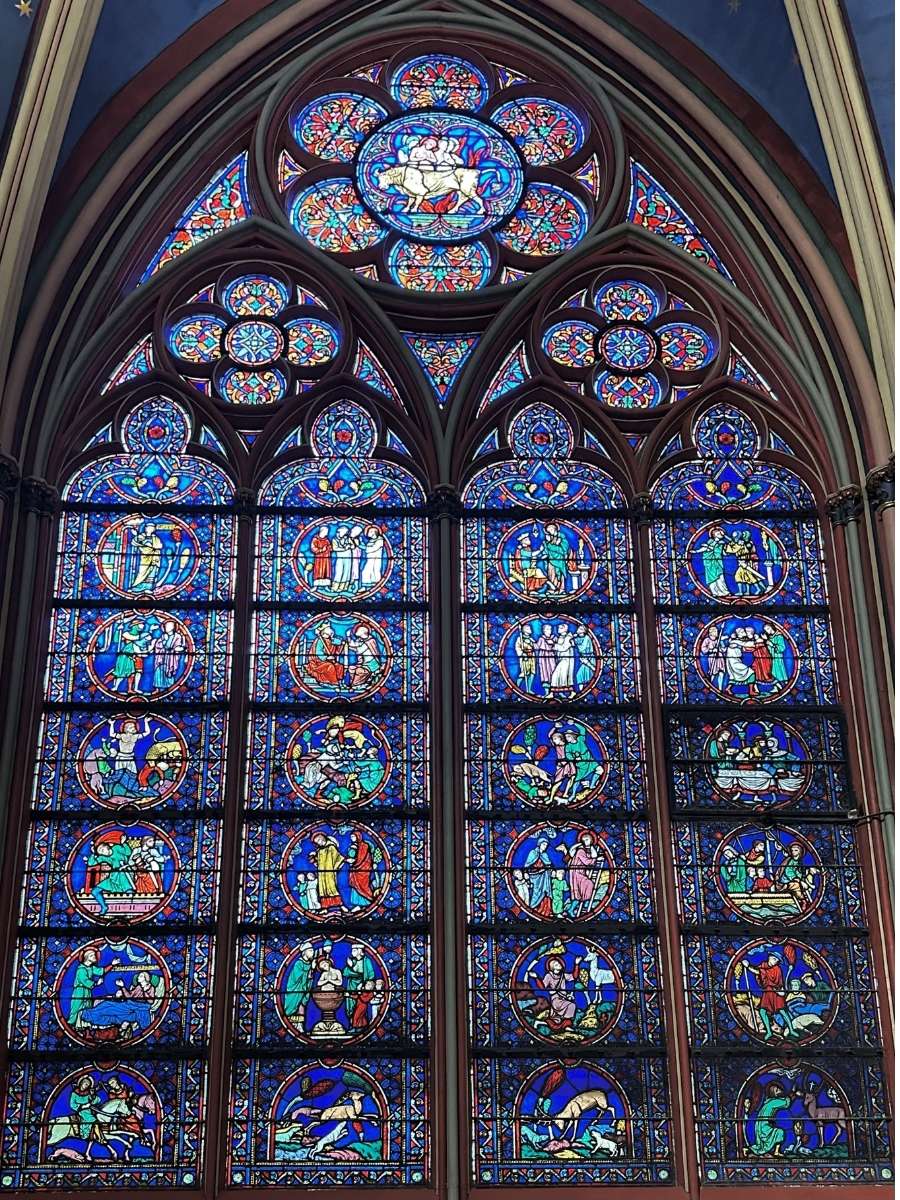
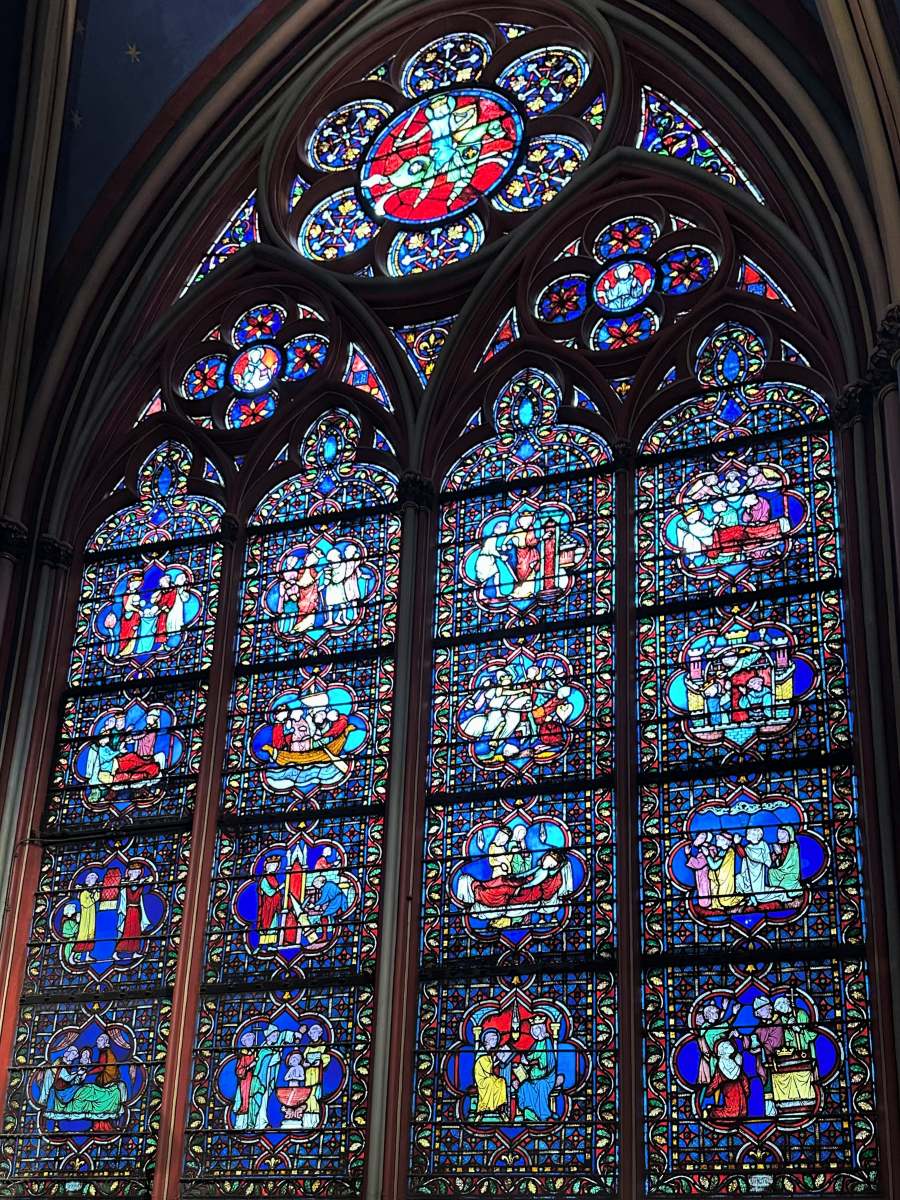
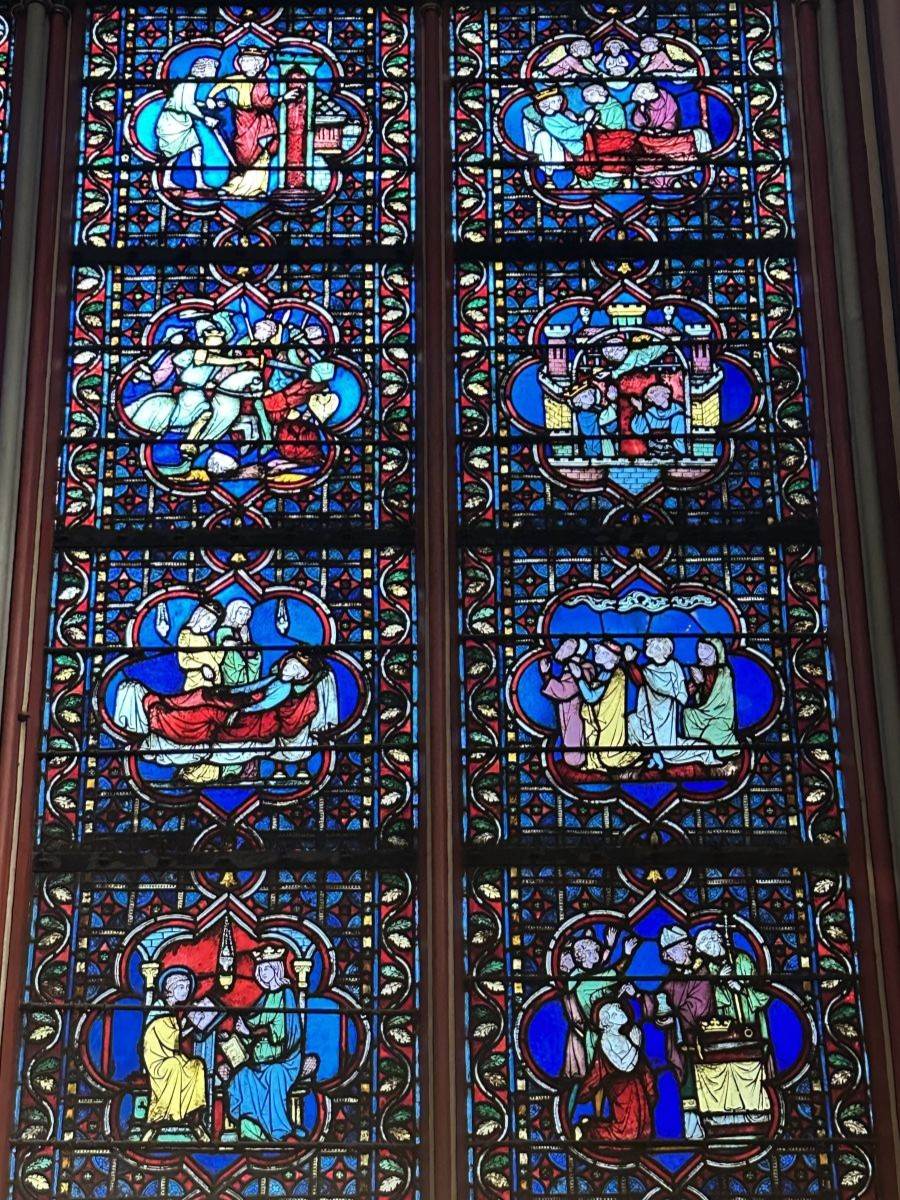
Stained Glass Window of the Life of Saint Louis — Edouard Didron (1865)
This window honors King Louis IX, later canonized as Saint Louis. Scenes illustrate his piety, charity, and role as a just monarch. For travelers fascinated by French royal history, this panel bridges sacred faith and monarchy, reinforcing the idea that French kingship once carried a divine dimension.

Stained Glass Window of the Tree of Jesse — Edouard Didron (1864)
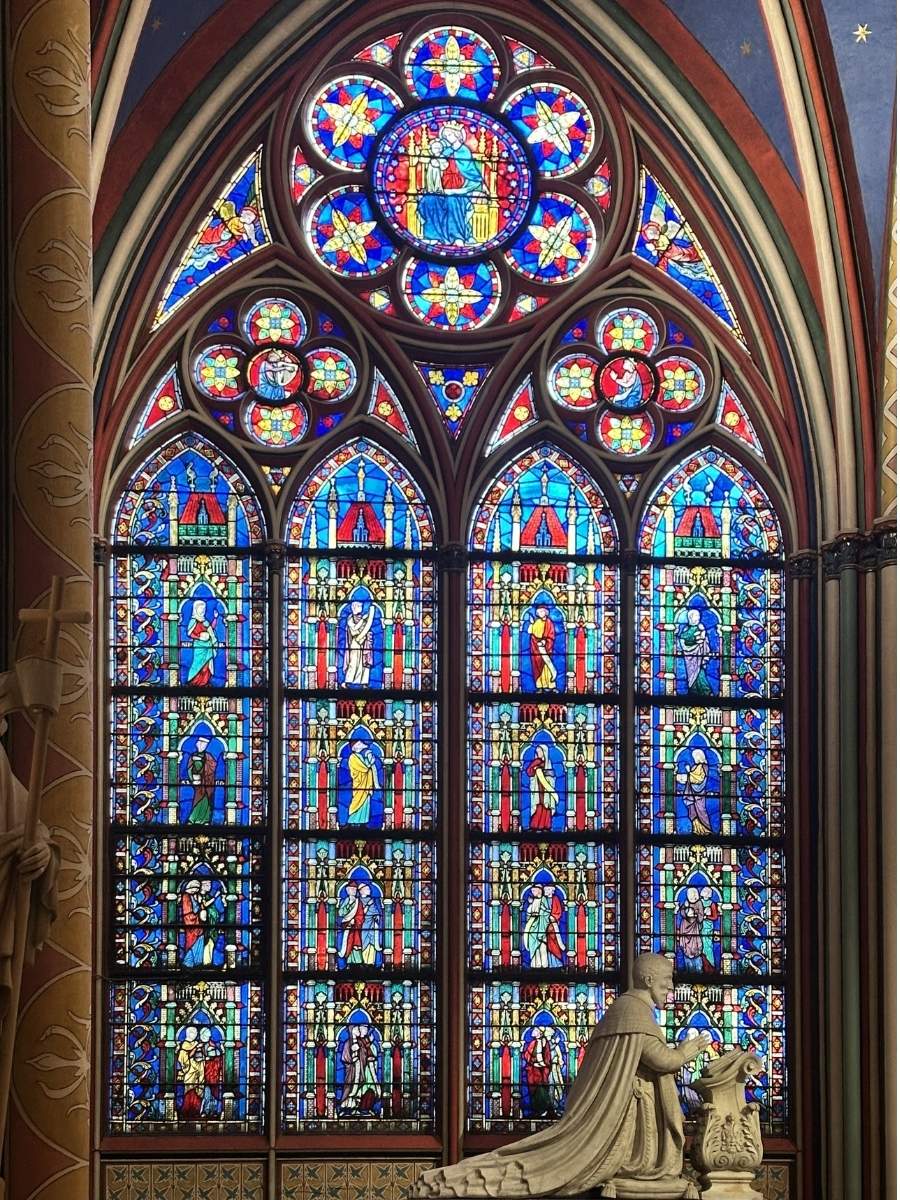
The Tree of Jesse presents Christ’s genealogy, growing symbolically from Jesse, father of King David. Figures of prophets and ancestors ascend in a vertical composition culminating in the Virgin and Child. This theological “family tree” visually expresses continuity, divine promise, and fulfillment.

Restoration Efforts of the Stained Glass after the 2019 Fire
On April 15, 2019, a fire shocked the world. Miraculously, the rose windows and the stained glass panels survived, in large part to the firefighters’ directive not to spray the glass directly as this could have shattered it. However, its survival is not without consequence and it endured invisible but serious trauma.
Molten lead from the roof contaminated the surfaces of the glass panels with fine toxic dust as did the ash from the burned wooden structure. The intense heat and temperature variations created risks of thermal shock, potentially weakening centuries-old panes. Vibrations from the collapse of the spire and other falling debris and emergency stabilization measures caused violent structural stress throughout the cathedral, including the lead holding together the stained glass.
The Condition of the Notre Dame Cathedral Stained Glass Post-Fire
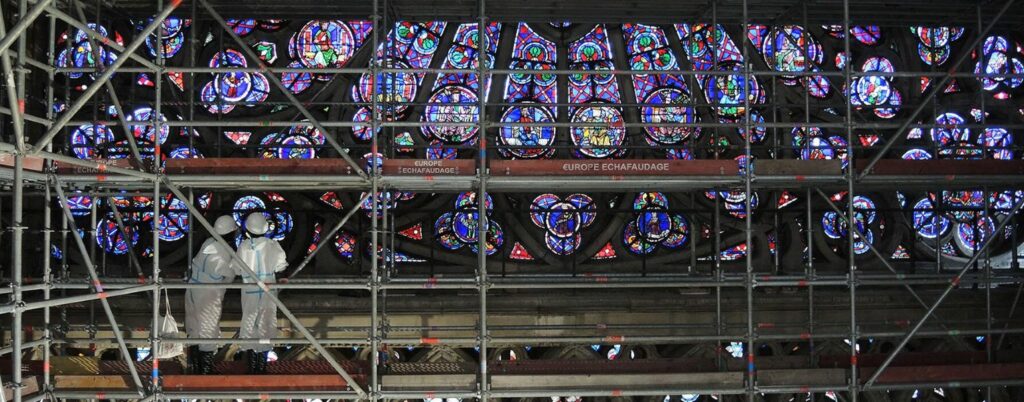
In the weeks following the fire, conservation experts conducted detailed diagnostic campaigns. Each window was inspected from scaffolding, photographed in high resolution, and tested for structural integrity. While the medieval rose windows remained structurally stable, laboratory analysis revealed significant lead particle deposits and surface grime embedded in the glass.
To prevent long-term chemical damage, many panels were carefully removed and transported to specialized restoration workshops across France. This was a monumental logistical operation requiring climate-controlled transport, meticulous labeling, and insurance-level documentation worthy of priceless artworks.
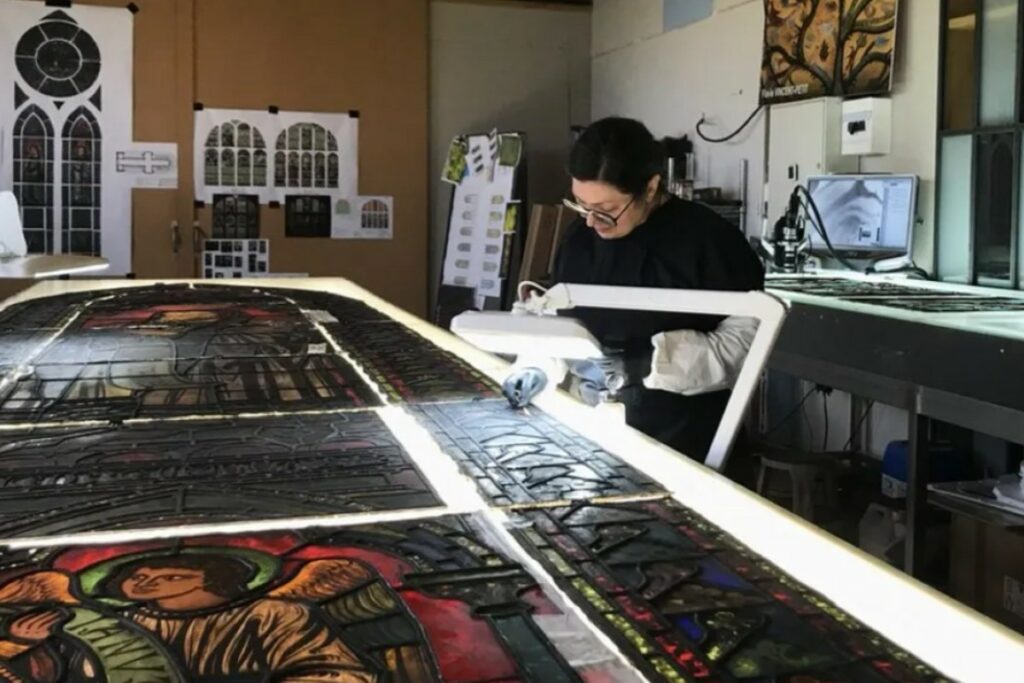
The Stained Glass Restoration and its Challenges
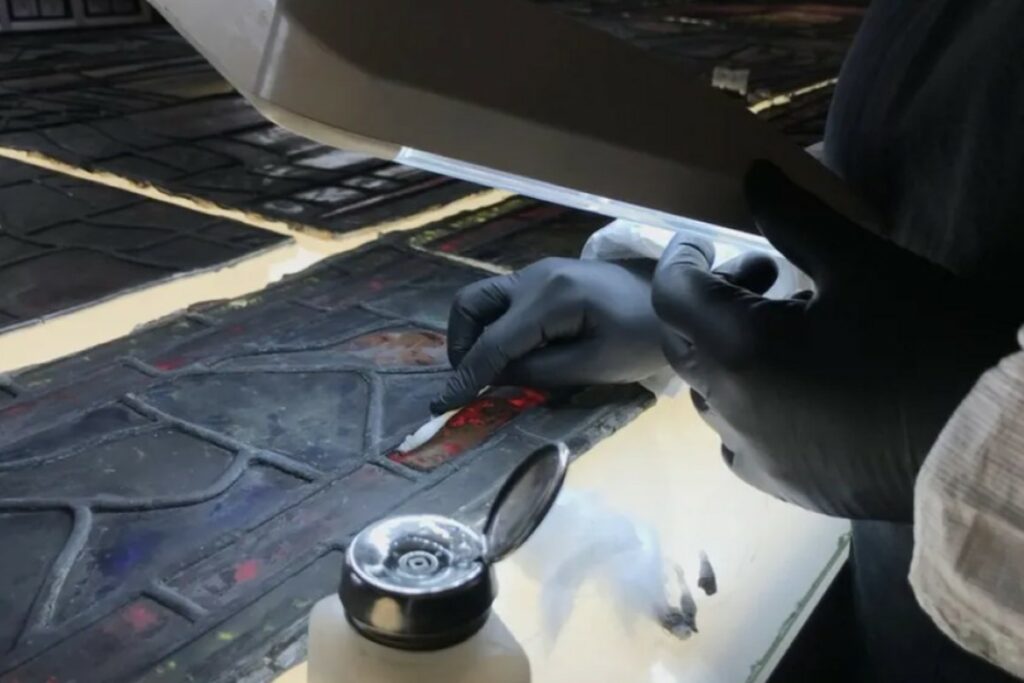
France mobilized some of its most experienced master glass artisans and scientists, working under the supervision of the Monuments Historiques authorities. Each panel was catalogued piece by piece before undergoing a delicate cleaning process using deionized water, soft brushes, and specialized conservation gels designed to lift contaminants without altering the original surface.
Extensive experimentation was conducted to determine which cleaning and stabilization methods would be both effective and safe for the glass and for the conservators themselves. This testing phase was essential because the panels were coated with toxic lead dust released during the fire. Lead contamination poses serious health risks, particularly through inhalation or ingestion of microscopic particles. Conservators therefore worked in controlled laboratory environments, wearing protective suits, respirators with specialized filtration systems, gloves, and following strict decontamination protocols.
For these reasons, every technique from dry micro-vacuuming to gel-based cleaning solutions was tested to see what efforts would suffice. After each test the lead levels were measured. Conservators did not want to overdo their efforts and extend the process longer than necessary.
Notre Dame Cathedral’s Controversial Competition for its New Stained Glass
Contemporary Competition and the Call for Submissions
In 2023, President Emmanuel Macron, with the support of Laurent Ulrich (the archbishop of Paris), announced a plan to commission contemporary stained glass for six chapels on the cathedral’s south side, replacing certain 19th-century windows installed under Viollet-le-Duc, which are mostly grisaille designs. An official competition was launched, inviting contemporary artists to propose designs that would embody the spirit of the 21st century while dialoguing with Gothic architecture.
The project was framed as an opportunity to demonstrate that Notre Dame is not a frozen relic but a living monument. Finalists were asked to collaborate with master glass ateliers capable of translating contemporary artistic language into stained glass, a medium that demands both technical mastery and theological sensitivity.

Why is Notre Dame Cathedral Stained Glass so Controversial?
The announcement immediately divided historians, politicians, clergy, and the public. The idea was even rejected by France’s National Heritage and Architecture Commission, which stated it violated the Venice Charter, an international agreement that provides guidelines for heritage conservation. Petitions circulated, signed by art historians and preservation advocates who insisted that Viollet-le-Duc’s restorations had become historically significant in their own right and that because none of the stained glass was damaged in the fire it was meant to stay intact inside the Cathedral.
On the other hand, supporters emphasized that cathedrals have always evolved. Medieval builders regularly replaced earlier elements. The 19th-century windows themselves were once “modern” interventions. From this perspective, introducing contemporary art continues a centuries-old tradition of renewal. The debate ultimately reflects a broader French tension between conservation and creative expression.
The Stained Glass Designs of the Winner, Claire Tabouret
Claire Tabouret, a French artist based in Los Angeles, was chosen to create new stained glass windows for the Paris cathedral. Known internationally for her emotionally charged figurative paintings, Tabouret proposed luminous compositions centered on human presence, spiritual vulnerability, and collective memory centered around the theme of Pentecost.
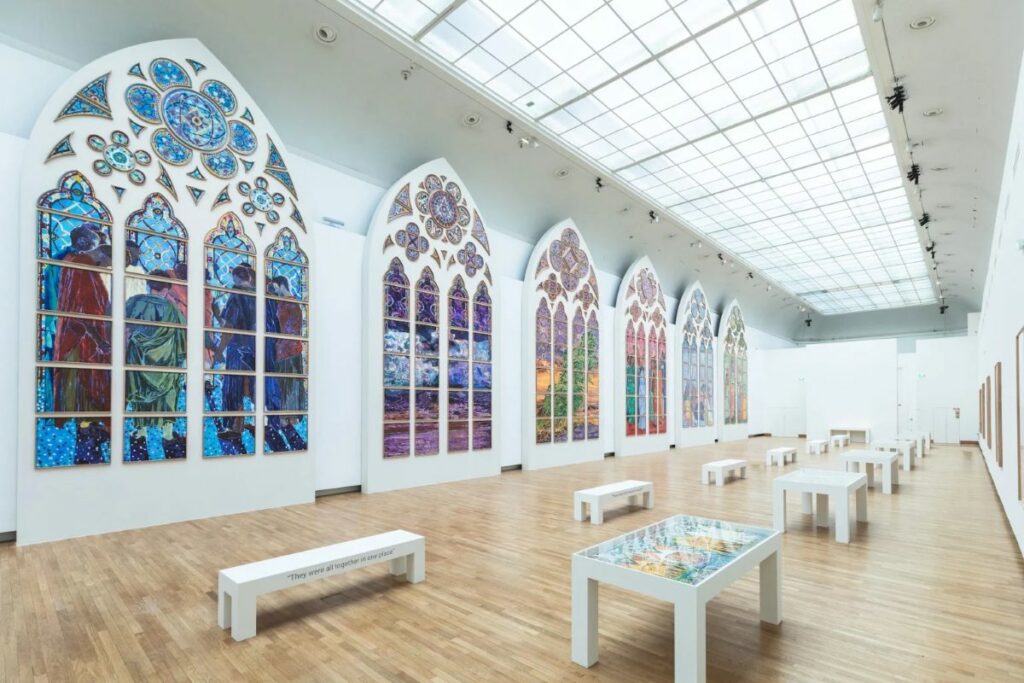

Her approach does not attempt to imitate medieval iconography. Instead, it embraces a softer, subtle gestures, ethereal faces, and restrained yet expressive color palettes designed to converse respectfully with the existing Gothic architecture. The execution will be carried out in collaboration with renowned Atelier Simon-Marq, a master glass workshop founded in Reims, France, in 1640, ensuring that artistic vision meets technical excellence.
Whether celebrated as a courageous act of cultural continuity or criticized as an unnecessary intervention, this new chapter ensures that the story of the Notre Dame Cathedral’s Stained Glass remains dynamic. The new glass panels are currently on display at the Grand Palais until March 15, 2026.
Visiting Notre Dame Cathedral to Experience Its Stained Glass
Whether celebrated as a courageous act of cultural continuity or criticized as an unnecessary intervention, this new chapter ensures that the story of the Notre Dame Cathedral’s Stained Glass remains dynamic. The new glass panels are currently on display at the Grand Palais until March 15, 2026.
What Visitors Can Expect at Notre Dame Cathedral
Since the reopening phases following restoration, access to Notre Dame has been carefully organized to preserve both visitor safety and the integrity of the monument. You can expect airport-style security screening and clearly defined circulation paths upon entering inside the cathedral. These measures ensure that the Notre Dame Cathedral Stained Glass can be admired without overcrowding and maintain the dignity of this sacred space.
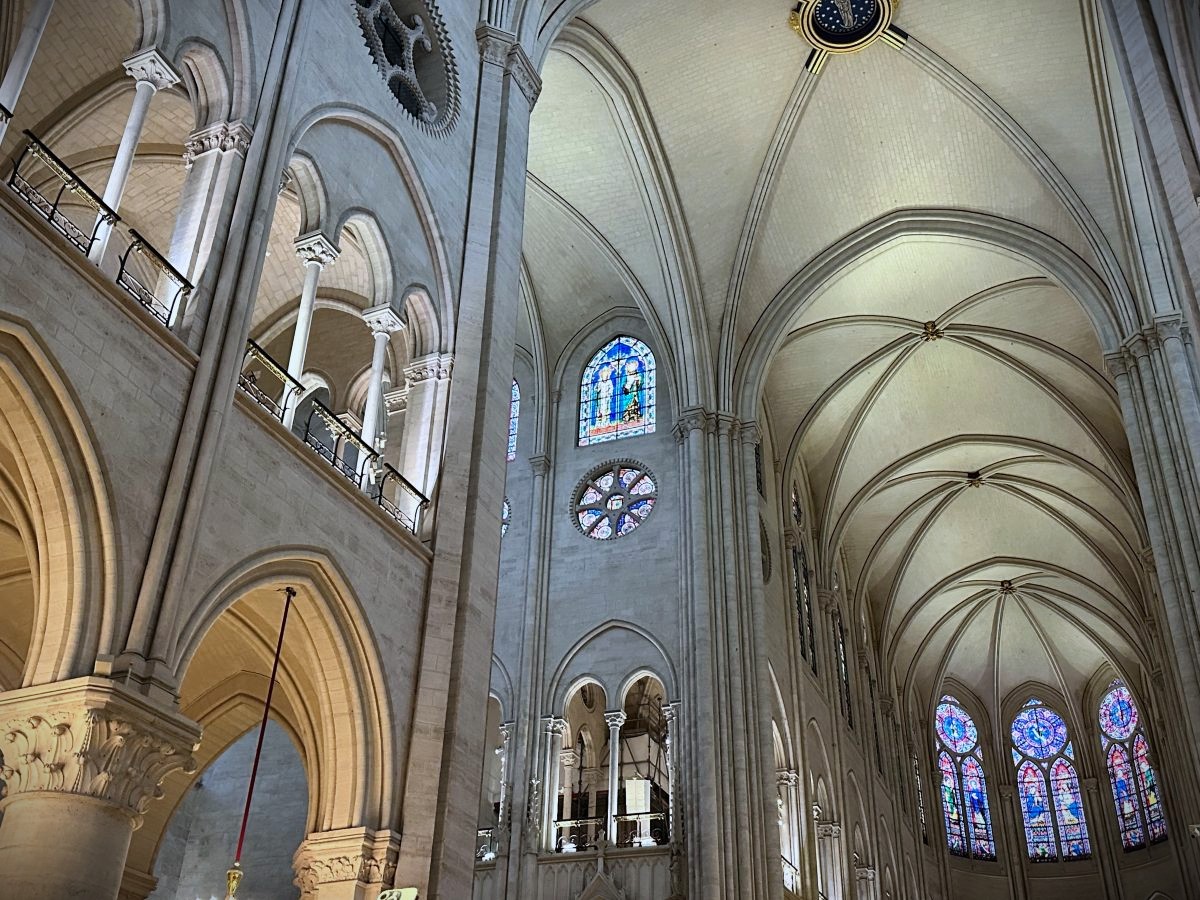
Inside, the atmosphere is different from the pre-fire years. Although it was previously one of the most visited sites in France, today it is even more of a cultural landmark where tourists flock to see the renovations and learn about the restoration. Above all it is a working religious site, which means cultural visits take second place.
Tips for Viewing the Stained Glass in the Best Light
Time of Day
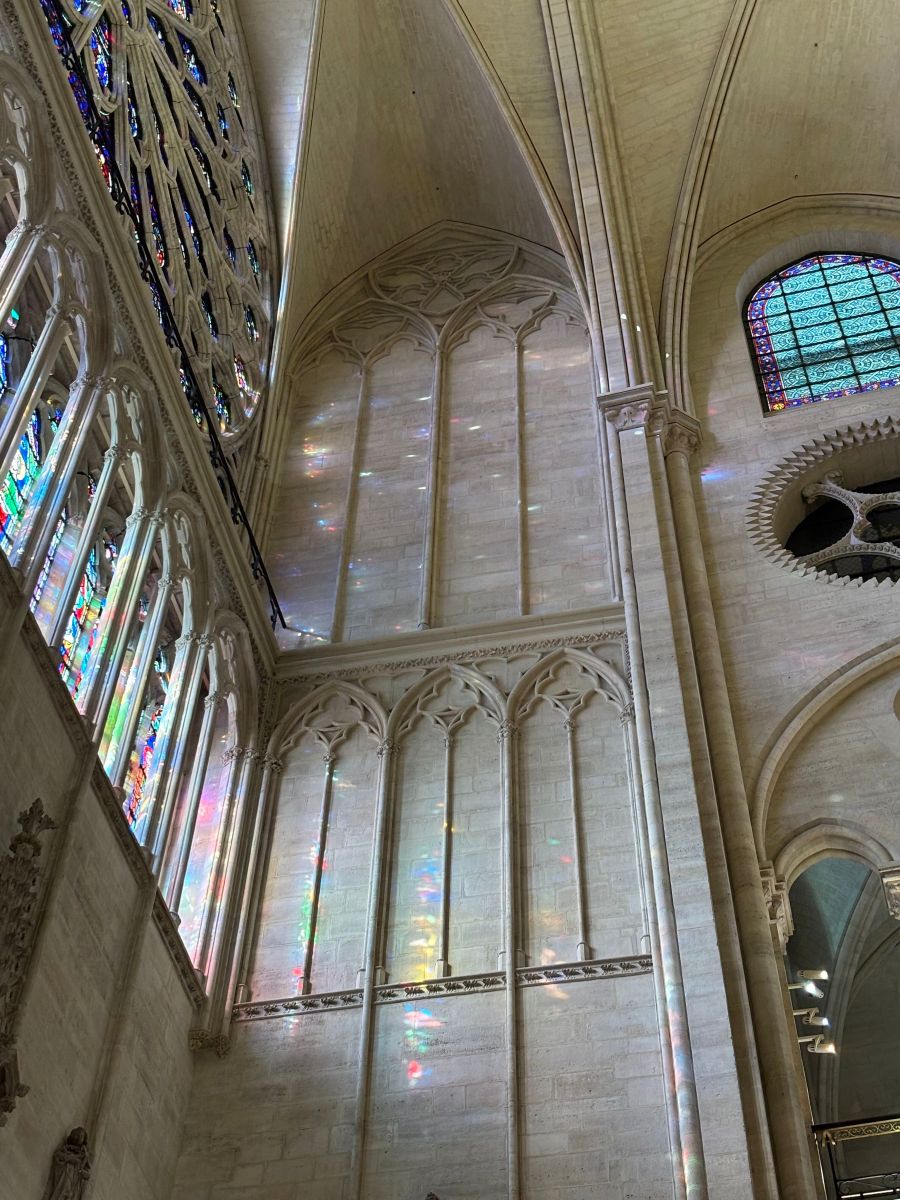
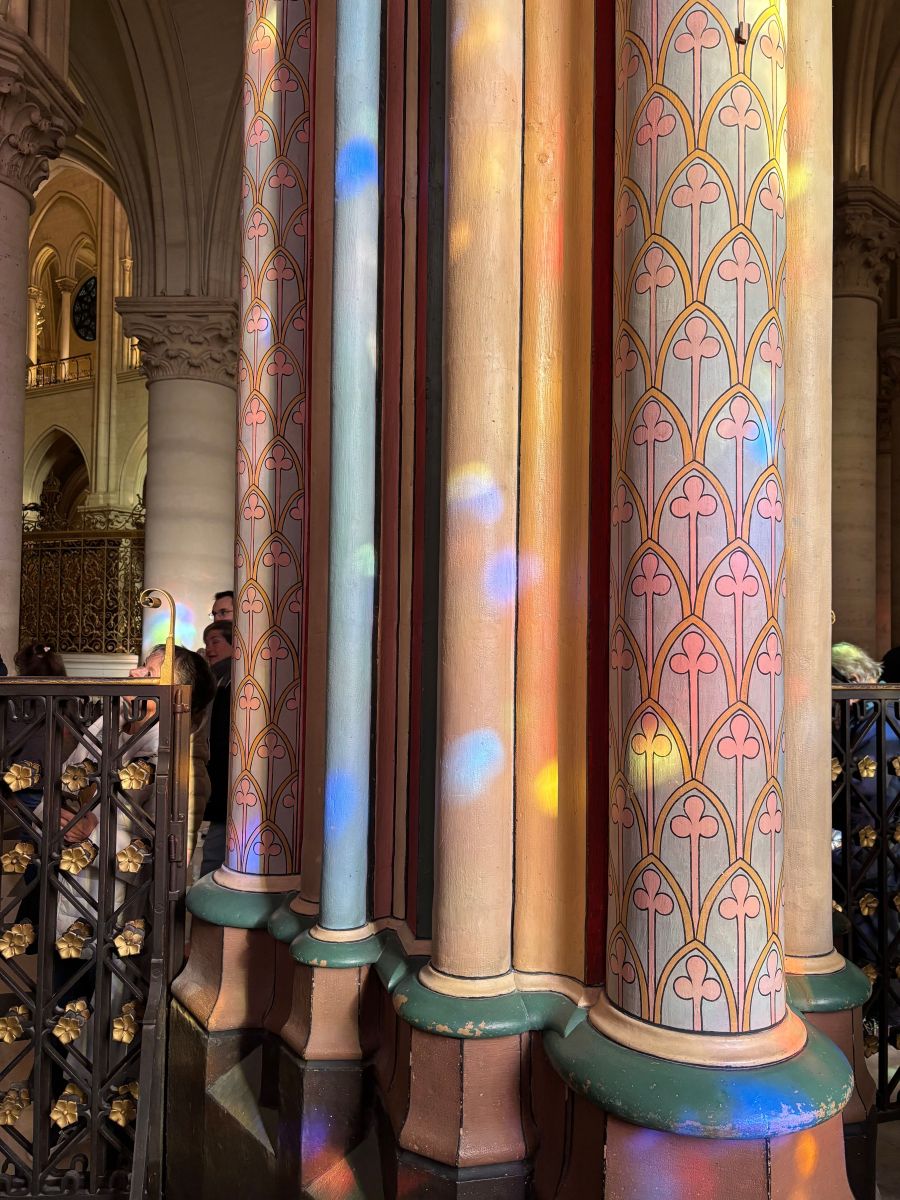
In the morning, the light entering from the east is softer and cooler. This is an ideal moment for seeing the grisaille windows, next to the choir chapels on the south side, create a silvery luminosity.
Around midday, the sun will be at its highest, which means the light will spread around the Cathedral evenly. While the windows may not be as lit up, this can be a good time with less crowds, as many are having lunch.
In the late afternoon, or golden hour, the western light intensifies reds and glds, especially in the rose windows. The colors become richer and brighter with direct sunbeams hitting the panels, revealing details that can seem subdued earlier in the day.
Due to their location at the back of the Nave, some panels do not experience direct sunbeams, but that does not make them less stunning!
Recommended Angles and Spots
To see the Notre Dame Paris Rose Windows, stand beneath the North Rose and the South Rose to admire the opposite side of the transept and see some of the best-preserved ensembles of medieval stained glass in existence.
On both sides, along the chapels, you will see stained glass, in mostly grisaille designs. At the very back of the Cathedral, there are several narrative panels (described above). Lastly, if you wish to sit in the Nave (center aisles), this may allow you different angles and more time to study the panels. Please be respectful to worshippers, as the Nave is reserved for religious use.
If you wish to study upper windows more closely, discreet binoculars can enhance your appreciation of facial expressions and narrative details.
FAQs About Notre Dame Cathedral Stained Glass
Yes, the original 13th-century Notre Dame Cathedral Stained Glass rose windows particularly the North and South Rose, largely survived both the French Revolution and the devastating 2019 fire. While they required careful inspection and cleaning after the fire, the medieval glass panels remain structurally stable and continue to be among the most extraordinary examples of Gothic stained glass in the world.
No, the 2019 fire did not destroy most of the Notre Dame Cathedral Stained Glass. Although the flames caused immense damage to the roof and spire, the stained glass windows survived. However, they were exposed to toxic lead dust, thermal shock, and structural vibrations, which required extensive conservation, laboratory cleaning, and stabilization by specialized restoration teams.
During the 19th century, architect Eugène Viollet-le-Duc led a major restoration campaign that replaced or reimagined portions of the Notre Dame Cathedral Stained Glass. Many windows installed during this period reflect Romantic interpretations of medieval art and are now considered historic in their own right. These 19th-century stained glass panels play a central role in today’s debates about preservation and contemporary intervention.
The new contemporary Notre Dame Cathedral Stained Glass has sparked debate because it proposes replacing certain 19th-century panels with modern designs. Critics argue that removing historic restorations alters the cathedral’s heritage, while supporters believe Gothic cathedrals have always evolved artistically. The controversy highlights broader questions about tradition, innovation, and cultural identity in France.
The contemporary Notre Dame Cathedral Stained Glass designed by Claire Tabouret is intended to become a lasting part of the cathedral’s evolving artistic legacy. Created in collaboration with master glassmakers, these new stained glass windows aim to reflect the spiritual and cultural identity of the 21st century while respecting the Gothic framework of Notre Dame.
The best time to experience the Notre Dame Cathedral Stained Glass is in the late afternoon, when sunlight intensifies the reds and golds of the rose windows. Morning light, however, offers a softer and more contemplative illumination, especially through the grisaille panels. Timing your visit enhances your appreciation of how Gothic architecture was designed to choreograph light throughout the day.
Plan Your Visit to See Notre Dame Cathedral's Stained Glass today!
For travelers who seek not just to visit Paris but to understand it, the Notre Dame Cathedral Stained Glass offers one of the city’s most moving encounters with history, faith, and artistry. Let us craft your private journey into the light.
Notre Dame Cathedral Private Tour
Learn more about the fascinating and spiritual stories of centuries with your expert guide!